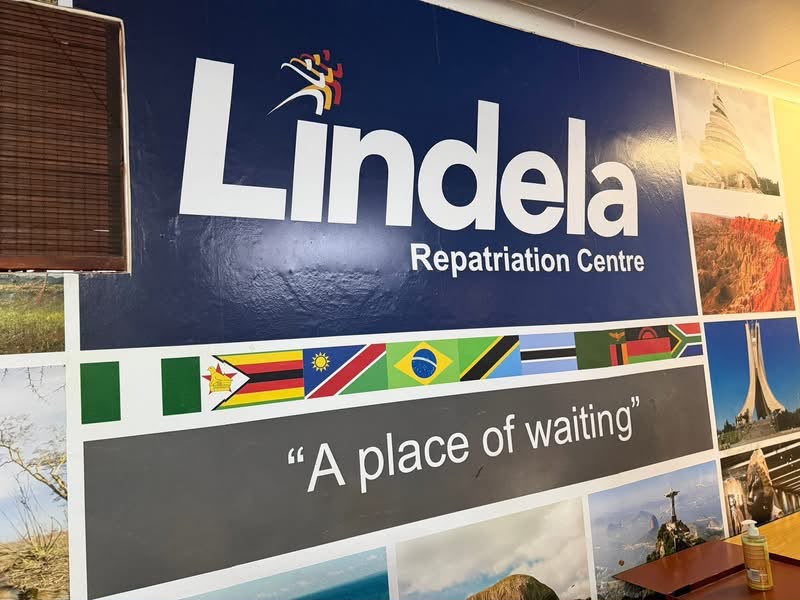

Muslim detainees at South Africa’s Lindela Repatriation Centre have allegedly been called “terrorists”, denied halal food and beaten for complaining, amid wider allegations of overcrowding, medical neglect and unlawful detention at the country’s main deportation facility.
The allegations were made to One Nation Media (ONM) by Luis Ndlovu, a Zimbabwean national detained at Lindela earlier this year, whose wider account of conditions at the centre is supported by testimony from other former detainees and years of documented concerns raised by human rights organisations.
Ndlovu alleges Muslim detainees faced particular humiliation at Lindela, including being openly mocked and called “terrorists”.
He said there was no halal food provided and Muslim detainees were expected to eat the same meals as everyone else. Those who complained risked being beaten, he alleged, including detainees who were already sick.
His allegations of specifically anti-Muslim treatment are principally based on detainee testimony, while broader concerns surrounding detention conditions, healthcare and legal safeguards at Lindela have been documented by organisations including Lawyers for Human Rights (LHR) and the South African Human Rights Commission (SAHRC).
From Hillbrow to Lindela
Ndlovu is a Zimbabwean Exemption Permit (ZEP) holder who said he was arrested in Johannesburg’s Hillbrow in January 2026 after losing the old passport containing his ZEP sticker.
He spent three days at Hillbrow Police Station, commonly known as “Number 4”, before appearing at Hillbrow Magistrate’s Court.
Ndlovu was subsequently held for another seven days at Johannesburg Correctional Centre, commonly known as Sun City, while the Department of Home Affairs verified his immigration status.
Charged with illegal immigration and resisting arrest, Ndlovu said he followed the advice of a state-appointed lawyer and pleaded guilty to the immigration charge to avoid potentially prolonged detention. He was sentenced to three months.
He described conditions at Sun City as overcrowded, with food in short supply.
But after being transferred to Lindela for deportation processing, Ndlovu said conditions deteriorated further.
Another former detainee recalled being warned before leaving Sun City: “Don’t go there.”
Illness, overcrowding and death
Former detainees interviewed by ONM described overcrowded conditions at Lindela, with large numbers of detainees visibly ill and some suffering persistent coughing.
They feared tuberculosis was circulating among the detainee population.
Medical treatment, according to their accounts, was severely limited, with detainees frequently receiving little more than basic painkillers.
“Someone gives you paracetamol – what does paracetamol do to your chest?” a former Congolese detainee told ONM.
Ndlovu described a similar experience.
“No medication, only painkillers, paracetamol,” he said.
He also alleged that deaths occurred during his detention, claiming two men near him died on the same night.
Concerns over healthcare, detention conditions and deaths at Lindela are not new, with human rights organisations having scrutinised conditions at the facility for years.
Former detainees also described poor-quality meals consisting largely of pap and thin soup.
What South African law says
Section 34 of South Africa’s Immigration Act 13 of 2002 provides for the arrest and detention of undocumented foreign nationals pending deportation, but places legal limits and safeguards around their detention.
Under the existing framework, detention for deportation cannot ordinarily exceed 30 days without judicial authorisation. A court can authorise further detention for periods not exceeding 90 additional days.
Detainees must also be informed of their rights, while regulations governing detention require minimum standards relating to accommodation, sanitation, healthcare and nutrition.
South Africa has since passed the Immigration Amendment Act 11 of 2025, which was assented to in May 2026 following Constitutional Court rulings concerning judicial oversight of immigration detention.
The legislation strengthens safeguards by requiring detained foreign nationals to be physically brought before a court within 48 hours so a judicial officer can determine whether continued detention is justified.
However, the amendment had not yet commenced by mid-August 2026, with the Act providing that it will come into operation on a date determined by presidential proclamation.
Years of legal challenges
Lindela has faced longstanding scrutiny over whether these legal protections are respected in practice.
In August 2014, the South Gauteng High Court ruled against prolonged detention practices at Lindela following a case brought by the SAHRC, People Against Suffering, Oppression and Poverty (PASSOP) and 39 detainees.
The court ordered Home Affairs and Lindela to cease detention practices that violated the Immigration Act, ensure detainees were not held beyond statutory limits without valid judicial authorisation, grant the SAHRC regular access to the facility and provide reports concerning detainees.
Human rights lawyers have continued to raise concerns about compliance in the years since.
LHR has documented cases involving people allegedly detained without valid warrants or beyond statutory detention limits, as well as asylum seekers with outstanding claims facing arrest and deportation.
In a 2023 report and subsequent submissions, LHR warned of individuals being “frequently detained without a valid warrant or for periods exceeding the 120-day legal limit”.
In February 2025, the organisation told Parliament that immigration detention should be used as a “last resort” and warned that weaknesses and ambiguities within the system could facilitate arbitrary detention.
LHR has also raised concerns over access to legal representation, the detention of children and accountability within the system.
‘Terrorists’ and no halal food
For Muslim detainees, Ndlovu alleges those broader failures were compounded by religious discrimination.
According to his testimony, Muslims were mocked as “terrorists”, while their dietary requirements were disregarded.
He said detainees separated themselves largely according to nationality and that Muslims were not provided with halal meals.
South Africa’s immigration regulations require detainees to receive adequate nutrition and make provisions relating to healthcare and basic conditions. However, the legislation does not contain a specific statutory guarantee of halal food.
The allegations nevertheless raise broader questions about religious freedom and non-discrimination within a state-run immigration detention system.
South Africa’s Constitution guarantees freedom of religion and equality and prohibits unfair discrimination on grounds including religion.
A system under pressure
Ndlovu said he spent approximately one month at Lindela before eventually being released under a self-deportation arrangement.
Former detainees told ONM that those unable to raise the money required to leave South Africa themselves could remain at the facility considerably longer, in some cases for months.
Their accounts paint a consistent picture of overcrowding, illness, inadequate medical treatment, poor food and prolonged uncertainty over when detainees will be released or deported.
Amid intensified immigration enforcement in 2026, an Inter-Ministerial Committee visited Lindela and called for the amount of time migrants spend at the facility to be reduced.
Yet more than a decade after the landmark 2014 High Court ruling, allegations surrounding detention conditions and treatment at Lindela continue.
Ndlovu’s testimony now adds an explicitly Muslim dimension to those concerns.
His allegations of “terrorist” slurs, denial of halal food and physical abuse require investigation in their own right, while the wider accounts of overcrowding, inadequate healthcare and prolonged detention raise further questions about whether safeguards designed to protect migrants are being consistently enforced.
For detainees held behind Lindela’s walls, those safeguards are not abstract legal principles. They determine whether people awaiting deportation are treated with dignity, receive adequate medical care and are able to practise their religion without discrimination.
The Department of Home Affairs has not yet responded to ONM’s request for comment on Ndlovu’s allegations and the wider conditions described by former detainees. Its response will be added once received.