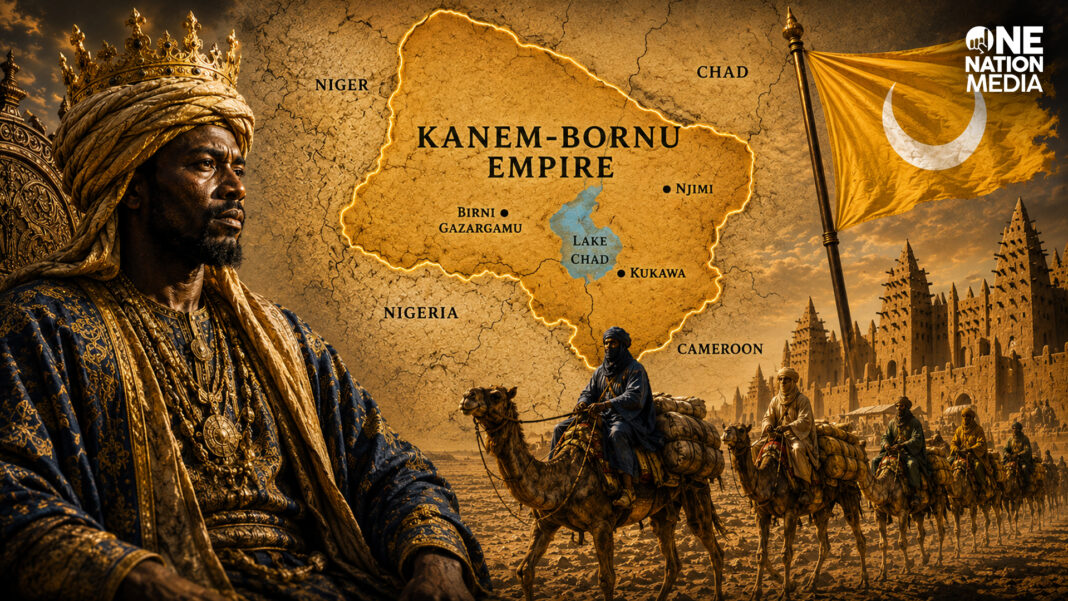

For centuries, the Kanem-Bornu Empire stood among Africa’s most powerful Islamic states, controlling major trade routes across the Sahara and shaping religious and political life around Lake Chad. From the ninth century until the dawn of European colonial conquest in the nineteenth century, the empire expanded through military strength, commercial wealth and Islamic scholarship, becoming one of the longest-lasting Muslim dynasties in African history, writes Neelam Rahim.
Centred across present-day Chad, northeastern Nigeria, Niger, Cameroon and parts of southern Libya, Kanem-Bornu occupied a strategic position between North Africa and sub-Saharan Africa. This location allowed the empire to dominate caravan routes linking the Mediterranean world to the African interior. Merchants crossed the Sahara carrying salt, horses, copper, textiles and luxury goods southward, while enslaved people, ivory, ostrich feathers and natron travelled north.
The empire’s wealth depended heavily on its control of these trade routes. The widespread use of camels transformed Saharan commerce, and Kanem-Bornu emerged as one of the greatest beneficiaries of this economic revolution. Taxes on trade strengthened the state, financed armies and helped rulers expand their influence across surrounding territories.
The rise of the Sayfawa Dynasty
Kanem-Bornu was ruled by the Sayfawa dynasty, a royal house that governed the empire for nearly a thousand years. Historical traditions connected the dynasty to Sayf ibn Dhi Yazan, a legendary Arab figure associated with Yemen. While historians debate the accuracy of these claims, the association reflected the growing importance of Islam within the empire and the desire of rulers to establish legitimacy within the wider Muslim world.
The rulers of Kanem carried the title “Mai”, and over time they built a highly organised political structure that united diverse communities under central authority. The early capital of Kanem was located east of Lake Chad, where the empire first consolidated its military and commercial power.
Islam entered the region gradually through contact with Muslim traders and scholars from North Africa. By the eleventh century, Islam had become firmly rooted within the royal court and political elite.
One of the earliest Muslim rulers associated with this transformation was Mai Humai ibn Salamna, who helped establish Islam as a major force within governance and administration.
Islamic scholarship
As Islam spread through the empire, Kanem-Bornu developed into an important centre of Islamic learning in Central Africa. Quran schools and mosques expanded across the region, while Arabic became increasingly important in administration, diplomacy and scholarship.
Islamic scholars travelled between Kanem-Bornu and North African cities, strengthening intellectual ties with the broader Muslim world. Pilgrimage routes to Makkah also connected the empire to global Islamic networks, allowing rulers and scholars to engage with religious developments beyond the Sahara.
Islamic law influenced governance, trade and judicial systems within the empire. Religious scholars held respected positions at court, while rulers sponsored mosques and educational institutions. These developments transformed Kanem-Bornu into more than a military and commercial state; it became a centre of Islamic civilisation in the heart of Africa.
Among the empire’s most influential rulers was Mai Dunama Dabbalemi, who ruled during the thirteenth century. His reign marked a major turning point in the empire’s expansion and Islamic consolidation. Dunama Dabbalemi strengthened ties with North Africa, promoted Islamic governance and launched military campaigns that expanded Kanem’s authority across surrounding territories.
Historical records describe him building diplomatic relations with Muslim powers and supporting Islamic institutions throughout the empire. Under his leadership, Kanem became one of the strongest states in the central Sudan region.
War, migration and the birth of Bornu
Following the death of Dunama Dabbalemi, succession struggles weakened the empire. Internal divisions, combined with attacks from the Bulala people, destabilised Kanem during the fourteenth century. Eventually, the Sayfawa rulers were forced to move west of Lake Chad into the region of Bornu.
The relocation marked one of the most important transitions in the empire’s history. Rather than collapsing, the state rebuilt itself in Bornu and gradually restored its political and military strength. From this new base, the empire revived trade routes and re-established control over surrounding territories.
This resilience became one of Kanem-Bornu’s defining characteristics. Few African states survived major invasions and political crises for as long as the Sayfawa dynasty managed to do.
Idris Alooma and the golden age of Bornu
The empire reached another height of power during the reign of Idris Alooma in the sixteenth century. Often regarded as the greatest ruler in Kanem-Bornu’s history, Alooma transformed the empire through military reforms, stronger administration and deeper Islamic scholarship.
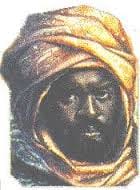
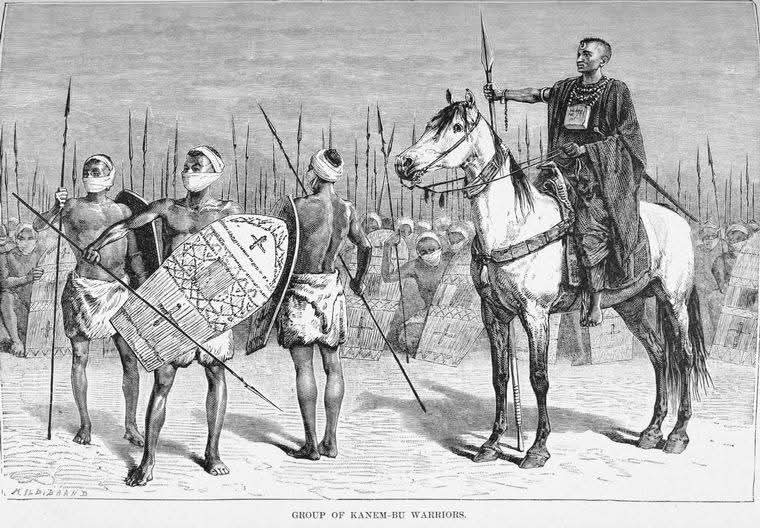
He reorganised the army, strengthened cavalry forces and improved military discipline. Historical accounts also describe the use of fortified camps and more advanced warfare tactics under his leadership. These reforms allowed Bornu to defeat rival states and secure important trade routes across the Sahara.
Alooma was equally committed to Islam. He supported mosques, Islamic judges and scholars while encouraging stronger implementation of Islamic law throughout the empire.
He is also remembered for maintaining diplomatic relations with North Africa and the wider Ottoman-era Muslim world, reinforcing Bornu’s place within broader Islamic networks.
Trade flourished once again under Alooma’s rule as caravan routes became safer from raids and bandit attacks. His reign represented the political, military and religious peak of the empire.
The legacy of Kanem-Bornu
By the eighteenth and nineteenth centuries, Kanem-Bornu faced growing pressure from regional conflicts, shifting trade systems and external invasions. The rise of neighbouring powers, including the Sokoto Caliphate, weakened the empire further, while European colonial expansion accelerated its decline.
Although Bornu resisted total absorption through later leaders such as Muhammad al-Kanemi, the old Sayfawa order never fully recovered its former dominance. Yet Kanem-Bornu’s historical legacy remains profound. For nearly a millennium, the empire connected Africa to the Islamic world through trade, scholarship and diplomacy. It produced influential Muslim rulers, sustained centres of Islamic learning and controlled some of the continent’s most important commercial networks.
Its history stands as a reminder that African civilisations were deeply connected to global systems of knowledge, religion and commerce long before colonial rule reshaped the continent. Around the shores of Lake Chad, Kanem-Bornu built an enduring Islamic civilisation whose influence stretched across centuries of African history.
You can read more of One Nation Media’s Islamic civilisation and African history features here.