
Long before borders and nation states, the River Nile was already shaping life, power and civilisation across Africa, writes Neelam Rahim.
There are few places in the world where geography has shaped human life as completely as it has along the River Nile. For thousands of years, this river has not only carried water; it has carried survival, settlement, memory, and meaning across north-eastern Africa. Stretching roughly 6,600 to 6,800 kilometres from its sources deep in East and Central Africa to the Mediterranean Sea, the Nile remains one of the most important natural systems on the continent.
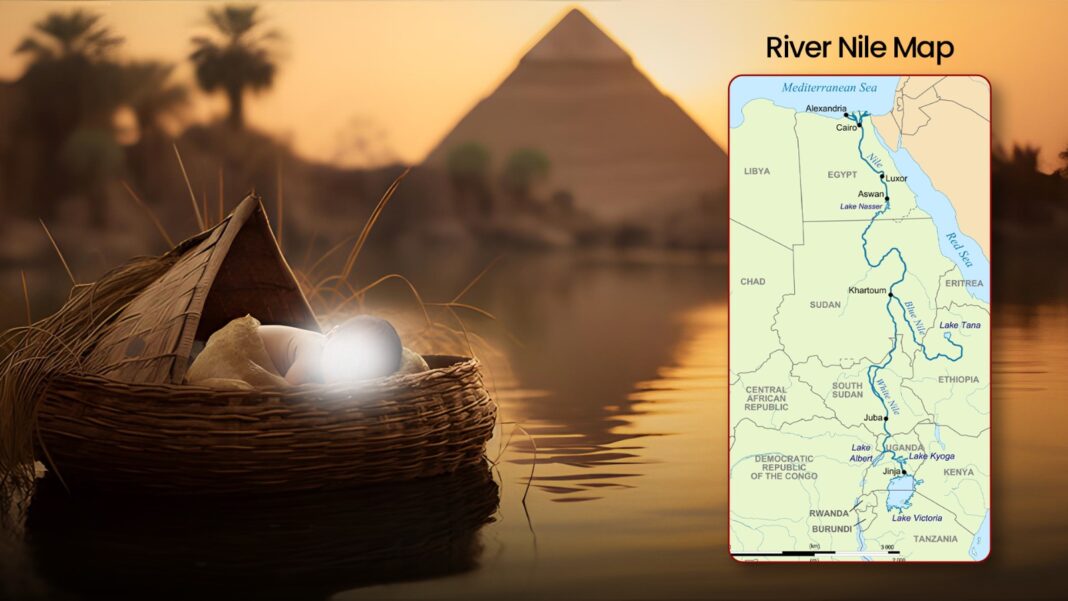
Today, the Nile Basin spans 11 countries: Uganda, Tanzania, Rwanda, Burundi, the Democratic Republic of the Congo, Kenya, Ethiopia, Eritrea, South Sudan, Sudan, and Egypt. While the main river flows directly through Uganda, South Sudan, Sudan, and Egypt, its tributaries and catchment systems reach far wider, linking forests, highlands, lakes, and deserts into one interconnected water network. It is not a single-country river; it is a continental system.
To understand the Nile is to understand why civilisation in this region developed the way it did.
The foundation of civilisation
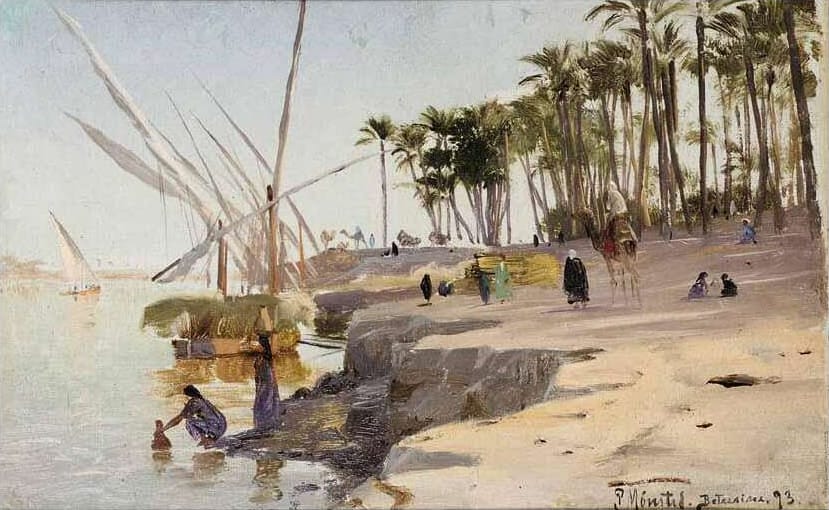
According to historical accounts referenced by SAHO, early Egyptian settlement was concentrated along the narrow ribbon of fertile land that ran alongside the river. On either side lay vast desert, rocky terrain, and harsh climatic conditions. The Nile broke that harshness. Each year, it overflowed its banks and deposited rich alluvial soil, naturally renewing the land. In a landscape where rainfall was scarce, this predictable rhythm of flooding made agriculture possible again and again.
This is why ancient observers, including the Greeks, described Egypt as “the gift of the Nile.” It was not poetry alone; it was observation. Life flourished along the river because life beyond it was difficult to sustain.
Over time, this dependable cycle of water and fertile soil transformed human patterns of living. Communities that once moved across wide hunting grounds gradually settled. Farming became stable. Villages expanded into towns, and towns into one of the world’s earliest and most enduring civilisations. The Nile was not just a source of water; it became the backbone of economy, agriculture, and communication.
A river of connection
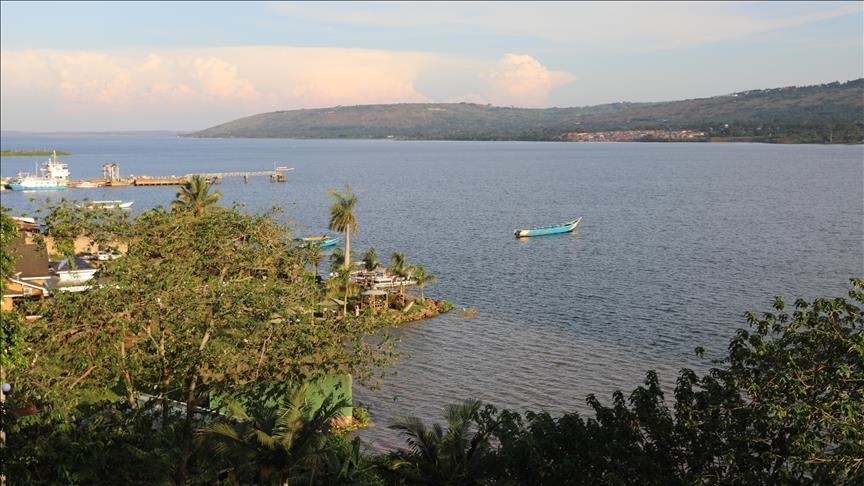
The river itself tells a story of connection. It is formed primarily through two major tributaries. The White Nile, originating from the Lake Victoria region shared by Uganda, Kenya, and Tanzania, provides a steady flow throughout the year. The Blue Nile, beginning at Lake Tana in Ethiopia, brings powerful seasonal floods that historically contributed most of the river’s downstream water volume. These two streams meet in Khartoum, Sudan, before continuing north through Egypt and finally emptying into the Mediterranean Sea through the Nile Delta.
That delta, where the river splits into multiple branches, became one of the most fertile and densely populated regions in North Africa. For centuries, it supported farming, trade routes, and the movement of goods between Africa, the Mediterranean, and beyond.
Sustaining modern Africa
Often overlooked is how deeply modern life still depends on this ancient river. The Nile continues to support over 300 million people across the basin, providing water for drinking, irrigation, livestock, industry, and electricity generation. In Egypt especially, where rainfall is minimal, the river accounts for almost the entire freshwater supply. Without it, large-scale agriculture and urban life would not be possible in the same way.
At the same time, the Nile today sits at the centre of a changing world. Population growth, climate variability, and expanding development projects have placed increasing pressure on its waters. Dams such as Egypt’s Aswan High Dam have reshaped how the river is managed, allowing control over flooding and improving irrigation. Upstream developments, including Ethiopia’s Grand Ethiopian Renaissance Dam, reflect the growing need for energy and development across the region but i also source of tension between Egypt and Ethiopia. But they also highlight a simple truth: this river is shared, and what happens in one part of the basin affects the rest.
Despite political and environmental complexity, the Nile remains a space of connection more than division. Its waters cross borders that were drawn long after the river began shaping human life. In that sense, it is incomparably older than the states that depend on it and more permanent than the disagreements surrounding it.
Historically, the Nile was also a route of movement. It carried grain, people, ideas, and culture. It connected Upper Egypt in the south to Lower Egypt in the north. It shaped not just economies, but identity itself. Even today, many communities along its banks still live in ways that reflect this deep historical relationship with the river.
The Nile in the Islamic tradition
The River Nile is not only a geographical lifeline of Africa; within the Islamic tradition it carries spiritual, historical and symbolic weight. The Prophet Muhammad (SAW) explicitly described the Nile as one of the rivers of Paradise, stating: “Saihan (Oxus), Jaihan (Jaxartes), Al-Furat (Euphrates) and An-Nil (Nile) are all from the rivers of Jannah.” This hadith mentioned in Sahih Muslim elevates the Nile beyond a natural waterway, placing it within a metaphysical framework tied to divine origin and blessing.
Its significance is further reinforced through the story of Prophet Musa (AS), whose earliest moments were defined by the river itself. At a time when Pharaoh’s tyranny threatened the lives of newborn Israelite boys, Musa was placed to float on the Nile as an infant, an act of desperation that became the beginning of divine protection. Drawn out from the water and raised within the very household of his oppressor, his journey reflects a recurring Quranic theme: that Allah’s decree unfolds through means that appear fragile, even perilous, but ultimately serve a higher purpose.
Beyond prophetic history, the Nile also appears in later Islamic political imagination. It is referenced in the famous dream of Sultan Osman Ghazi, founder of the Ottoman Empire, whose vision symbolised the expansion of his lineage and authority. That legacy would eventually extend to Egypt under Sultan Selim I in 1516 (922 AH), bringing the lands of the Nile under Ottoman rule and into the wider framework of the Ottoman Caliphate.
Taken together, these strands position the Nile not as a passive feature of the natural world, but as part of a wider system of divine provision, balance and mercy. It sustains life physically, while its place in revelation and history serves as a reminder that even in moments of vulnerability, Allah’s (SWT) will operates with precision, shaping outcomes through the very fabric of the natural world.
You can read more of One Nation Media’s Islamic civilisation and African history features here.