

Israel has opened a new front in the battle for global opinion: a propaganda campaign aimed at winning the hearts and minds of South Africans. At the forefront are the country’s small but highly influential Jewish community and its representative organisations. They have responded with alacrity to the South African government’s genocide case against Israel at the International Court of Justice (ICJ) in The Hague, as well as the significant local support for the Palestinian struggle against occupation. In response, Israel and its local supporters have embarked on a campaign to court politicians, journalists, so-called influencers and even traditional leaders in an attempt to shape how Israel is viewed and represented in South African public life, writes Neelam Rahim.
Understanding this landscape is not about speculation, but about mapping how influence operates across institutions and how it contributes to defining the boundaries of public discourse. At the centre of organised representation are bodies such as the South African Jewish Board of Deputies (SAJBD) and the South African Zionist Federation (SAZF).
The SAJBD functions as a formal representative body for sections of the Jewish community, frequently engaging on issues of antisemitism, identity and public policy, while the SAZF plays a more explicitly ideological role, actively promoting Zionism and defending Israel during periods of heightened scrutiny.
Together, these organisations ensure that pro-Israel perspectives remain consistently present in public debate, particularly at moments when criticism of Israeli state policy intensifies.
This influence also extends beyond formal institutions into what is often described as Israel’s global public diplomacy strategy, or “hasbara.” Reports indicate that Israel has significantly expanded investment in its international messaging efforts, allocating hundreds of millions of dollars toward shaping global perception during the Gaza war. This includes outreach to political figures, cultural leaders and influencers, forming part of a broader attempt to influence how Israel is understood and represented internationally.
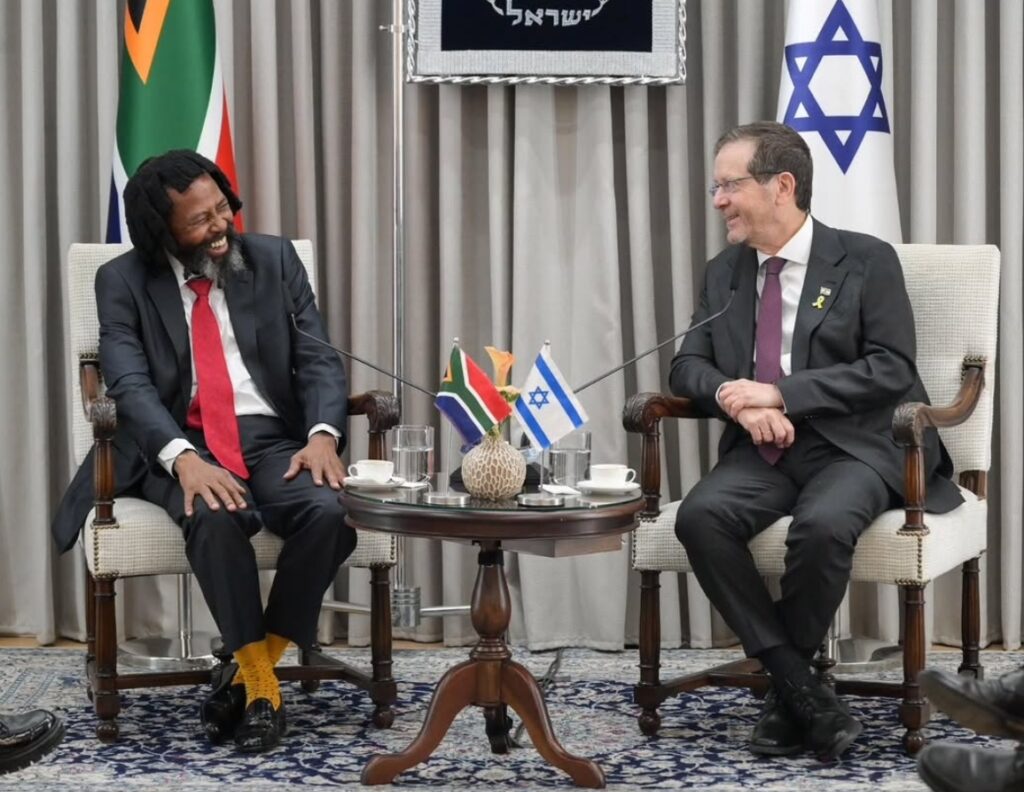
In South Africa, this influence has taken concrete and controversial form. The visit of Israeli embassy officials to the AbaThembu kingdom, following King Buyelekhaya Dalindyebo’s engagement with Israel, triggered strong backlash from the ANC in the Eastern Cape, which described the move as a betrayal of South Africa’s liberation principles. The incident exposed how Israeli diplomatic outreach can extend beyond formal state channels into traditional leadership structures, raising deeper questions about how influence is cultivated at local levels, often in ways that cut across the country’s stated position on Palestinian solidarity.
Legal influence
One of the most significant arenas of influence is the legal system. South Africa’s constitutional framework allows civil society actors to shape legal interpretation through litigation and advocacy, and pro-Israel-aligned organisations have actively engaged in cases involving hate speech, public commentary and the definition of antisemitism. These interventions do more than settle individual disputes; they help define the limits of acceptable expression. When legal boundaries are tested around issues such as apartheid comparisons, occupation or armed resistance narratives, the outcomes influence how journalists, universities and institutions approach the subject, making legal advocacy a mechanism through which both the tone and scope of public debate are shaped.
Legal representation for the SAJBD in various hate speech and antisemitism-related matters has historically included South African human rights and constitutional law practitioners associated with public interest litigation in equality and rights-based cases, as well as counsel working through equality court structures. These legal interventions are frequently positioned as protections against antisemitism, but critics argue they also contribute to expanding the scope of what is legally defined as “hate speech” in political discourse relating to Israel, occupation and liberation narratives.
Economic interests
Economic relationships form a less visible but equally important layer of influence. South Africa maintains commercial ties with Israeli-linked companies across sectors, including agriculture, cybersecurity, pharmaceutical and defence technology. These relationships are rarely framed as political, but they create material incentives for stability in bilateral relations.
For sections of the private sector, foreign policy positions are not purely ideological; they are weighed against trade, investment and access to technology. Even when political rhetoric becomes critical of Israel, economic cooperation often continues, reflecting a separation between public stance and underlying commercial reality.
Economic linkages extend beyond general trade into specific sectors and companies. Israeli agricultural technology company Netafim has long operated in South Africa, providing irrigation systems widely used in commercial farming projects. In the private security space, the Community Security Organisation (CSO), led nationally by figures such as Michael Kransdorff in public commentary contexts, operates within Jewish community protection structures and is frequently referenced in broader security cooperation discussions. These sit alongside continued trade in pharmaceuticals, agricultural inputs and technology-linked goods between South Africa and Israel, which remains documented in bilateral trade reporting even during political tensions.
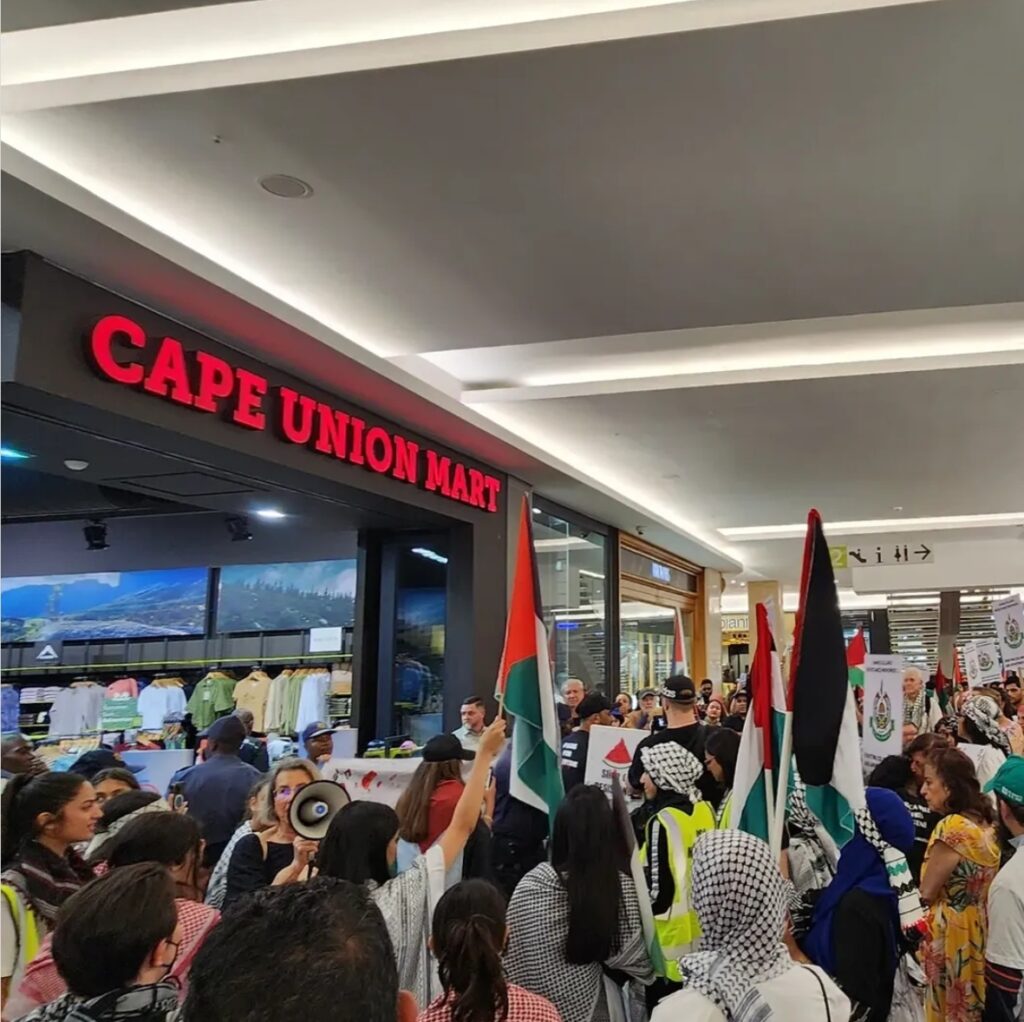
These dynamics have also surfaced in the private sector. Companies such as Cape Union Mart have faced legal and public challenges from pro-Palestinian activists, reflecting growing scrutiny over perceived links, ownership positions, and broader alignment with Israel. The issue has moved beyond consumer activism into the courts, signalling how economic relationships are increasingly being contested within legal and public arenas in South Africa.
Another prominent Jewish supporter of Israel is local billionaire and founder of the Dis-Chem chain, Ivan Saltzman, publicly dismissed calls for the boycott of Israeli products. He was quoted saying: “So far as your stated intention of boycotting Dis-Chem goes, that is your decision: we live in a free country.”
Media and narrative shaping
Media remains a central battleground in shaping public perception. Pro-Israel advocacy groups maintain active engagement with journalists, contribute opinion pieces and respond rapidly to developments in the Middle East, with messaging that consistently emphasises security concerns, democratic identity and the need to “counter antisemitism”.
This ensures that pro-Israel framing remains present within mainstream discourse, particularly during periods of escalation. By contrast, Palestinian narratives and human rights-focused critiques often rely more heavily on grassroots activism, independent platforms and civil society mobilisation to gain visibility, resulting not in the absence of dissent, but in an uneven distribution of institutional amplification.
Media framing is reinforced through structured advocacy responses during conflict periods. The SAZF, led publicly by figures such as Rowan Polovin, who has repeatedly criticised South African media coverage as “biased” and framed Israel’s actions as “self-defence” against Hamas. The South African Jewish Report (SAJR), edited by Peta Krost, regularly publishes commentary defending Israeli policy and challenging BDS activism. During the 2023 onslaught of Gaza, these platforms amplified coordinated messaging across opinion pieces and media responses, ensuring pro-Israel framing remained visible in mainstream South African news cycles.
Political influence
Influence is further reinforced through sustained political engagement. Advocacy organisations maintain relationships with members of parliament, government departments and diplomatic channels, engaging through submissions, policy discussions and responses to international developments.
Political engagement has included direct statements from major parties and organised briefings with lawmakers. The Democratic Alliance (DA) has repeatedly opposed the downgrading of diplomatic relations with Israel, with party representatives arguing in parliamentary debates that South Africa should avoid a “one-sided foreign policy approach” to the conflict. The Patriotic Alliance (PA), led by Gayton McKenzie, has taken a more openly supportive stance. McKenzie has been the most vocal, stating he will “never turn his back on Israel” and vowing to restore full diplomatic relations if in power. Meanwhile, both the SAJBD and SAZF have engaged parliamentary committees and government departments, particularly around foreign policy motions and South Africa’s ICJ case against Israel, which they have criticised as diplomatically harmful.
South Africa’s foreign policy appears to remain formally sovereign, but like all democratic systems, it operates within an environment shaped by organised interests competing to influence interpretation and direction. The presence of structured, well-resourced advocacy ensures that certain perspectives retain consistent access to these spaces.
It is important to recognise that this is not a single coordinated system directing outcomes, but a layered network of institutions operating across different sectors, each contributing to the broader shaping of discourse. At the same time, South Africa remains one of the most outspoken critics of Israeli policy globally, informed by its own history of apartheid and liberation struggle.
Grassroots movements, trade unions, student groups and organisations such as BDS South Africa continue to push for accountability, using the language of international law and human rights. This creates an ongoing tension between institutional advocacy and popular mobilisation, and between structured access and grassroots pressure.
Implications for South African Muslims
The question is not whether influence exists, but how it operates and who it ultimately constrains. In South Africa, it operates through law, media, business and politics, shaping not only how Israel is discussed, but how far that discussion can go within institutional spaces.
For the country’s Muslims, this is not an abstract dynamic. It directly affects the boundaries within which they can speak, organise and advocate on one of the defining issues of the Muslim world and Ummatic conscious. Legal interventions around hate speech, media framing that privileges certain narratives over others, and political pressure applied during moments of regional escalation collectively create an environment where criticism of Israel can carry reputational, professional and even legal risk.
This does not amount to the absence of free speech, but it raises a more difficult question about its consistency. When certain viewpoints are more likely to trigger legal scrutiny, institutional pushback or public condemnation, the result is not open discourse, but controlled debate.
South Africa presents itself as a defender of human rights and a critic of illegal occupation on the global stage. The test, however, is not only what it says internationally, but what it permits domestically. If one of the most politically conscious communities in the country must weigh its words carefully when speaking on Palestine, then the issue is no longer just foreign policy, but the integrity of free expression itself at home.