
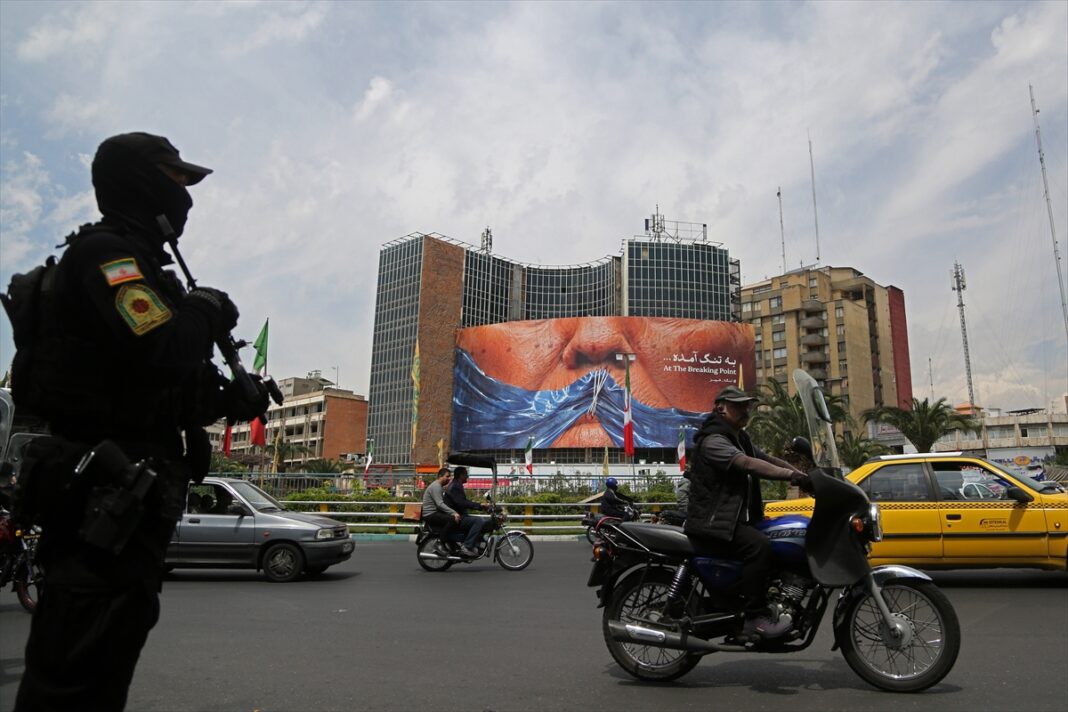

A spokesman for the Iranian army said on Sunday that countries enforcing US sanctions against Tehran will “certainly face difficulties in passing through the Strait of Hormuz,” according to local media.
“None of the enemy’s objectives were achieved,” and the political balance of the Iranian system was “not disrupted,” Brigadier General Akrami Nia said in a statement carried by the semi-official Tasnim news agency.
Regional tensions have escalated since the US and Israel launched strikes against Iran on February 28, triggering retaliation from Tehran against Israel, as well as US allies in the Gulf, along with the closure of the Strait of Hormuz.
A ceasefire took effect on April 8 through Pakistani mediation, but talks in Islamabad failed to produce a lasting agreement. The truce was later extended by US President Donald Trump without a set deadline, giving way to diplomacy for a permanent solution to the war.
Since April 13, the US has enforced a naval blockade targetting Iranian maritime traffic in the waterway. Trump announced Tuesday that the US military will temporarily pause “Project Freedom” to restore freedom of navigation for commercial shipping through the shipping channel and said the American blockade will remain “in full force and effect”.
Meanwhile, Russia is shipping drone components to Iran via the Caspian Sea, helping Iran rebuild its offensive abilities after losing roughly 60% of its drone arsenal during recent fighting, The New York Times reported on Saturday.
Russia is also supplying goods that would normally transit through the Strait of Hormuz, which is currently under a US blockade, as part of international trade, the report said.
Iranian officials say efforts to establish alternative trade corridors are advancing quickly, with four Iranian ports on the Caspian Sea operating continuously to import wheat, corn, animal feed, sunflower oil, and other essential goods, the Times added.
Mohammad Reza Mortazavi, the head of Iran’s Association of Food Industries, told state broadcaster IRIB that the country is actively redirecting key food imports through the Caspian route.