

By Mxolisi Ncube
As South Africa grapples with a fresh wave of xenophobic attacks targeting African migrants, Somali businesspeople say Islamic charity, deliberate community engagement and everyday goodwill have helped protect them — with many local residents refusing to join vigilante calls for them to leave.
Mohammed Abdulahi Abdi, Chairperson of the Somali Community in South Africa, says practical solidarity with struggling South Africans has built a layer of mutual respect around Somali spaza shop owners and traders.
“In Islam, we believe that whatever you get, you give a quarter of it to the needy,” Abdi said. “We are faithful people. We are respectful people. We are humanitarian. Muslims are not selfish.”
A kitchen that never closes
In Mayfair, Johannesburg, that ethos is visible every day.
A community kitchen provides hot meals to anyone who arrives, regardless of race or nationality. Monthly food hampers are also distributed, while Shoprite vouchers worth R700 to R800 allow recipients to buy what their families need most.
“It is non-negotiable that someone goes to bed without eating when we are there,” Abdi said.
Most of the beneficiaries, he says, are South Africans.
The initiative is financed by Somali business owners and builds on the community’s response during the COVID-19 lockdown in 2020.
At the time, the Somali Community Board and African Diaspora Forum began distributing around 350 cooked meals a day from Madrasah Abu Bakr Siddique, rapidly increasing that figure to around 750 meals daily. Volunteers delivered food door to door, while networks of wholesalers and spaza shop owners provided food parcels, electronic transfers and supermarket vouchers to both migrant and local households.
In Pretoria, Somali refugee businesspeople distributed masks, sanitisers and food parcels containing flour, rice, beans and oil to informal settlements. In Nelson Mandela Bay, Somali and Ethiopian spaza shop owners delivered 1,500 food parcels to townships.
Across several provinces, hundreds of South African and migrant families received support.
“We understand how it feels to be hungry, so as a community, we stood up,” Abdi said.
Jobs for locals, by policy
Alongside its charitable work, Abdi says the Somali business community has adopted a clear employment principle: Somali-run businesses should employ South Africans, preferably as the majority of their staff.
“In every business, we need to have a local person working, at least the majority must be local,” he said.
The shift is visible, he says, in Somali restaurants in Mayfair now employing South African waiters, as well as in hundreds of local jobs created across the country.
This combination of visible Islamic charity, job creation and everyday coexistence has, in Abdi’s view, helped foster a measure of harmony.
“South Africans are good people. The communities we are living in, there is love and harmony between us,” he said.
“We have not witnessed any Islamophobia because the majority of South Africans know who we are and how good we have been in the communities where we operate.”
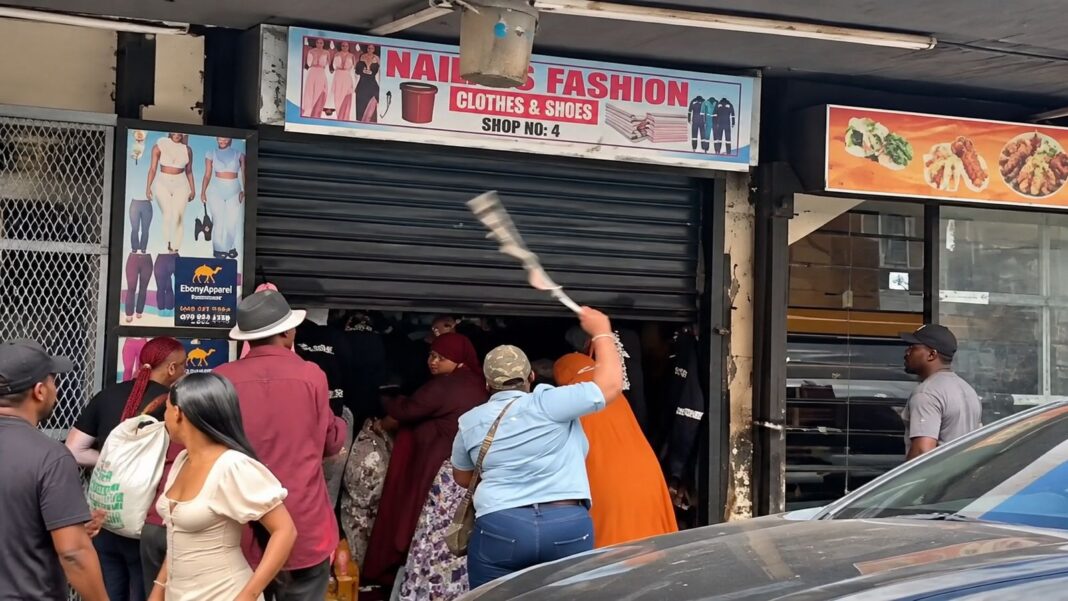
While some Somali-owned shops have been looted and traders have faced threats and ultimatums from vigilante groups, Abdi says ordinary residents have largely refused to take part.
Most Somali traders, he added, hold refugee or asylum documentation allowing them to work legally, and most businesses remain open.
Still facing deadly crime
Goodwill, however, has not eliminated the dangers Somali traders face.
Abdi says between 50 and 60 members of the Somali community are now killed each year, down from around 150 annually five to ten years ago. Most, he says, are killed inside their shops during robberies, with some incidents linked to commercial rivalry.
Attacks have been recorded across all nine provinces, with the Western Cape, Eastern Cape, KwaZulu-Natal and Gauteng among the worst affected.
Abdi says arrest and prosecution rates remain at around 50 percent.
The community has responded with safety awareness campaigns urging traders to prioritise their lives over small amounts of cash during robberies.
Abdi concluded with a message rooted in faith, coexistence and shared African history, recalling Somali support for South African freedom fighters during the apartheid era.
“Don’t judge a book by its cover. Let us not judge each other according to race. Let’s respect and value each other as human beings. The world is too big for all of us.
“We love our South African brothers… Africa is to be for all of us,” he said.


