

The apartheid regime’s imposition of racist residential segregation on the Cape Town suburb of Claremont remains one of the most bitter chapters in South Africa’s history of forced removals of people of colour.
What began as farmland in 1660 and later developed into a settler estate was torn apart in the 1960s when the apartheid government enforced the Group Areas Act. About 3,000 residents were forcibly removed from their homes. Their bitterness was compounded by the forced sale of their properties — homes located in what would later become one of the most expensive residential suburbs in post-apartheid South Africa.
Today, the Claremont Main Road Mosque stands as a living monument to that displaced community and as a symbol of memory, dignity, belonging and justice.

One of the oldest Muslim religious institutions in South Africa, the mosque is situated on Claremont’s busy Main Road, surrounded by retail businesses. It is the sixth-oldest masjid in the country and was the first purpose-built mosque in Cape Town.
The land, previously part of the Mariendahl Estate, was purchased in 1849 by Slamdien, a mason and coachman, from Johan Michiel Liebbrandt for twenty-four pounds and ten shillings sterling. Since opening its doors in 1854, the masjid has had ten imams.
The current imam, Dr Rashid Omar, recently reflected on its history.
“By the time the apartheid government came to power in 1948, the masjid had already existed for almost a century,” Dr Omar said.
“The passage of the notorious Group Areas Act in 1950 fundamentally transformed the community that surrounded it. Under this legislation, people classified as ‘coloured’, which included virtually the entire Muslim community living in Claremont and Newlands, were forcibly removed from their homes and displaced to the Cape Flats.
“One of the remarkable features of Muslim resistance to apartheid was that, although communities were forcibly removed from their homes, often under protest and with great anguish, they resisted attempts to close, abandon or sell their masajid,” he said.
“In this sense, the masajid became important symbols of memory, belonging and resistance. Today, in our democratic South Africa, the Claremont Main Road Masjid, together with a number of historic masajid in District Six and elsewhere, stands as a powerful monument to communities that refused to allow apartheid to erase their religious and cultural presence from the city.”
Elected board installed after 14-year court battle
During the forced removals, members of the Claremont Muslim community feared for the future of their place of worship. Senior community members approached the incumbent imam, Shaykh Abderouf, and offered support to secure the institution, but he declined, maintaining that he was the sole trustee.
He died in 1964, in the midst of the removals, intensifying concerns about the mosque’s ownership and governance. Members of the displaced community then took the matter to court.
The legal struggle lasted about 14 years before the court ruled in favour of the Claremont Muslim community and against the Abderouf family.
“This was a decisive turning point in the history of CMRM. For the first time, the masjid moved towards a system of constitutional and accountable community governance,” Dr Omar said.
“An elected Board of Governors was established, replacing the earlier model in which control of the masjid had effectively rested with an individual trustee and his family.”
Dr Omar, who became imam in 1986, noted that an important development during the struggle was the involvement of students and associates of the martyred anti-apartheid cleric Imam Abdullah Haron.
By the time the first elected board assumed leadership around 1979 to 1980, people influenced by Haron’s legacy had become an important force, helping propel the masjid to the forefront of Muslim opposition to apartheid.
“During the 1980s, the masjid became increasingly identified with the anti-apartheid struggle and its imam, Imam Gassan Solomon, was subjected to apartheid persecution and eventually forced into exile,” he said.
“When I assumed the imamate in 1986, I continued and developed this tradition of socially engaged Islam. Since then, CMRM has maintained a strong social justice mission. The masjid understands Islam not merely as a set of rituals, but as a faith that calls Muslims to struggle for justice, human dignity, peace and solidarity with those who are oppressed and marginalised.”
The masjid could no longer function only as a place of worship
The Group Areas Act had an unintended long-term consequence for the masjid’s identity, Dr Omar explained.
Because the original residential Muslim community had been forcibly dispersed, the mosque could no longer function simply as a conventional neighbourhood masjid. Instead, it developed into what he describes as a community of choice rather than merely a community of geography.
“This attracted people whom we sometimes describe as spiritual refugees — Muslims, particularly younger people, who were searching for a more socially conscious and justice-oriented expression of Islam and who did not necessarily find a spiritual home in the communities in which they lived. They were drawn to CMRM because of its commitment to an Islam that connected spirituality with the struggle for justice,” he said.
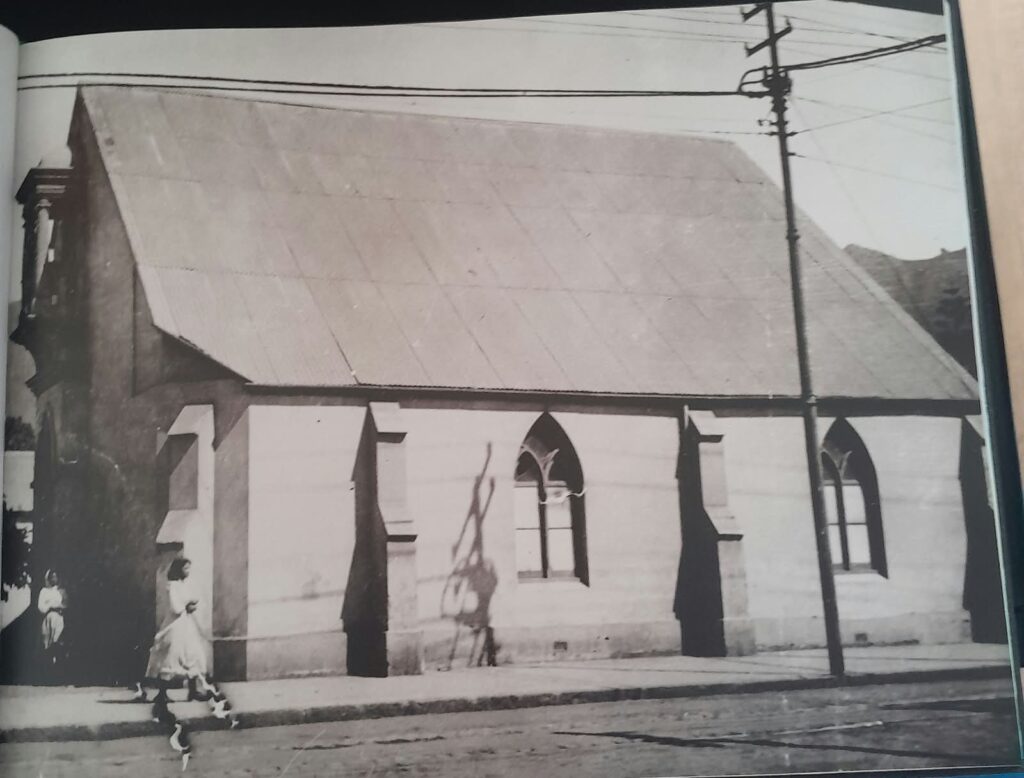
The contemporary congregation, he said, has a distinctive character. The building survived as a physical symbol of resistance, while its congregation was reconstituted in a new form.
“It consists, on the one hand, of descendants of the original Claremont Muslim community who continue to regard the masjid as an important part of their family history and heritage. On the other hand, it includes generations of these spiritual refugees who have consciously chosen CMRM as their religious home because of its progressive social justice ethos.
“There is a profound historical irony in the story of CMRM. The Group Areas Act attempted to destroy the community by forcibly separating people from their homes and their masjid, yet the community refused to surrender the masjid. In this way, CMRM bears witness both to the devastation caused by apartheid forced removals and to the resilience of a community that refused to disappear,” he said.
“Its contemporary social justice mission is therefore not something recently added to its identity. It emerged from this painful history of dispossession, resistance, democratic struggle and the determination to preserve the masjid as a living institution serving Islam, justice and the broader society.”
The mosque continues to face more contemporary challenges, including a lack of parking, noise pollution from air-conditioning systems in surrounding high-rise buildings and complaints from neighbours over the sounding of the athaan.
“The mosque and its costs are covered by its members. We have challenges from time to time that we have to deal with. One of those is the sounding of the athaan, so we don’t have it going off loud outside because of neighbours complaining,” Dr Omar said.