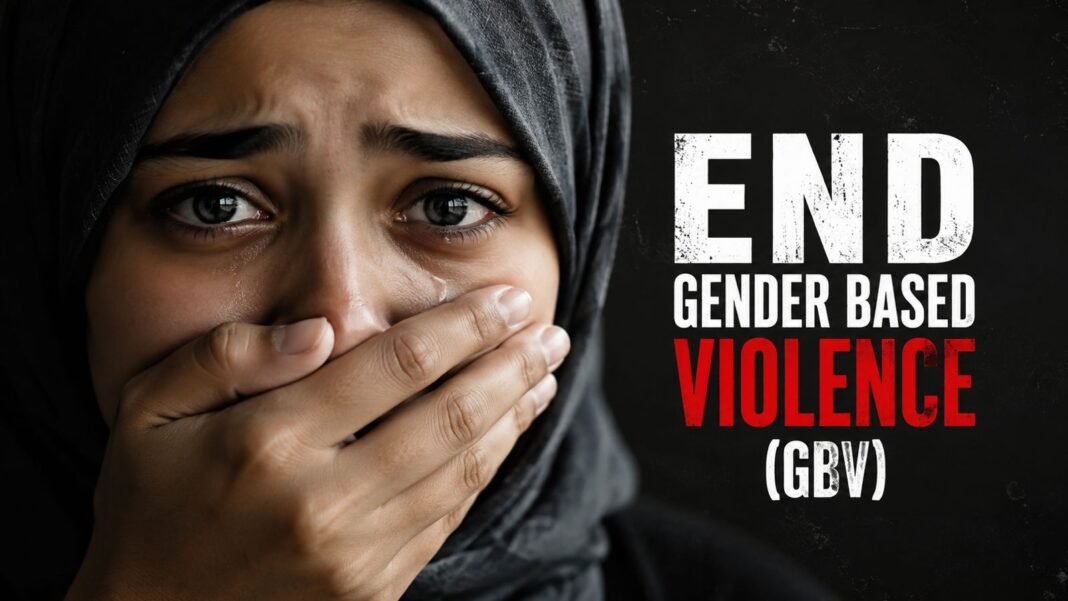

Gender-based violence exists within some Muslim households, but community leaders and support organisations say the true scale of the problem may never be known because many victims suffer in silence and never report the abuse.
For years, they suffered in silence.
One woman alleges she endured repeated physical assaults after confronting her husband about his extramarital affairs. Another says she remained in a marriage for decades despite alcohol abuse, gambling, infidelity, financial hardship and emotional torment, believing staying together was in the best interests of her children.
Neither woman reported the alleged abuse to police while it was taking place. Neither sought an Islamic annulment during the marriage.
Their experiences reflect what Sheikh Laja Yasini, Director of the Independent Islamic Court, describes as one of the greatest obstacles to understanding the true extent of gender-based violence (GBV) within Muslim families: many victims never come forward.
Speaking to One Nation Media (ONM), Sheikh Yasini acknowledged that domestic abuse exists within the community but said establishing the full scale of the problem remains difficult because many cases are never reported.
“Off my head, I would say it is a problem. However, it is difficult to have conclusive evidence as most cases are either unreported or there is nothing provided by the claimant to support the claim.”
He said some women submit J88 medical reports documenting injuries, while in other cases husbands have admitted before the Independent Islamic Court to assaulting their wives. However, he added that there are also matters in which allegations are denied or where insufficient evidence is presented to substantiate the claims.
“Our stats would likely show claims made and these can be up to 30–35% of the faskh applications.”
Sheikh Yasini stressed that these figures relate only to allegations contained in applications for a faskh (Islamic annulment) and should not be interpreted as confirmed findings of abuse.
The accounts of two anonymous women interviewed by One Nation Media illustrate the hidden nature of abuse that never reaches either the legal system or religious institutions.
One survivor alleged that she spent years living with physical and emotional abuse.
She said her late husband repeatedly engaged in extramarital affairs and would assault her whenever she confronted him after discovering messages on his phone.
On one occasion, she approached a woman whom she believed was involved with her husband.
“She admitted that she was having an affair with my husband and that he intended to marry her.”
The woman said she opposed the marriage and made it clear that she would not accept another wife living in the same home. According to her, her husband eventually ended the relationship and remained with the family until his death.
Despite years of alleged abuse, she never reported the assaults to police or approached a Jamiatul Ulama to seek a faskh.
“I was alone.”
She told One Nation Media that the absence of emotional and practical support prevented her from seeking help.
A second survivor described a marriage that began happily before deteriorating into years of emotional, verbal and financial abuse.
According to her, she and her husband enjoyed a stable family life for almost a decade before he developed problems with alcohol and gambling. She alleged that he regularly returned home intoxicated, verbally abused her and their children, disappeared for days at a time and neglected his financial responsibilities, forcing the family to rely on relatives for food and other essentials.
She also alleged that her husband secretly married another woman while still married to her. Although she separated from him for a period, she later reconciled after relatives encouraged her to give the marriage another chance.
Instead, she said, the abuse continued.
She further alleged that she was misled into signing documents that resulted in the sale of the family home without her knowledge, leaving her and her children displaced.
After years of hardship and raising six children, she eventually left the marriage permanently.
Reflecting on her experience, she said remaining in the relationship for the sake of her children was her greatest regret.
“My advice is do not stay in a toxic marriage thinking it’s for the kids’ sake. It’s not. It damaged my children more.”
She said she hoped that sharing her experience would encourage other women facing similar circumstances to seek help.
“I hope my story can inspire and change even if it’s one person’s life.”
One Nation Media also contacted the NISAA Institute for Women’s Development, which provides support to survivors of gender-based violence. The organisation said it is consulting with its board and would respond once those discussions have concluded.
The experiences shared by both women highlight a reality that often remains hidden behind closed doors. Their decision not to report the alleged abuse for years reflects the challenge identified by Sheikh Yasini: fear, isolation and a lack of support can leave victims suffering in silence, making the true scale of gender-based violence within Muslim homes difficult to determine.
While Islam unequivocally prohibits oppression and commands spouses to treat one another with mercy, dignity and justice, survivors and community leaders say breaking the silence is essential if victims are to receive the protection, support and justice they deserve.