
As footage of devastation emerges from Gaza, the danger extends beyond the destruction itself. It also lies in the world’s growing familiarity with Palestinian suffering, as the loss of entire families, the displacement of communities and the killing of civilians risk becoming just another part of the daily news cycle.
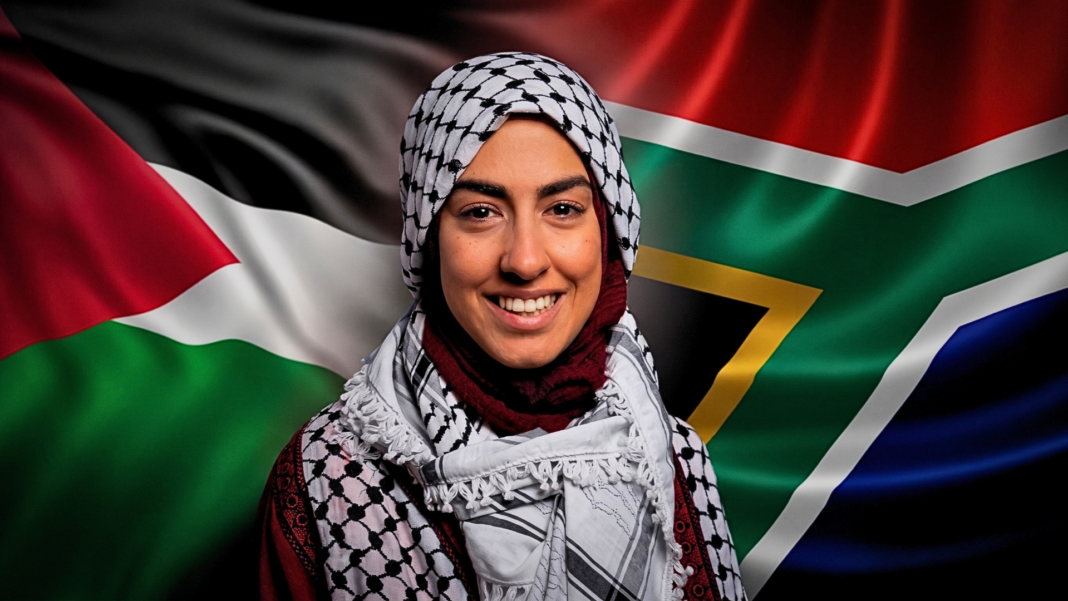
For Jerusalem-born Palestinian-Australian activist Aseel Tayah, the greatest concern is that Palestine is increasingly treated as a passing conversation, with people sharing posts, expressing outrage and moving on while Palestinians continue to endure occupation and genocide. Speaking to One Nation Media (ONM), Tayah reflected on her Palestinian identity, the responsibility of Muslims to stand against oppression, the resilience of women living through war and the urgent need to challenge the normalisation of the genocide in Gaza.
Named Australian Muslim of the Year in 2024, Tayah said her commitment to Palestine was never something she consciously chose. It was shaped by the people and community she grew up around in Jerusalem, where activism and resistance were part of everyday life.
“In Palestine, we don’t really choose to be who we are. We just were then and we kind of are built into this whole space, I guess, of activism and fight for Palestine and advocacy,” she said.
Growing up in Jerusalem meant understanding that even the most fundamental aspects of identity could become a struggle. Palestinians have to fight to speak their language, remain on their land and preserve their right to exist within a system that continually challenges their presence. After moving to Australia, Tayah encountered questions of identity and belonging in a different context, but her faith remained central to how she understood her responsibility towards oppressed people. She said the obligation to stand against injustice cannot be confined to one nationality or struggle.
“Allah is asking us to fight for our brothers, no matter if they are, you know, either Palestinians or Congolese or Sudanese or Yemenis. It doesn’t matter. Like, we are requested to do that,” she said.
For Tayah, being recognised for her work in support of Palestine carries particular significance. While she has received recognition for her artistic achievements, she considers the acknowledgement of her advocacy a reminder that Palestinians must know their people are not being abandoned or forgotten.
“I wanted Palestine to know that I am not silent, that I will keep talking, that I will not stop fighting until they are free,” she said.
The struggle does not end at displacement
Through her work with Bukjeh Global, which amplifies the experiences of refugees, migrants and women affected by conflict, Tayah has spent more than a decade engaging with displaced communities. Having interviewed hundreds of people, she said one message has remained consistent: people do not willingly abandon the places they call home. The memories of their neighbourhoods, their families, their languages and the ordinary routines of life remain with them long after they have been forced to leave.
“The thing that was most carried by people is their memories, is their hope, is their, what their homeland means to them,” she said.
She recalled how people repeatedly spoke about the communities they had left behind, including the simple familiarity of neighbours calling one another over for tea. “They love their homelands, they love the neighbourhoods,” she said, challenging the assumption that displaced people simply seek opportunities elsewhere. “We actually always wanted to stay in our homelands if only they left us alone.”
Her observations speak to a wider reality of displacement: people are not simply leaving behind buildings and possessions but entire lives, relationships and identities. Crossing a border does not erase that loss, nor does it guarantee that those seeking safety will be welcomed without prejudice.
“Welcome feels like a hug,” she said. “It’s more that hug of, you’re safe, you don’t need to worry, like, we are here for you, tell us what we can do.”
Women sustaining communities through war
Another central part of Tayah’s work is documenting the experiences of women living under occupation and through conflict. She believes the strength of women lies not only in individual resilience but also in their ability to build collective support systems that sustain families and communities through devastating circumstances.
Reflecting on Palestinian history, she recalled how women gathered to sing, mourn and support one another while their husbands went to fight against British colonial forces, knowing that some would never return. These gatherings were not merely expressions of grief. They were part of how women maintained their strength and ensured that their communities continued to endure.
Her engagement with First Nations and Indigenous women internationally has further highlighted the shared experiences of communities confronting colonial systems and fighting to preserve their cultures. She said these encounters reinforced the importance of collective resistance, particularly when considering the women in Gaza who continue to hold their families together amid unimaginable loss.
Tayah also briefly discussed how Motherhood in the Colony, a film she co-directed, and her work through theatre and creative projects seek to document these experiences, including those of women whose lives are shaped by occupation and displacement. However, she believes far more needs to be done to ensure that the realities on the ground are not overlooked.
The danger of normalising genocide
For Tayah, the international community’s response to Palestine cannot be measured solely by the number of statements issued or social media posts shared. She is concerned that repeated exposure to images of destruction has created a dangerous familiarity with suffering that should never be considered normal. She believes the world has yet to hear many of the stories of Palestinians in Gaza, the occupied West Bank and Jerusalem, particularly those whose experiences are overshadowed by the daily reporting of casualty figures and destruction.
“We have to move away from the normalisation of the genocide that is happening. We cannot continue to just scroll past it as if it’s normalised,” she said.
Her concern is also reflected in her upcoming South African performances, including One Last Lullaby, which explores the human experiences of those living through war and siege. Tayah said hundreds of people in Gaza have experienced the unimaginable reality of losing every other member of their families. She wants audiences to understand these experiences beyond the statistics, recognising the individual lives and families behind the figures.
She also stressed the importance of remembering Palestinian journalists who have documented the genocide at enormous personal cost, naming Roshdi Sarraj and Saleh al-Jafarawi among those whose stories must not be forgotten. Through her work, she hopes to ensure that Palestinians are not reduced to another number in a casualty count. Their experiences, identities and humanity must remain at the centre of how the world understands what is happening.
Solidarity must demand action
Tayah’s visit to South Africa carries particular significance given the country’s own history of colonialism, apartheid and resistance. She hopes local audiences will connect with the experiences she shares while recognising that solidarity cannot end with an emotional response. Asked what she hopes people will take away from her work, she said she wants audiences to leave questioning their own contribution to the struggle.
“I just want them to leave knowing, or thinking, what can I do next?” she said.
She wants people to be moved by what they witness but, more importantly, to recognise that there is still much more they can do. For Tayah, the struggle for Palestine requires sustained commitment, a refusal to become desensitised and the courage to continue speaking when international attention shifts elsewhere.
Her message is that Palestinians should never have to compete for the world’s attention to have their suffering acknowledged. Nor should the ongoing destruction of their lives and communities become something the international community learns to accept.