
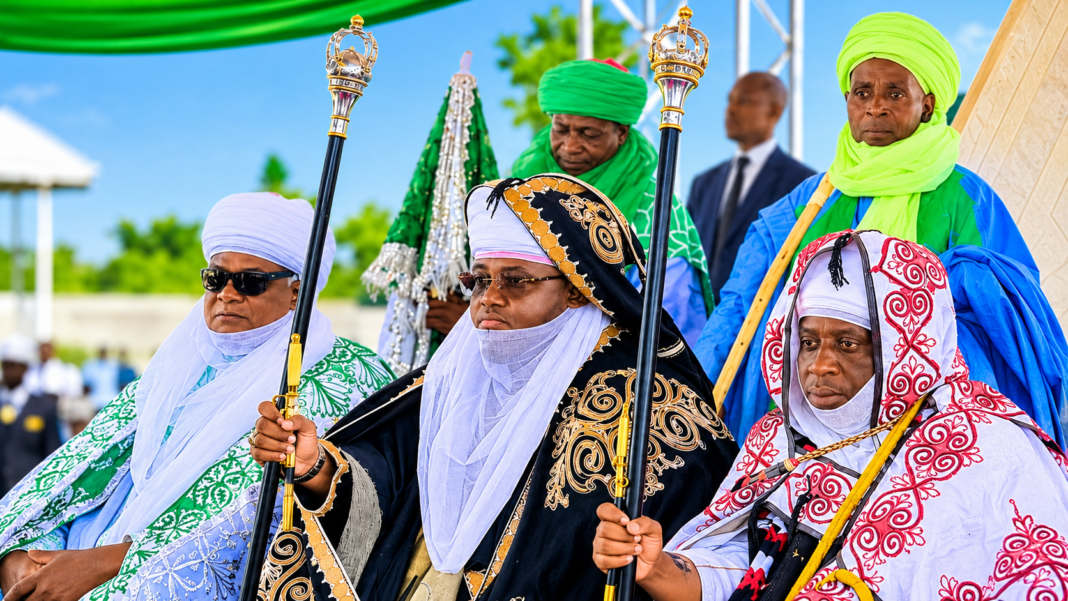

In Zamfara State, northwestern Nigeria, the search for peace often extends beyond police stations, government offices and security checkpoints. In communities where insecurity has disrupted farming, trade and family life, traditional rulers and Muslim religious leaders remain important sources of counsel, mediation and assistance.
For a farmer afraid to return to his fields, a family caught in an inheritance dispute or neighbours struggling to reconcile, traditional institutions can provide a familiar starting point for dialogue.
The Zamfara Emirate Council and the wider network of traditional Muslim institutions illustrate how centuries-old structures continue to influence community relations, conflict resolution and social welfare, even as elected governments and formal institutions exercise constitutional authority.
A palace connected to the people
Zamfara’s traditional leadership is organised through emirates, district heads, village leaders and religious authorities whose responsibilities connect royal palaces with communities across the state.
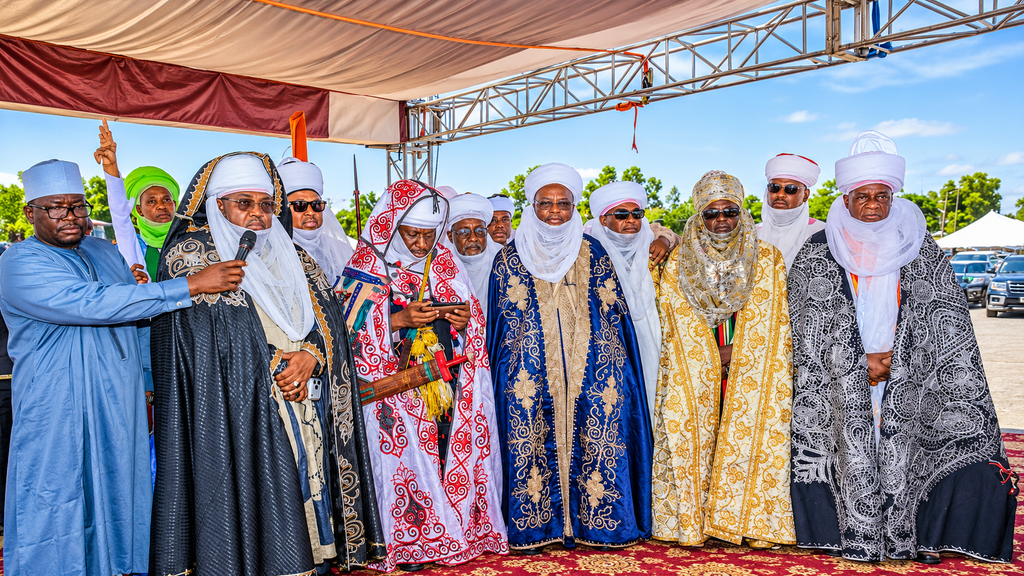
The institution received renewed official recognition on 31 October 2026, when Governor Dauda Lawal presented staffs of office to 19 emirs, comprising 11 first-class and eight second-class rulers, in Gusau, the state capital. The ceremony formed part of activities marking the state’s 30th anniversary.
Among the recognised institutions is the Gusau Emirate Council, whose emir, Abdulkadir Ibrahim Bello II, called for peace, stability, religious devotion and peaceful coexistence following his formal recognition.
Beyond its ceremonial significance, such recognition reinforces traditional authority in a society where Islamic values, family relationships and respect for established leadership remain influential.
For many rural residents, district and village heads provide accessible channels for presenting grievances, seeking guidance and resolving disputes. This is particularly important where travelling to government offices or navigating formal legal procedures can be difficult.
Mediation amid insecurity
Traditional leadership has particular relevance against the backdrop of Zamfara’s prolonged security crisis.
Armed groups have attacked villages, abducted residents, disrupted farming and trade, and displaced families. Restoring confidence in affected communities requires more than military operations; it also demands dialogue, trust-building and local participation.
Traditional rulers can contribute through community engagement and communication to address grievances. Their knowledge of local histories, family relationships and community tensions may help identify problems that external officials struggle to understand.
Research by the Centre for Democracy and Development on conflict dynamics in northwestern Nigeria documented the involvement of traditional leaders in peacebuilding initiatives in Zamfara. It highlighted the Emir of Gummi’s participation in a local effort to reduce violence and the Anka Emirate Council’s exploration of negotiations.
However, traditional institutions are not without limitations. Their involvement does not always guarantee impartiality or successful outcomes. They cannot independently dismantle armed networks, guarantee public safety or replace professional security agencies.
Any peace initiative must also protect victims’ rights and ensure that negotiations do not undermine accountability for killings, abductions and displacement.
Islamic values and community welfare
Zamfara’s traditional institutions operate within a strong Islamic social and moral framework. Islamic teachings place considerable emphasis on justice, compassion, reconciliation, the protection of life and property, and responsibility towards vulnerable members of society.
These principles give traditional leadership responsibilities beyond preserving cultural heritage. They provide a moral foundation for promoting charitable assistance, supporting displaced households, encouraging children’s education and addressing social disputes.
Religious authority also plays a role in public policy through the Zamfara State Council of Ulama, a separate institution that provides Islamic guidance and advice on religious and social matters.
In July 2024, Governor Lawal inaugurated its consultative council, describing its role in advising the government. Its statutory responsibilities include Islamic jurisprudential guidance and advice on proposed legislation.
Together, traditional rulers and Islamic scholars can communicate public-interest messages in language that communities understand and trust. Their influence can support public health initiatives, education, family reconciliation and cooperation with government programmes.
Nevertheless, religious appeals must be matched by practical action, transparent management and functioning public services.
The human meaning of traditional authority
The importance of an emirate council is often reflected in everyday problems that rarely attract public attention.
A family disputing inherited property, a farmer uncertain about returning to an insecure community or a household rebuilding after displacement may need an institution capable of listening, facilitating dialogue and connecting them with assistance.
Traditional leaders can help because their authority is embedded in local relationships. However, their relevance depends on fairness, accessibility and accountability.
Women, young people, minority communities and individuals without influential family connections must also have opportunities to seek justice and raise concerns. Respect for tradition should strengthen access to justice rather than protect misconduct or harmful practices.
Tradition and modern governance
Nigeria’s traditional rulers occupy a distinctive position, retaining considerable cultural and social influence while operating alongside elected governments, local councils, courts and security agencies.
For Zamfara, the challenge is to translate that influence into measurable improvements in community welfare. Cooperation between emirate councils and public institutions can strengthen communication, identify local needs and encourage participation in development initiatives.
The recognition of 19 emirs offers an opportunity to renew these expectations. Their real test begins beyond coronation ceremonies, in confronting insecurity, poverty, family disputes and limited access to essential services.
Zamfara’s traditional Muslim institutions cannot resolve every challenge. However, when guided by Islamic principles of justice, compassion and accountability, they can help bridge the distance between government and ordinary residents, making peace, reconciliation and community welfare practical responsibilities rather than promises spoken from a palace.


