
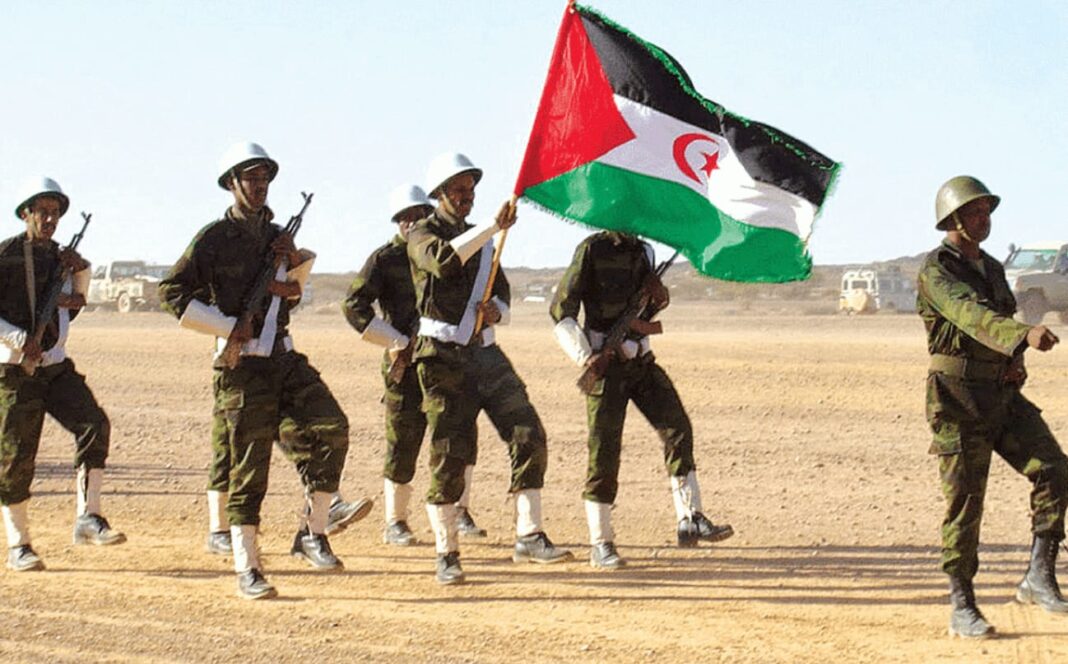

MINURSO is gone after 35 years. Morocco and Algeria are circling each other — and Libya may be the next chessboard.
For 35 years, a thin blue line of UN observers stood between Morocco and the Polisario Front in Western Sahara.
On 31 October, that line disappeared.
On 30 October, the UN Security Council failed to renew the mandate of MINURSO, the United Nations Mission for the Referendum in Western Sahara. Russia vetoed the US-backed draft resolution. Moscow’s alternative text failed to secure the nine votes needed. The mandate expired the next day.
It was not just the end of a mission. It was the end of the only independent referee in a conflict that has lasted nearly half a century.
Less than 24 hours later, the guns spoke
Less than a day after MINURSO’s mandate expired, the Polisario Front’s military leadership reportedly announced that it had carried out strikes against Moroccan military bases in the Oum Dreiga sector, at Aglab Al-Kamouna, claiming casualties among Moroccan troops. Those claims have not been independently verified.
Rabat insists it remains committed to the ceasefire, despite the breakdown of the 1991 agreement in 2020. In a widely publicised interview on 31 October, Foreign Minister Nasser Bourita argued that the expiry of MINURSO’s mandate did not mean the end of Morocco’s commitment to the ceasefire. That commitment, he said, was separate from the presence of UN observers.
Bourita reiterated Morocco’s position: the autonomy initiative under Moroccan sovereignty should be the basis for any future negotiations.
But that raises a practical and dangerous question: who now monitors incidents, verifies allegations and prevents miscalculations?
Humanitarian organisations, including Oxfam, have warned about the loss of MINURSO’s monitoring and de-escalation functions. Without independent verification, accusations and military displays could increase — and a misunderstanding could trigger escalation.
Rabat vs Algiers: the real rivalry
Behind the Polisario Front stands Algeria. Behind Morocco’s autonomy plan stands a growing list of international backers, including the United States.
Algiers continues to defend the Sahrawi people’s right to self-determination and rejects any solution that prejudges the outcome. Algeria is also the Polisario Front’s major political backer.
According to Intissar Fakir, a senior fellow at the Middle East Institute, Morocco enjoys a military advantage over the Polisario Front — but an escalation could prompt direct Algerian intervention.
That would fundamentally change the conflict. It would no longer be a state confronting a Sahrawi independence movement. It would become an interstate crisis between two military powers in the Maghreb.
Direct Algerian intervention is far from a foregone conclusion. Algiers officially maintains a predominantly diplomatic and legal approach, even though its strategic interests are directly at stake.
But the risk is now higher because there is no longer an independent UN monitoring mission on the ground to verify what actually happened.
Libya: the new arena
Into this tense standoff steps Libya — still divided between authorities in Tripoli and the eastern-based forces led by Khalifa Haftar, and now drawing closer to Morocco.
In October, Khaled Haftar, chief of staff of the forces based in eastern Libya, visited Morocco to discuss military cooperation. Reports also indicated that a Moroccan intelligence delegation travelled to eastern Libya to meet officials from the Haftar camp.
For many observers, these contacts do not amount to a mutual defence agreement, nor do they show any Libyan commitment to becoming involved in Western Sahara.
But they point to growing security ties that Algeria is likely to monitor closely. Algeria shares a long border with Libya and considers stability in its eastern neighbourhood a major national security concern.
Any strengthening of cooperation between Rabat and Haftar’s camp could add another layer of mistrust to the already strained Algeria-Morocco relationship.
Libya could thus become less a direct belligerent than a new arena for diplomatic, military and intelligence competition between the two Maghreb powers.
What happens next?
On 10 November, a fresh diplomatic confrontation is expected at the UN General Assembly, where Moscow and Washington are expected to defend their opposing positions on Western Sahara.
Beyond this latest episode of great-power rivalry, the lack of consensus among major powers risks further complicating efforts to find a political solution.
The stakes now extend beyond the future of the Sahrawi territory itself. They concern the stability of the wider Maghreb — and whether regional and international actors can prevent an unresolved conflict from becoming the starting point for a much broader confrontation.
With MINURSO gone, the Maghreb has lost its early-warning system.


