
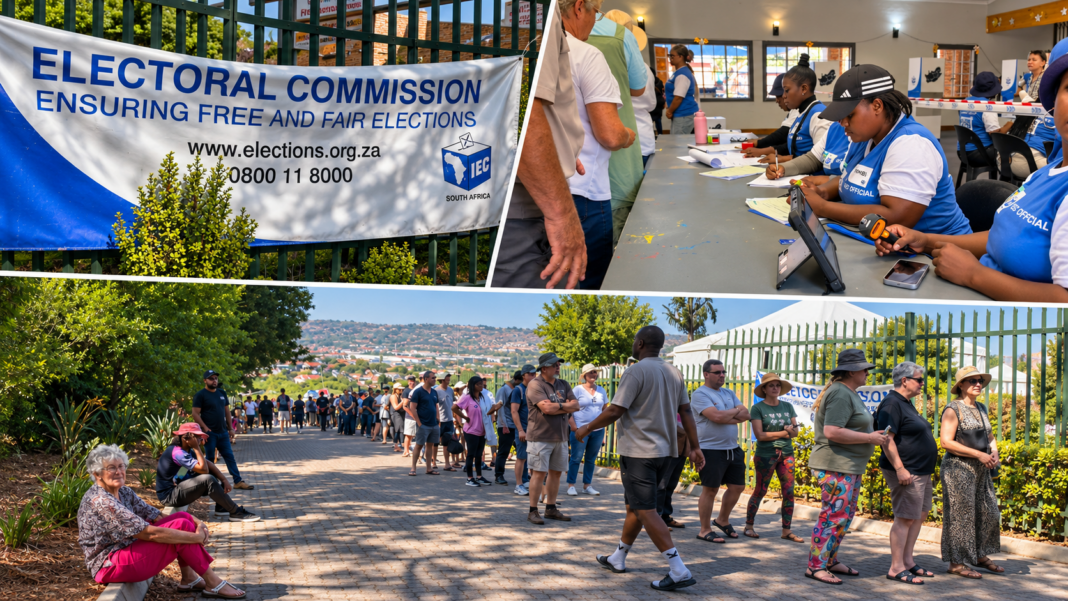

For some South Africans, growing frustration with the country’s political landscape extends beyond individual political parties to the political system itself, with years of unmet promises and persistent socio-economic challenges raising questions about whether electoral participation can bring meaningful change.
As voters headed to the polls on Wednesday, One Nation Media (ONM) spoke to several voters who preferred to remain anonymous about their faith in the electoral process and whether they believed the country’s political system could still deliver a better future.
Their responses reflected a tension between the desire for change and declining confidence in the structures expected to bring it about. While some voters maintained that electing different political leaders could improve governance and service delivery, others questioned whether political parties were genuinely serving the interests of ordinary citizens.
One voter expressed a broader rejection of the political party system, saying they had yet to see meaningful action addressing the needs of the public.
“I don’t believe in the system of political parties. Why? Because I haven’t seen anything that is important that they’re doing, only it’s about themselves,” the voter said.
Despite this disillusionment, the voter intended to cast their ballot, citing the need for change and better educational opportunities for their children, including access to university.
For another voter, repeated disappointments had made it increasingly difficult to maintain faith in the country’s political direction.
“Time and time again we’ve seen our fellow citizens being disappointed countlessly, and you know it’s really hard to have that hope still instilled within us,” the voter said.
However, the demand for change was rooted in more than political dissatisfaction. Economic pressures, unemployment and the rising cost of living featured prominently in the interviews, with one voter pointing to financial struggles, rising petrol prices and inadequate income as reasons for wanting a different political direction.
The consequences of governance failures were perhaps most evident in the account of a voter living in an informal settlement, where access to basic services remains a daily concern.
“There’s no change, there’s no water, there’s no electricity,” the voter said, also highlighting the lack of adequate sanitation and toilet facilities.
The contrast between those who retain faith in the possibility of political change and those who have grown disillusioned raises a broader question about the state of public confidence in the country’s political system.
For voters facing unemployment, financial hardship and inadequate basic services, political participation carries expectations that extend beyond election day. These include holding those seeking public office accountable and ensuring that the system through which they are elected translates political promises into tangible improvements in people’s lives.
Voter turnout and the counting process
Preliminary figures indicated that approximately 12 million ballots had been cast across all nine provinces, led by Gauteng with three million, KwaZulu-Natal with 2.5 million, the Western Cape with 1.5 million, the Eastern Cape with 1.4 million, Limpopo with 1.1 million, Mpumalanga with 854,000, North West with 702,000, Free State with 588,000 and the Northern Cape with 299,000.
Although polling stations officially closed at 9pm on Wednesday, IEC Chief Electoral Officer Sy Mamabolo confirmed that voters who had joined queues before the deadline would still be permitted to cast their ballots. Counting was set to begin at individual voting stations once voting had concluded, with generators and alternative lighting arranged to prevent power disruptions. The commission expects to finalise the results and municipal seat allocations by the weekend.


