
Uganda begins withdrawing troops after nearly 20 years, while reports of Ethiopian and American departures and the closure of a UN mission raise questions about the Western-backed government’s ability to survive without international support.
Somalia is witnessing significant changes to its political and military landscape as Uganda begins withdrawing its troops after nearly two decades, reports emerge of Ethiopian and American military departures, and a longstanding United Nations political mission concludes its operations.
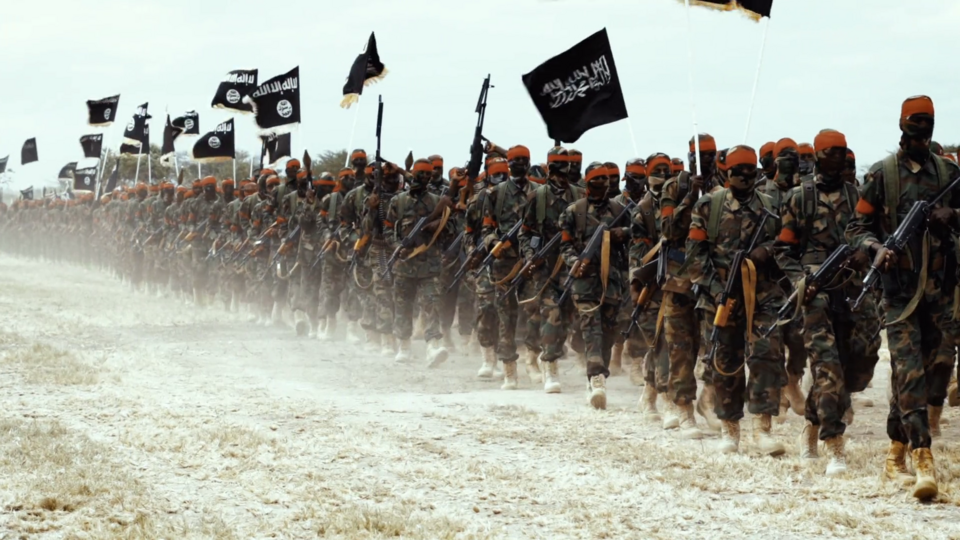
The developments raise serious questions about whether the Western-backed government in Mogadishu can maintain control over its territory without the foreign military assistance on which it has long depended, particularly as Al-Shabaab continues to inflict heavy losses on government forces.
Some observers suggest that a substantial foreign withdrawal could accelerate the government’s collapse, potentially enabling Al-Shabaab to expand its territorial control and threaten Mogadishu.
Uganda begins withdrawal after nearly 20 years
Uganda’s Chief of Defence Forces, General Muhoozi Kainerugaba, confirmed on 29 October that his country’s troops had begun withdrawing from Somalia and transferring security responsibilities to Somali forces.
Uganda was the first African country to deploy troops to Somalia under the African Union mission in March 2007 and has since maintained one of the largest military contingents.
Uganda’s nearly two decades of military involvement have come at a considerable cost, with its forces suffering repeated major losses in attacks by Al-Shabaab.
The deployment has also been marred by serious human rights abuses, including the killing of civilians and the sexual exploitation and abuse of Somali women and girls by Ugandan and Burundian troops serving under the African Union mission. These include allegations of rape and the exploitation of vulnerable women seeking food and humanitarian assistance.
The withdrawal has begun in phases, with initial groups of Ugandan soldiers reportedly departing Mogadishu International Airport.
Uganda has previously indicated that it intends to complete its withdrawal by August 2027, although reports suggest substantial troop reductions could occur much sooner.
Somali President Hassan Sheikh Mohamud reportedly travelled to Uganda to persuade President Yoweri Museveni to postpone the withdrawal amid concerns that Somali forces were not adequately prepared to assume responsibility for military positions currently held by Ugandan troops.
However, the Ugandan government reportedly declined to delay the planned departures.
Reports of Ethiopian and American military departures
Uganda’s decision comes amid broader indications of a reduction in the foreign military presence in Somalia.
Reports suggest that thousands of Ethiopian soldiers may also be preparing to withdraw, although no official decision confirming the scale or timing of their departure has been established.
Meanwhile, American forces have reportedly vacated Baledogle Airbase, a strategically important installation in southern Somalia used to support military operations against Al-Shabaab.
According to reports published in late October, US personnel departed the base, with military equipment reportedly transferred to Berbera in Somaliland.
Reports also claimed that American military vehicles were burned before the troops departed, suggesting an accelerated withdrawal.
The extent and permanence of the American withdrawal remain unclear.
The developments follow years of reductions in the African Union military presence, from approximately 21,000 troops under earlier arrangements to around 11,000 under the current mission structure.
Further reductions remain possible as the African Union Support and Stabilisation Mission in Somalia (AUSSOM) faces financial and operational challenges.
Major Al-Shabaab attack exposes government vulnerabilities
The withdrawals coincide with a major military setback for Somali government forces following an Al-Shabaab attack near Jameeca in the Bay region on 26 October.
The attack targeted a substantial government formation reportedly including specialised units trained and equipped with assistance from Turkey and the United States.
Government forces suffered significant casualties, with some reports placing the number of killed and wounded at more than 800, although this figure remains independently unverified.
The engagement raises serious questions about the military capabilities of the Mogadishu administration, particularly given that some of its most extensively foreign-trained units suffered substantial losses despite continuing international assistance.
Read more about the Jameeca battle.
UN mission concludes as future of military support remains uncertain
The military developments coincide with the closure of the United Nations Transitional Assistance Mission in Somalia (UNTMIS) on 31 October, ending a succession of UN political missions dating back to 1995.
The mission’s responsibilities have been transferred to Somali institutions, UN agencies and other existing mechanisms.
However, the closure of UNTMIS does not mark the end of international involvement in Somalia. The African Union Support and Stabilisation Mission in Somalia (AUSSOM), which continues to provide military support to the Mogadishu administration, remains mandated until December 2026.
Nevertheless, its future is increasingly uncertain after the United States indicated that it would oppose renewing AUSSOM’s mandate under arrangements that include continued UN logistical support.
AUSSOM relies heavily on the United Nations Support Office in Somalia (UNSOS), which provides essential supplies and services, including food, water, fuel, medical care and troop transportation.
Washington initially sought to end this support after December 2026 but subsequently proposed a 12-month drawdown of UNSOS beginning in January 2027, followed by its closure.
The proposed withdrawal of UN logistical assistance could leave African Union troops unable to sustain their operations unless alternative arrangements are established, potentially threatening the viability of the military mission itself.
The conclusion of the UN political mission, combined with uncertainty over the future of African Union operations and the logistical infrastructure sustaining them, raises serious questions about the durability of Somalia’s foreign-backed security structure.
Somalia’s political weaknesses and Al-Shabaab’s entrenched insurgency
Beyond the immediate military implications, the withdrawals highlight the challenges facing Somalia’s Western-backed administration and the continuing threat posed by Al-Shabaab.
Successive Somali governments have depended heavily on international military assistance, foreign funding and external political support. Meanwhile, Al-Shabaab has maintained armed networks, territorial influence and administrative structures that have allowed it to withstand nearly two decades of military campaigns.
The armed group, which seeks to establish Islamic governance in Somalia, emerged from the country’s domestic Islamic movements and continues to control extensive rural territories, particularly in southern and central Somalia.
Al-Shabaab has established administrative, judicial and taxation structures in territories under its control, although its methods of governance remain subjects of scrutiny and criticism.
Researchers have documented how Al-Shabaab’s courts attract some people seeking the resolution of land disputes, commercial disagreements and other civil matters, including individuals travelling from government-held territories to obtain judgments.
Some studies suggest that these courts are perceived by certain communities as faster and more predictable than government institutions, which face longstanding complaints of corruption and clan favouritism.
The Somali government continues to face widespread allegations of corruption, political favouritism and an inability to provide effective justice, security and basic services across much of the country.
These weaknesses have created opportunities for Al-Shabaab to capitalise on public grievances, expand its influence and consolidate control over communities in areas where government authority remains limited.
The group’s influence is also reflected in its dealings with traditional authorities.
In early October, Al-Shabaab announced that it had reached an agreement with elders from the Hawadle clan in the Hiiraan region, reportedly ending years of hostilities.
The agreement is significant given the clan’s previous involvement in military campaigns against Al-Shabaab.
It illustrates how the group combines military pressure with local political arrangements to maintain and expand its influence.
Could Somalia follow Afghanistan?
The developments have invited comparisons with Afghanistan, where two decades of American military intervention, extensive financial assistance and years of training failed to produce a government capable of surviving the withdrawal of foreign forces.
In August 2021, Taliban forces rapidly captured provincial capitals as Afghan government troops surrendered or abandoned their positions, culminating in the fall of Kabul on 15 August, before the final American troops had departed.
Somalia faces some of the same underlying vulnerabilities: a government heavily dependent on foreign military support, security forces struggling to maintain territorial control, and an entrenched armed movement capable of exploiting weaknesses in state institutions.
However, the circumstances are not identical. Al-Shabaab’s insurgency, Somalia’s clan dynamics and the continued presence of international and regional actors make any direct comparison with Afghanistan inherently uncertain.
Nevertheless, a significant reduction in foreign military assistance could create further security vacuums, particularly if Somali forces remain unable to assume responsibility for areas currently protected by international troops.
Such a development could enable Al-Shabaab to expand its operations and territorial control, potentially reshaping Somalia’s political, security and governance landscape.
After nearly 20 years of international military intervention intended to defeat Al-Shabaab, the group remains deeply entrenched, while the Western-backed government continues to struggle with political divisions, corruption and military dependence.
The central question is whether Somalia can develop the political stability, institutional capacity and security infrastructure needed to survive a substantial reduction in foreign support without plunging into another period of widespread conflict.