

FINAL ESSAY: Accommodation is not ownership
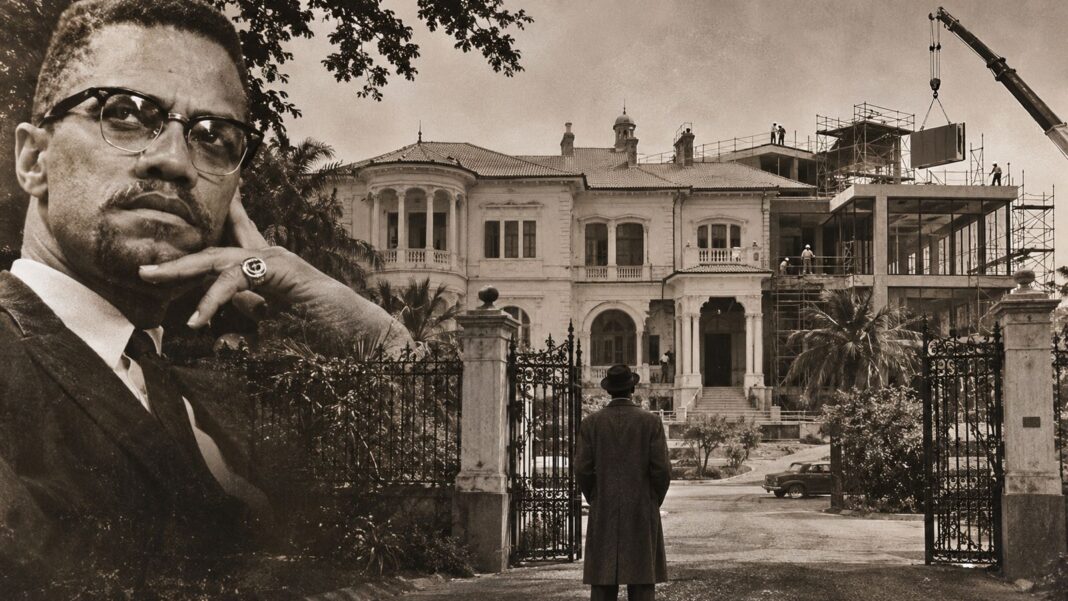
As South Africa reflects on last Wednesday’s municipal elections, consider an argument Malcolm X delivered in Detroit on 10 November 1963. Later known as El-Hajj Malik El-Shabazz, he contrasted the enslaved field worker with the servant inside the master’s house. His point was about identification: proximity to power can persuade someone to confuse another’s interests with their own. That distinction invites uncomfortable questions about our relationship with dominant political systems, writes Moulana Uwais Dockrat.
In Malcolm’s account, the field worker experienced the plantation’s violence without mistaking the master’s prosperity for his liberation. The house worker received comparatively better food, clothing and shelter. The danger was not merely comfort; it was the change of pronoun that followed. When the master spoke about his house, the servant began speaking as though it were “our” house. When danger threatened the master’s property, the servant rushed to defend it. His material position improved, but the structure of ownership remained unchanged.
My extension concerns the psychology of allegiance, not an equivalence between those histories.
Imagine, then, that the master does not abandon the house. He enlarges it. More rooms are built. The residents gain desks, degrees, professional titles, property and places in administration. Their lives may genuinely improve. But the foundational questions remain: who owns the land, who designed the building, who makes its rules, and who possesses the authority to redesign it? A bigger room is a benefit. It is not necessarily a transfer of the title deed.
This is the distinction Muslims must learn when discussing secularism. A constitutional order may protect our mosques, recognise our organisations and offer avenues for representation and service. Those protections matter and should not be casually dismissed. Nevertheless, being accommodated by a system does not establish that its philosophical foundations are ours. Holding a position within it does not make its underlying account of ultimate authority Islamic. A right to participate is not the same thing as the right to determine first principles.
The danger becomes acute when our identity is quietly rewritten. We begin by saying that we live in South Africa, a perfectly ordinary description of location. Gradually, that may become the claim that the nation-state is the highest community to which we belong, that its interests supply our moral compass and that Islam must be reinterpreted whenever it conflicts with the approved civic consensus. A map, a flag and a national story may appear innocent and reasonable. But they have become instruments for teaching people where their ultimate loyalty should rest.
This is also how systems come to defend themselves without needing to answer every challenge. Once people have identified completely with the house, criticism of its foundations sounds like an attack on their personal dignity. The person who asks a serious question is branded ungrateful, backward or disruptive. Debate gives way to emotional loyalty. The system has acquired defenders who protect its assumptions more fiercely than its architects.
There is a vital difference between living under a system and believing in it, between using its tools and inheriting its worldview, and between working with institutions and becoming their ideological guardians. Islam has foundations of its own: revelation, the sovereignty of Allah, moral accountability and belonging to an Ummah that transcends borders. These commitments require wisdom in practical affairs, not an escape from society.
So, as we reflect on the personalities and political debates that dominated last Wednesday’s municipal elections, let us ask the question Malcolm’s illustration leaves ringing in our ears. When the house grows bigger and offers us another room, have we examined its foundations, or have we simply become more comfortable defending them?


