
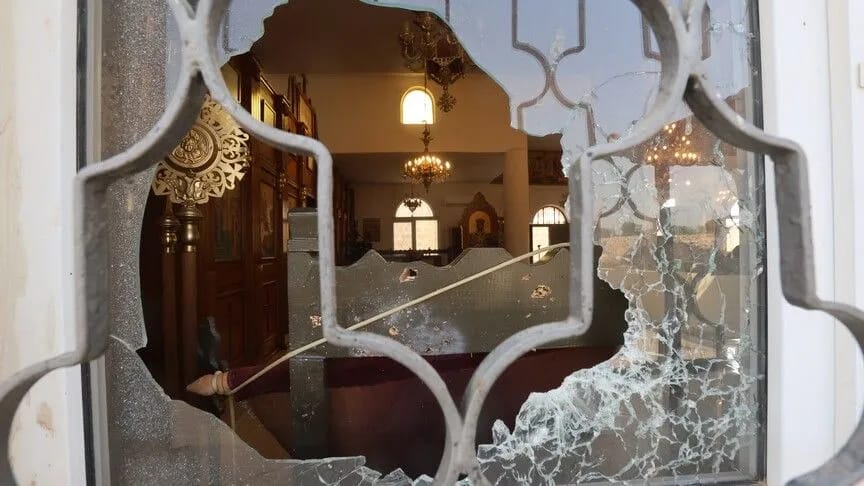

On 23 October 2026, Jordan’s Prime Minister’s Office described the Christian victims of the Karak church attack as “martyrs” and prayed that Allah grant them His mercy and pleasure. That was not merely a message of national mourning. It was religious language issued in the name of the state.
But what followed was more disturbing than the original statement.
From religious statements to religious intimidation
On 24 October, Jordanian media reported that Minister of Awqaf Mohammad Al-Khalaileh described those who opposed praying for mercy for deceased Christians as extremists.
Two days later, Interior Minister Mazen Al-Faraya identified opposition to such prayers among the ideas he considered extremist. He promised harsh measures against extremism and warned that the state would not tolerate teachers or mosque imams who spread what it defines as hatred.
Meanwhile, the Public Security Directorate announced that its Cybercrime Unit was monitoring online comments about the incident. Individuals had been identified for arrest, and the authorities threatened the strictest judicial measures against posts deemed harmful to civil peace.
Officials frame these measures as protecting civil peace and opposing hatred. But there is an obvious distinction between inciting hostility against individuals and stating a religious ruling about the Hereafter. Collapsing the two threatens the very freedom of belief that coexistence should protect.
This is where government religious messaging becomes coercion.
When a religious minister brands disagreement as “extremism”, an interior minister discusses imams in the context of punitive measures and police threaten arrests over online speech, what message is being sent to scholars who hold a different theological position?
Conform, remain silent or risk being placed under suspicion.
The government is not the authority over ʿaqīdah
The question of seeking forgiveness for deceased non-Muslims has a recognised place in Islamic jurisprudence, including discussions arising from Qur’an 9:113. It is not a doctrine invented by some modern party, nor does adherence to an established religious ruling automatically amount to hatred.
Nor can the government resolve this by declaring these individuals “martyrs”. In Islamic theology, shahādah has religious significance. An official declaration that combines the title with supplication for divine mercy and pleasure raises questions that Muslim scholars are entitled to discuss openly.
The domestication of Islam
Instead, we are witnessing something more familiar: the domestication of religion by the state.
A government first presents its preferred religious interpretation as enlightened moderation. It then labels inconvenient orthodox positions extremist. Finally, the threat of legal, professional or reputational consequences pressures scholars and preachers to repeat the approved message.
This is not neutrality. It is political authority claiming the power to determine which expressions of Islam may be taught without fear.
There is also a theological problem with the perennialist impulse behind erasing religious boundaries in the name of unity. Respectful coexistence never required Islam to abandon its distinctive claims about revelation, belief and salvation. Unity cannot become a licence for politicians to manufacture a state-friendly creed.
The scholars of Jordan must be free to explain Islamic teachings without treating a government press statement as though it were revelation. Their responsibility is to religious truth, not to political convenience.
If the state can decide what Muslims must say about martyrdom and divine forgiveness today, what part of Islamic belief will it demand they revise tomorrow?
Islam is not the property of the government. Its theology is not written by ministers, and no scholar should have to choose between principled religious conviction and fear of state punishment.


