

As rising food prices push struggling South Africans deeper into hardship, Muslim charities and mosques are feeding thousands of vulnerable people despite mounting financial pressures. Shonie Lesago reports on the organisations providing a lifeline to the hungry and the Islamic faith driving their commitment to serve those in need.
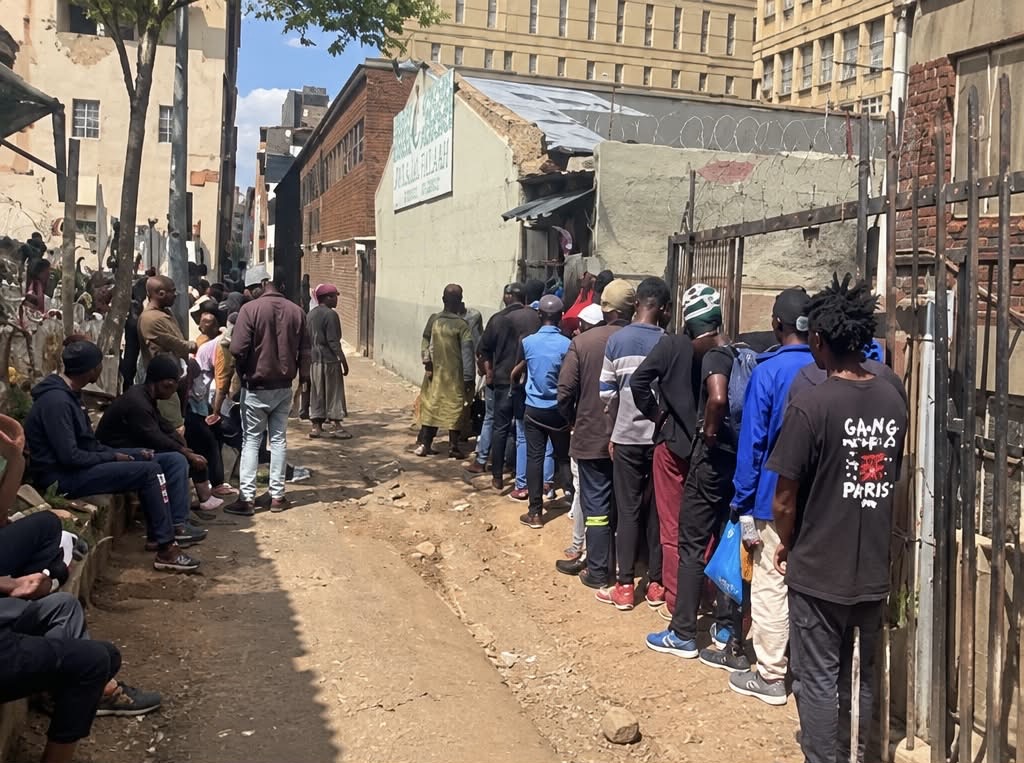
The queue begins forming long before midday. Outside Masjid Al-Falaah in Hillbrow, Johannesburg, around 120 people wait for hours each day for what, for many, will be their only meal.
“We try our best to ask for donations all over,” Sheikh Issa Muamba from Masjid Al-Falaah told One Nation Media.
It is a scene repeated across South Africa, where Muslim organisations provide meals to thousands of vulnerable people.
But behind every plate lies a pressing question: where does the money come from, and how long can these feeding schemes continue as food prices rise?
For many South African households, making ends meet has become increasingly difficult. Unemployment and the rising costs of food, electricity, transport and education are stretching already limited incomes to breaking point.
For those without stable employment, securing even one meal a day can be a struggle.
Against this backdrop, community feeding schemes have become more than acts of charity. For many, they are a lifeline.
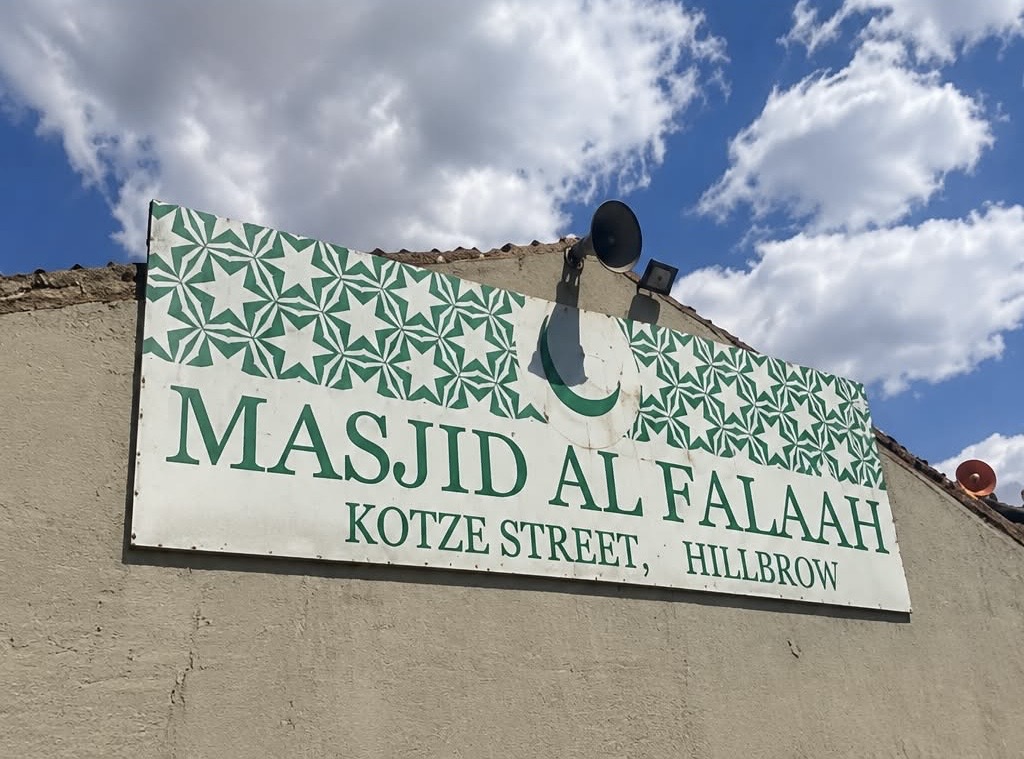
At Masjid Al-Falaah, feeding the hungry is a daily commitment from Monday to Friday, regardless of their religious background.
“So, we feed everyone. Muslim and non-Muslim. Our Prophet, Rasul (SAW), teaches us to take care of our neighbour. You cannot have food and your neighbour is hungry, which is not good,” Sheikh Issa said.
“Rasul (SAW) was always giving people whatever he had. That’s why he taught us like that. That’s why we are based on that. We think about our neighbour. We cannot just have food and our neighbour is hungry — Islamically, it’s not allowed.”
A daily struggle for survival
For those queuing outside the mosque, the need is immediate and deeply personal.
One woman, who regularly relies on the feeding scheme, said unemployment has left her dependent on the meals provided.
“During the day I don’t have something to eat. I’m not working. So I know that I can rely on this place, so I always come here for my lunch. I only started staying here last year,” she said.
Another man explained that the food he receives at the mosque is often all he will eat that day.
“This is [my] only meal for the whole day. Even [if] I’m getting nothing, if he’s giving a hand, we must appreciate that hand.”
For people like them, the mosque offers more than a hot meal. It provides a measure of certainty in lives marked by unemployment, poverty and food insecurity.
Donations under pressure
But sustaining these feeding programmes is becoming increasingly difficult.
Sheikh Issa said Masjid Al-Falaah relies heavily on community donations to fund its feeding scheme and other activities, including Islamic education for children from African migrant communities living in the area.
“We’ve got different activities in the masjid. We realised that around here we have a lot of Muslims coming from all over Africa and they don’t have a way they can teach children about Islam. We try our best to ask for donations all over,” he explained.
As food prices increase, so do the costs of ingredients, preparation and distribution. Meanwhile, donors themselves are grappling with the same economic pressures.
At Darul Islaah Spiritual Reformation and Wellness Centre in Johannesburg, which also operates a feeding scheme, organisers have adapted their approach to manage costs and growing demand.
“Challenges that we do face — many a time word does go out that you are doing feeding and the food is good and this is from the side of Allah — and it leads to many people coming for the food,” said Moulana Yousuf Osmany.
Rather than requesting cash donations, the centre encourages supporters to contribute ingredients and assist directly with preparing meals.
The approach helps reduce costs while encouraging greater community participation.
However, Moulana Yousuf said another challenge is ensuring that assistance reaches those who genuinely need it.
“If you’re feeding in close-knit localities, many times what happens is it encourages people not to work and not to go out and earn, so we try to hold it very firmly on the fine line of feeding those in real need.”
His comments highlight a difficult balance facing charitable organisations: providing immediate relief to vulnerable communities while encouraging those who are able to work towards financial independence.
Faith keeps the kitchens running
Despite the financial pressures and growing demand, organisers insist their commitment to feeding the hungry remains unwavering.
For them, the work is not simply a humanitarian responsibility but an expression of their Islamic faith.
“Everyone has their own rizq, so if we always keep this in mind, then we will always remember that ultimately, Allah will look after us. Our job is to continue to do the work, no matter the cost of living,” Moulana Yousuf said.
That belief continues to sustain feeding schemes even as donations come under pressure and the number of people seeking assistance grows.
For the 120 people queuing outside Masjid Al-Falaah, such commitment can mean the difference between going hungry and having something to eat.
And behind every plate lies a much wider story of poverty, rising living costs and the uncertainty of depending on charity for survival.
Yet amid those struggles, Muslim communities across South Africa continue to demonstrate a central Islamic principle: that no neighbour should be left to go hungry while others have food to share.