
By Mxolisi Ncube
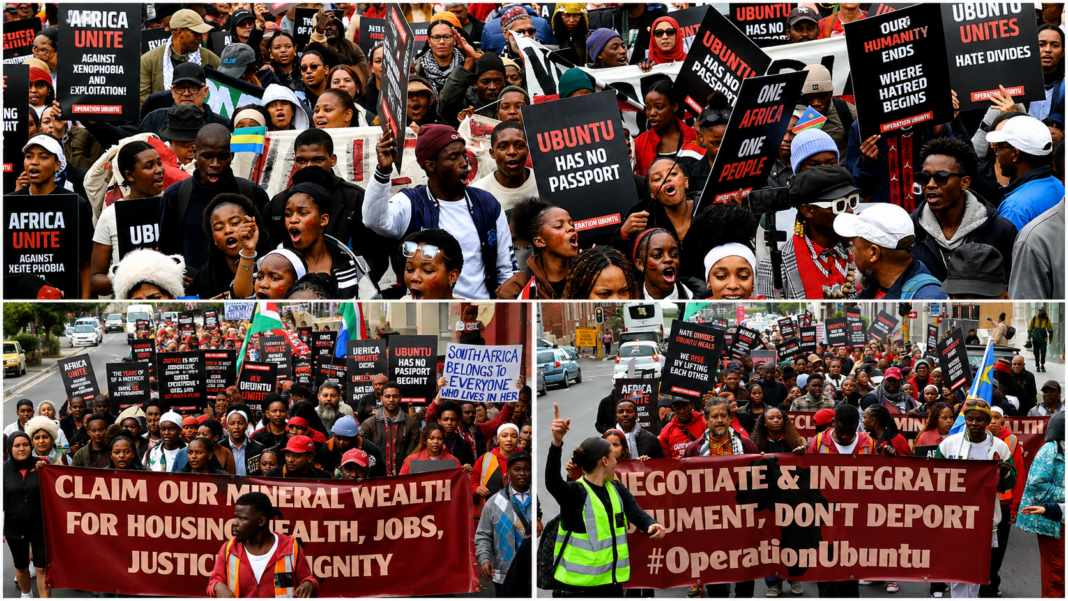
South Africa’s anti-migrant vigilante campaigns are increasingly fusing xenophobia with explicit Islamophobia, casting Muslims and organisations that assist migrants as part of a supposed religious threat, according to Kopanang Africa Against Xenophobia (KAAX).
The organisation, a broad coalition campaigning against xenophobia and discrimination, warns that rhetoric once focused primarily on undocumented migration is increasingly being accompanied by claims of a “Muslim takeover”, an “Islamic invasion” and attempts by Muslim organisations to exert religious or political influence.
“Elements of the anti-migrant mobilisation are moving beyond xenophobia and incorporating explicit Islamophobic narratives,” said Mike Ndlovu, spokesperson for KAAX.
“We are seeing claims about a ‘Muslim takeover’, an ‘Islamic invasion’, religious dominance and the alleged political intentions of Muslim organisations helping migrants. This changes the target from migrants as an administrative or economic issue to Muslims as a supposedly threatening religious community.”
From migration rhetoric to religious hostility
Ndlovu said concerns have emerged even among some people involved in campaigns against irregular migration over remarks criticised as Islamophobic.
KAAX cautions that the religious dimension is not uniform across South Africa, but appears to be growing, particularly through social media, political discourse and online networks connected to the wider anti-migrant mobilisation.
KwaZulu-Natal, and Durban in particular, has emerged as one of the main flashpoints, with the March and March movement remaining active in the province.
KAAX says the combination of xenophobic and Islamophobic narratives is especially dangerous because online rhetoric can quickly translate into intimidation on the ground.
Humanitarian organisations, mosques and Muslim community structures risk being portrayed as legitimate targets simply because they provide food, shelter, legal assistance or other support to migrants and displaced people.
Two recent developments have increasingly been drawn into this discourse.
In November 2025, 153 Palestinian travellers arrived at OR Tambo International Airport on a chartered flight. They were initially prevented from entering while immigration officials conducted further checks before most were eventually admitted on humanitarian grounds.
South Africa subsequently withdrew the 90-day visa exemption for ordinary Palestinian passport holders following an investigation. Home Affairs said the decision came after findings that Israeli-linked actors had abused the exemption as part of efforts to relocate Palestinians from Gaza.
The episode was subsequently drawn into online anti-Muslim and anti-migrant commentary.
Separately, the appointment of Yusuf Cassim as South Africa’s Deputy Minister of Higher Education and Training in June triggered anti-Muslim abuse and conspiracy theories on social media. A Sunday Times editorial later condemned attacks targeting Cassim because of his Muslim faith.
“Genuine questions about migration or government policy are increasingly being used as entry points for religious stereotyping and hostility,” said Ndlovu.
“KAAX’s concern is not that every discussion of these issues is Islamophobic, but that the rhetoric is shifting.”
Displacement and fear
Beyond the religious dimension, KAAX says its monitoring through community networks and partner organisations has revealed widespread displacement caused by threats, intimidation, raids, evictions and attacks linked to vigilante campaigns.
People have been driven from homes, workplaces, informal settlements and businesses.
KAAX says both undocumented migrants and foreign nationals lawfully living in South Africa have been affected, creating an environment in which African migrants more broadly are made to feel unwelcome regardless of their legal status.
The organisation does not claim a single independently verified national figure for displacement.
However, more than 160,000 foreign nationals were reported to have left South Africa during the height of the anti-migrant mobilisation, according to figures compiled from governments involved in repatriating their citizens.
Others left independently, sent family members home or relocated to safer areas within South Africa.
Durban has offered one of the clearest examples of internal displacement. Hundreds of refugees and asylum seekers, many legally documented, have camped outside Department of Home Affairs offices after fleeing violence and intimidation.
On 3 September, several refugees were injured when March and March members entered a camp outside Home Affairs offices in Durban. Four people were taken to hospital.
KAAX says it distinguishes between cases it has directly documented and incidents corroborated through trusted partners, government information and media reports, and has declined to publish a national death or injury toll without independent verification of individual cases.
Public reporting has nevertheless documented deaths linked to the unrest, including that of Malawian national Mishack Banda in KwaZulu-Natal, while several foreign governments have reported deaths involving their nationals.
Violence has also included beatings, assaults, forced business closures, looting and destruction of property.
The strongest pattern, according to KAAX, has been the targeting of working-class African migrants, including Malawians, Mozambicans, Zimbabweans, Congolese, Burundians, Rwandans and Nigerians.
KwaZulu-Natal, particularly Durban and Pietermaritzburg, has been a major flashpoint, while Gauteng has also experienced intimidation, raids and pressure targeting migrant-owned businesses and workers.
Human Rights Watch has documented attacks against African and Asian foreign nationals in Johannesburg, Pretoria and Durban, including migrants who were legally present in the country.
A parallel system of ‘citizenship enforcement’
The consequences extend beyond physical attacks.
KAAX has documented displacement, lost employment and income, family separation, disrupted schooling, restricted movement, difficulties accessing healthcare and growing fear among migrants when interacting with state institutions.
In some communities, migrants have been ordered to close businesses, leave neighbourhoods or produce immigration documents to private individuals claiming to enforce South African law.
“KAAX is particularly concerned about the normalisation of this parallel system of ‘citizenship enforcement’, in which private groups attempt to decide who belongs, who can work, who can trade and who can access public services,” Ndlovu said.
For KAAX, immigration policy cannot become a licence for private groups to determine who is entitled to work, trade, receive medical treatment or remain within a community.
The impact also extends to South Africans.
Families, employers, customers and communities that depend on migrant workers and migrant-owned businesses have been affected as people flee their workplaces or close businesses because of intimidation.
The organisation says genuine concerns around unemployment, crime, poor service delivery and weaknesses in South Africa’s immigration system should be addressed through accountable government institutions rather than by blaming migrants or religious communities.
KAAX monitors incidents through community networks, media reports, direct testimonies and partner organisations, while distinguishing verified cases from allegations requiring further corroboration.
It works alongside migrant-led organisations, human-rights groups, legal organisations and humanitarian bodies, including Médecins Sans Frontières, SECTION27 and the Socio-Economic Rights Institute of South Africa.
KAAX also believes stronger engagement with Muslim and other faith-based organisations is becoming increasingly important, particularly as mosques and religious networks provide humanitarian assistance to displaced communities.
The state’s responsibility
KAAX is calling for immediate protection for communities under threat, proper investigations into attacks and the prosecution of those responsible for violence or the direct incitement and organisation of unlawful activity.
“The state must enforce court orders and constitutional rights consistently rather than allowing vigilante groups to assume policing or immigration-enforcement functions,” Ndlovu said.
According to the organisation, South Africa does not lack laws or constitutional protections. The greater failure lies in implementation.
Despite court orders and existing legislation, vigilante groups have continued to intimidate migrants and interfere with access to public services.
KAAX has also criticised political rhetoric that portrays migrants as the primary cause of unemployment, crime and the collapse of public services.
“Political messaging is also problematic: government cannot simultaneously condemn xenophobic violence while political actors normalise language that portrays migrants as the cause of unemployment, crime or failing services,” said Ndlovu.
“Victim protection remains inadequate; people who are attacked or threatened need functioning mechanisms to report crimes, access healthcare, obtain legal assistance and secure temporary safety without themselves becoming subjects of immigration enforcement.”
For KAAX, South Africa faces two challenges that should not be deliberately conflated: the state has a responsibility to manage migration lawfully and effectively, while it also has a constitutional duty to prevent mobs or private organisations from deciding who belongs in the country.
As Islamophobic rhetoric becomes increasingly intertwined with anti-migrant mobilisation, that distinction becomes even more important.
What begins as a debate about immigration policy risks becoming something far more dangerous — the collective targeting of people because they are foreign, Muslim, refugees or simply perceived not to belong.