
By Neelam Rahim
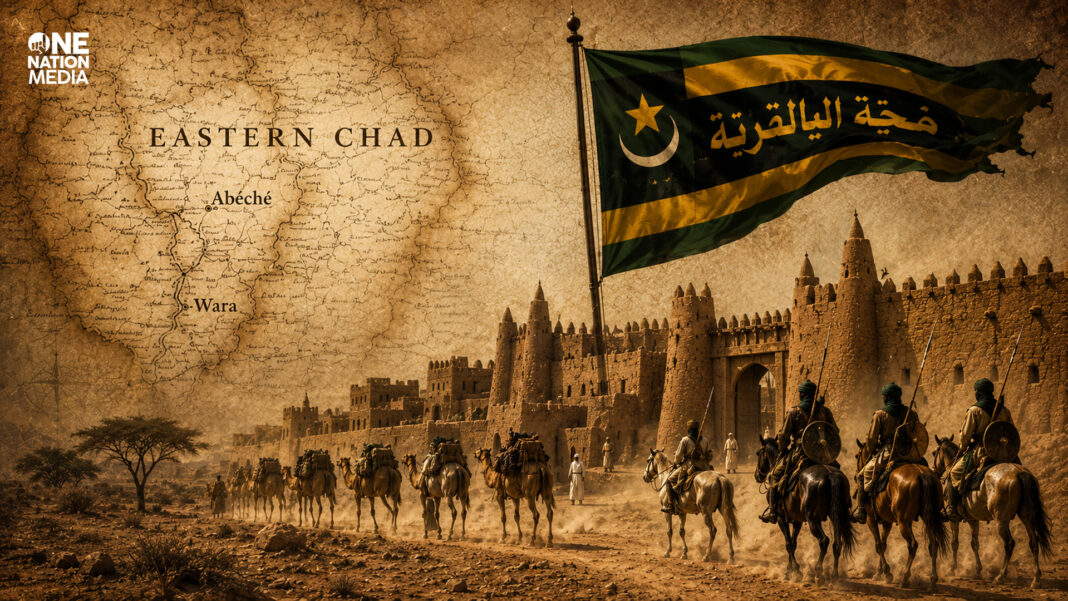
From the deserts of eastern Chad, the Wadai Sultanate built one of Central Africa’s most enduring Muslim states — a kingdom of scholars, caravans and cavalry that flourished for nearly three centuries before falling to French colonial conquest.
Long before European powers carved up Africa, a powerful Muslim kingdom stood between the Sahara and the savannah.
Centred in present-day eastern Chad, the Wadai Sultanate emerged in the seventeenth century and endured for almost 300 years. Built on Islamic governance, scholarship, trade and military strength, it became one of the most influential states in the Central Sahel.
Its rulers controlled vital trans-Saharan caravan routes, developed a sophisticated administrative system and extended their authority across a vast and culturally diverse region.
But Wadai’s story is not only one of kings, armies and conquest. It is also the story of a Muslim civilisation deeply connected to wider networks of learning, commerce and faith linking Central Africa with North Africa and the broader Islamic world.
The rise of Wadai
The sultanate arose after the decline of the Tunjur kingdom, which had dominated parts of eastern Chad and western Sudan.
Around 1635, Abd al-Karim overthrew the last Tunjur ruler and founded a new dynasty. He took the title of Kolak, the traditional designation of Wadai’s sultans, and established his capital at Wara, also known as Ouara.

Abd al-Karim’s authority rested on more than military power. He was associated with Islamic scholarship and religious legitimacy, with historical traditions linking him to learned scholars from the Central Sudan.
His rise reflected a wider pattern across the Sahel, where Muslim rulers strengthened their authority through Islamic learning, political alliances and military strength.
Islam at the heart of the state
Islam formed the foundation of Wadai’s political and social order. Islamic institutions shaped administration, courts and public life, while jurists, scholars and imams held influential positions within government. Islamic law provided an important framework for justice, governance and royal authority.
Wadai was also home to diverse communities, including the Maba, Tunjur, Fur and Arab peoples. While Islam became firmly rooted among the ruling elite and in urban centres, older customs and local traditions continued in parts of the kingdom.
The early rulers of Wadai faced pressure from the neighbouring Muslim Sultanate of Darfur. For a period, they paid tribute to Darfur, but gradually consolidated their authority and asserted independence.
By the late seventeenth and eighteenth centuries, Wadai had expanded its territory, strengthened central administration and built a disciplined military capable of defending and extending its influence.
Provincial governors collected tribute, maintained public order and mobilised troops when required. At the centre of the state stood the Kolak, supported by military commanders, advisers and respected religious figures.
A centre of Islamic learning
Wara became a symbol of Wadai’s political ambition and Islamic identity. Protected by defensive walls, the capital housed the sultan’s palace, royal residences, mosques and centres of religious learning. It functioned not only as the kingdom’s administrative capital, but also as an important centre of Islamic scholarship.
Wadai’s scholars maintained close links with the wider Muslim world. Along the same caravan routes that carried commercial goods came books, paper, manuscripts and religious texts.
Islamic jurisprudence, Arabic literacy and theological scholarship flowed between Wadai, Darfur, Bornu, Egypt and North Africa.
Nineteenth-century travellers described a society where Qur’anic education was widespread. Villages maintained Qur’anic schools, while larger towns supported more advanced centres of learning.
Scholars preserved Islamic knowledge, advised rulers and reinforced the religious legitimacy of the state.
Caravans, commerce and power
Wadai’s location was one of its greatest strengths. Positioned along major trans-Saharan trade routes, it linked Central Africa with North Africa and the Mediterranean world. Caravans carried ivory, ostrich feathers, hides and other commodities northwards, while firearms, textiles, books and luxury goods entered the kingdom.
One of the most important routes passed through the Sahara towards Kufra and Benghazi, allowing Wadai to strengthen its economic independence by reducing reliance on rival states.
Trade generated immense wealth. That wealth financed the royal court, strengthened the military and reinforced the authority of the Kolak.
But Wadai’s prosperity was also tied to the trans-Saharan slave trade. Like several states across the region during this period, the sultanate participated in slave raids and commercial networks that treated human beings as commodities.
This remains one of the most painful and undeniable aspects of its history.
The golden age of Sultan Sabun
Wadai reached the height of its power under Sultan Muhammad Sabun, who ruled from 1803 to 1813.
Sabun expanded the kingdom’s territory, defeated Bagirmi and established Wadai as one of the dominant powers in the Chad Basin.
He understood that economic strength and military power were inseparable. His government encouraged caravan routes that bypassed rival states while investing heavily in the kingdom’s armed forces.
Wadai’s military included cavalry, infantry and soldiers armed with lances, swords, shields and firearms. Its mounted cavalry became especially renowned across the open landscapes of the Sahel, where speed and mobility often decided battles.
Later in the nineteenth century, Sultan Muhammad al-Sharif moved the capital from Wara to Abéché, which offered greater advantages for administration and commerce.
Abéché rapidly developed into one of Central Africa’s leading commercial and religious centres.
The city also became closely connected to the Senussi Order, an influential Islamic revival movement whose lodges stretched across North Africa and the Sahara.
These lodges served as centres of worship, learning, hospitality, trade and diplomacy, further integrating Wadai into Islamic networks extending through Kufra and present-day Libya.
France’s colonial assault
By the end of the nineteenth century, Wadai faced growing pressure. Darfur had re-emerged as a regional rival, succession disputes weakened political unity and local conflicts strained the kingdom’s resources. But the greatest threat came from French colonial expansion.
France sought control over Central Africa through military conquest, political alliances, manipulation of local rivalries and intervention in succession disputes. Following the death of Sultan Yusuf in 1898, divisions within the royal family created an opening for colonial interference.
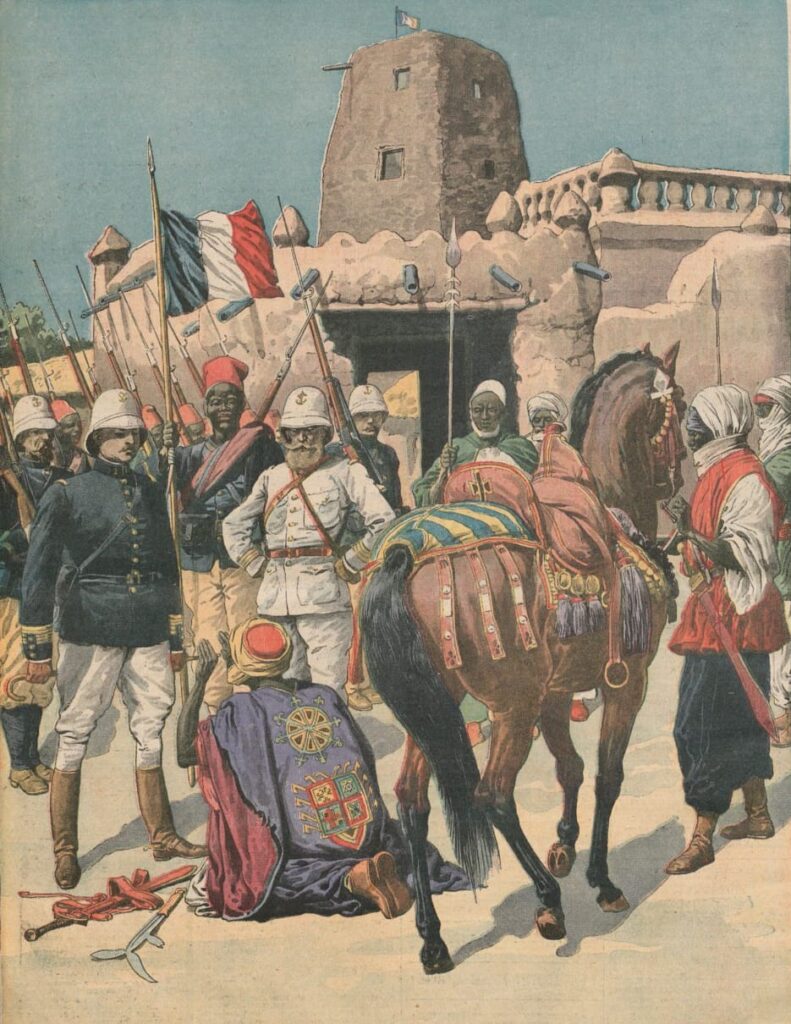
Muhammad Salih, better known as Dud Murra, emerged as the leading figure in Wadai’s final struggle for independence. Backed by the Senussi Order, he tried to preserve the sovereignty of the sultanate against advancing French forces.
France, meanwhile, supported a rival claimant, Adam Asil, and launched a sustained military campaign. In 1909, French troops captured Abéché, delivering a devastating blow to Wadai’s political authority.
Dud Murra continued resisting beyond the capital, but French forces had superior weaponry, stronger organisation and expanding colonial resources. They gradually isolated Wadai by targeting its allies and dependent territories.
By 1910, Dud Murra’s resistance had been broken. By 1912, the Wadai Sultanate had been fully incorporated into French colonial rule.
A legacy beyond conquest
The fall of Wadai was not the collapse of a weak or insignificant kingdom.
For nearly three centuries, the sultanate endured because it adapted to changing political realities, built effective institutions and remained deeply connected to regional networks of trade and Islamic scholarship.
Its collapse came when French colonial conquest met internal division and regional rivalry.
Today, Wadai stands as an enduring reminder that Central Africa was home to sophisticated Muslim states long before European colonial rule.
Its rulers combined political organisation, military strength, commerce and religious authority to build a kingdom that shaped the history of the Central Sahel.
Its scholars connected eastern Chad to a wider world of Islamic learning stretching across Africa and beyond.
The story of Wadai is therefore not simply one of conquest and defeat. It is the story of a Muslim sultanate that defended its independence for centuries and whose legacy continues to illuminate the rich Islamic heritage of Central Africa.
You can read more of One Nation Media’s Islamic civilisation and African history features here.