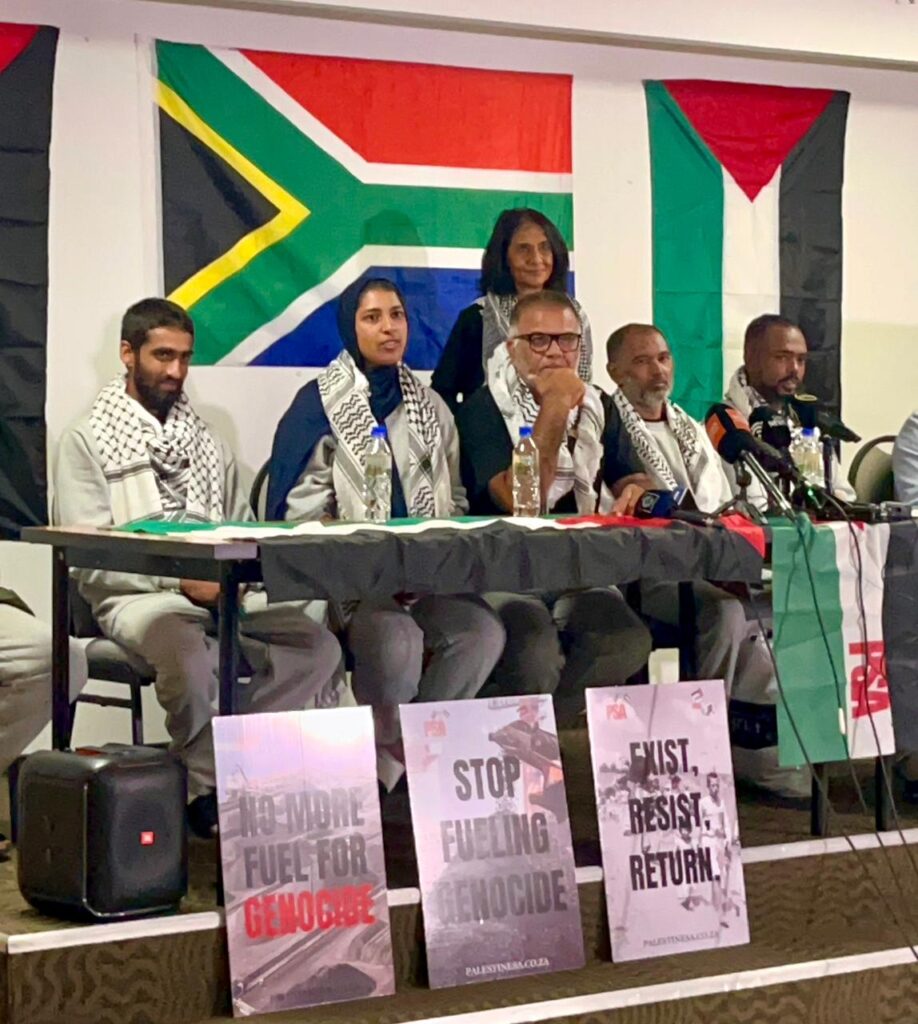
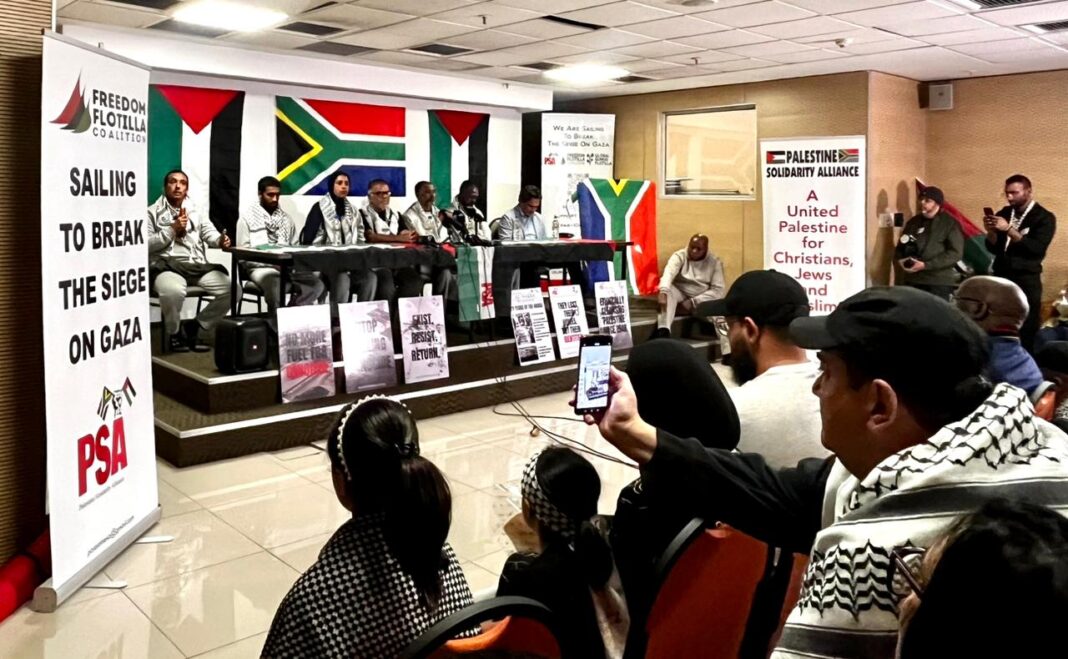

South African flotilla activists return with a message: Gaza cannot be abandoned
The release of South African activists who joined the Global Sumud Flotilla is not merely a story of detention and return. It is a reminder that Gaza continues to test the conscience of the world, writes Nesma Darwish.
The activists were part of a civilian humanitarian mission attempting to reach Gaza with aid, including food, water and medicine. Among them was 22-year-old Hajar Kagiso, who placed her own freedom at risk to stand with a besieged people facing starvation, bombardment and abandonment.
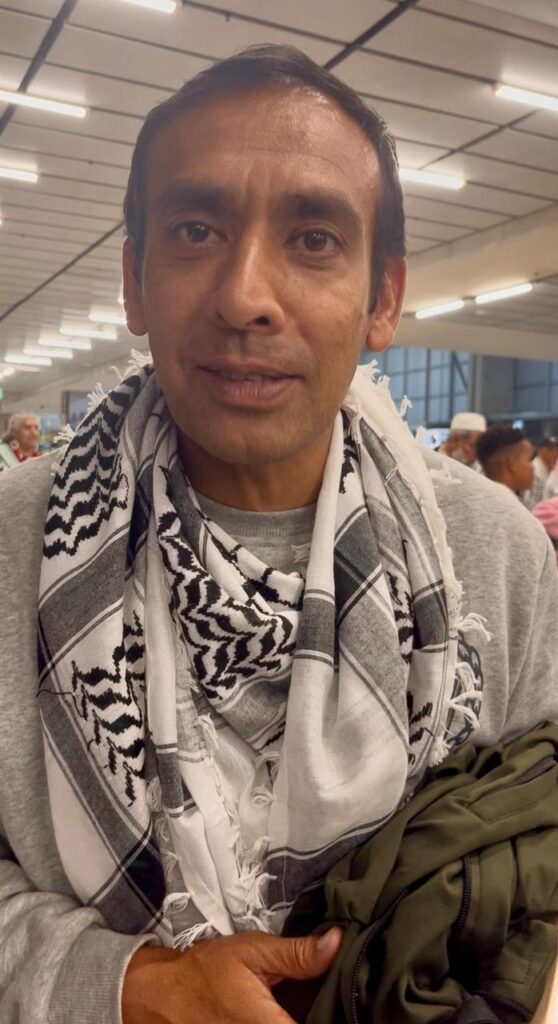
South African activist from Cape Town.
Their journey was not a symbolic gesture. It was a moral act rooted in the belief that standing with the oppressed is not optional, and that silence in the face of siege and suffering amounts to complicity.
The flotilla never reached Gaza. Israeli occupation forces intercepted the vessels, detained the activists and prevented the aid from reaching its destination. After their release, several activists alleged that they were subjected to harsh treatment and humiliation while in detention.
Yet they returned not broken, but more determined.
When the South African activists arrived at OR Tambo International Airport in Johannesburg, they were welcomed by crowds of Palestinian and South African supporters. Their return became a moment of solidarity, not only with those who had been detained, but with the people of Gaza whose suffering remains ongoing.
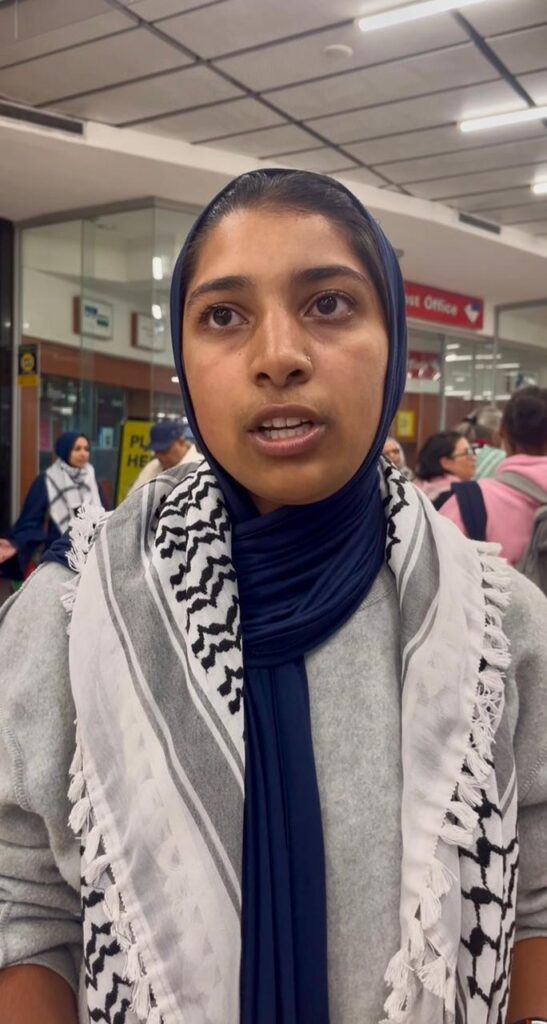
South African activist from Cape Town.
Their testimonies also carried a deeper lesson. Some of the activists compared their brief experience of detention with the years endured by Palestinian prisoners under far harsher and more prolonged conditions.
What they experienced for a short period gave them only a glimpse of what Palestinians have faced for decades under occupation, imprisonment and siege.
Speaking about the flotilla, Qutb Hendricks, one of the participants, stressed the need for Muslim unity in confronting Israel’s actions.
He warned that time is running out for Palestinians, both those held in prisons and those suffering under continued violence in Gaza.
The interception of the Global Sumud Flotilla is not an isolated incident. Israel has repeatedly stopped civilian humanitarian missions attempting to reach Gaza by sea.
The most infamous case remains the Mavi Marmara in 2010, when Israeli forces raided the vessel in international waters, killing several activists and triggering global condemnation.
Other vessels, including the Rachel Corrie in 2010, the Estelle in 2012 and the Marianne in 2015, were also intercepted while attempting to deliver aid and challenge the naval blockade on Gaza.
These repeated interceptions reflect a consistent policy of preventing civilian humanitarian efforts from reaching Gaza, even when those missions are non-violent and openly humanitarian in nature.
But the return of the South African activists shows that intimidation has not ended the will to act. Their message is clear: the mission did not end with detention. It continues through testimony, public pressure and renewed efforts to support Gaza.
For Muslims and people of conscience everywhere, their journey is a reminder that Gaza cannot be abandoned to statements, slogans and passive sympathy. The siege demands action, sacrifice and moral courage.
The activists returned home, but the cause that took them to sea remains unfinished.