
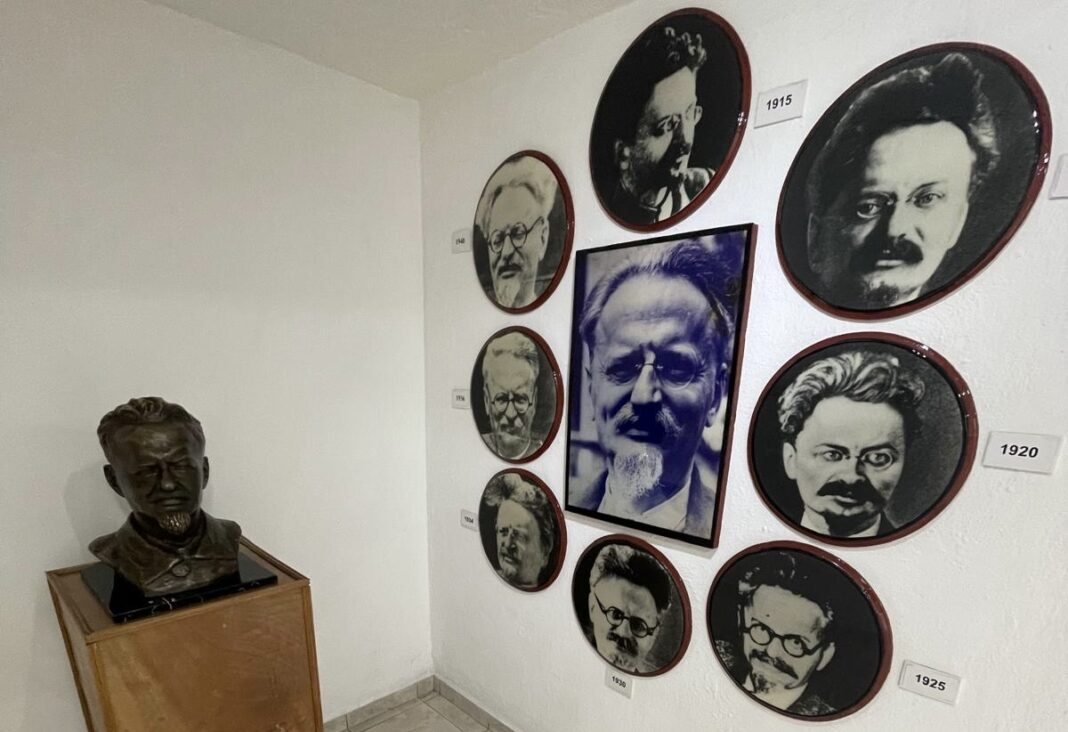

Drawing on his recent visit to Mexico, Najm Al-Din reflects on the country’s powerful solidarity with Palestine while warning Muslims against confusing shared opposition to Zionism with ideological unity with the secular left.
From its rich tapestry of ancient civilisations to its vibrant contemporary arts scene, Mexico City left an indelible mark on my travels.
Yet one of the most memorable aspects of this sprawling metropolis was witnessing its heartfelt solidarity with Palestine.
For many Mexicans, the Palestinian struggle for self-determination resonates deeply with their own history of resistance to foreign aggression, colonial domination and displacement.
Clear parallels exist between the Mexican and Palestinian experiences of physical and cultural destruction, whether reflected in the struggles of the Chichimeca, the Yaqui people or the Zapatistas. Sharing a painful legacy of colonial occupation and dispossession from ancestral lands, indigenous Mexican movements have found common ground with the Palestinian cause, embracing resistance to Zionism as a fraternal anti-colonial struggle.
Student activism
This solidarity is reflected in Mexico’s rich tradition of student-led activism, particularly at the National Autonomous University of Mexico (UNAM), one of the country’s leading centres of research and culture.
Upon reaching the Faculty of Philosophy, I found its hallways blanketed with pro-Palestinian flyers and Marxist graffiti advertising demonstrations against Israel’s genocide in Gaza.
These visual displays set the scene for my interactions with local activists and action groups who see themselves as part of a wider international student uprising against systemic threats to indigenous peoples.

Just as Latin American student movements once resisted US-backed dictatorships at home, Washington’s unwavering support for Israel has reinforced a shared understanding of imperialism.
This sentiment is expressed through cultural projects across Mexico’s student encampments and civil society coalitions, many of which use street art and public murals to challenge censorship and raise awareness of Israel’s human rights violations in Gaza.
A false sense of unity
The global emotional outpouring over Palestine is one of the few consolations in an otherwise macabre chapter for the Muslim Ummah.
The grief, anger and helplessness are not unique to Muslims. Non-Muslims around the world have also taken to the streets to protest the suffering of the Palestinian people.
However, Muslims must not be lulled into a false sense of ideological unity with those who interpret the conflict through a worldview fundamentally opposed to Islam.
This caution is necessary because much of the grassroots mobilisation for Palestine is spearheaded by leftist alliances whose political outlook is influenced by socialism and Marxism.
Socialism
Socialism is an economic and political ideology that advocates collective or state ownership of the means of production, distribution and exchange rather than private ownership.
In its reformist form, modern socialism may tolerate a market-based economy while supporting extensive regulation, strong labour unions and a robust welfare state to redistribute wealth and reduce inequality.
Although Muslims and socialists may share concerns over economic exploitation, labour rights and the oppression of marginalised communities, their foundational principles remain incompatible.
At the root of this irreconcilable divide is a clash of epistemology. The foundational pillar of Islam is Tawheed: the absolute oneness of Allah. It establishes that the universe was created and is sustained exclusively by Him.
Because Allah is the sole Creator and Owner of existence, ultimate sovereignty and legislative authority belong to Him alone.
Within this framework, granting human beings absolute lawmaking authority compromises Tawheed by assigning a divine prerogative to creation. Human authority is therefore never absolute, but a delegated responsibility restricted by divine revelation and sacred law.
Classical socialism, by contrast, is rooted in secular humanism and moral idealism. It elevates human reason, collective consensus and secular ethics above divine revelation, prophethood and sacred law as the organising principles of society.
The Islamic and socialist worldviews also offer opposing interpretations of history and human progress.

Islam understands human life through a spiritual framework shaped by divine decree, worldly trials and accountability before Allah.
Socialism approaches history through a secular and material lens, measuring progress primarily through economic welfare, equality and the distribution of resources.
While Islam seeks justice through divine law and spiritual reformation, socialism seeks it through the restructuring of economic relations and systems of ownership. Their ethical frameworks are also fundamentally different.
Islamic morality is objective, immutable and rooted in the Quran and Sunnah, establishing universal and timeless standards.
Socialist ethics, meanwhile, are secular and often utilitarian, treating morality as an evolving human construct measured according to its contribution to equality, solidarity and social welfare. This transfers ultimate ethical authority from Allah to the collective human community.
Although democratic socialists may tolerate religion, this tolerance is generally conditional upon faith remaining subordinate to secular freedoms and social norms.
Contemporary socialist platforms also tend to mandate support for LGBTQ+ rights. Traditional Islamic jurisprudence, by contrast, prohibits homosexual acts, creating an irreconcilable conflict with modern social progressivism.
Similarly, socialist and feminist movements frequently promote reproductive freedom, bodily autonomy and absolute gender equality, whereas orthodox Islam upholds divinely ordained gender responsibilities and moral regulations governing family and society.
While socialism champions a woman’s right to total reproductive self-determination, Islamic jurisprudence places such matters within a framework of sacred duties, marital rights and communal obligations. These are not minor ideological disagreements.
Indeed, many leftists openly argue that conservative religious values perpetuate inequality, patriarchy and sexism. This tension has also surfaced within sections of Britain’s political left, including factions associated with independent MP Zarah Sultana and the emerging Your Party movement.
Marxism
While socialism conflicts with Islam over sovereignty, morality and the source of law, Marxism — a revolutionary branch of socialist thought — presents an even deeper ontological rupture through its rejection of traditional metaphysics.
Marxism is built upon philosophical and historical materialism, which holds that the material world is the only reality.
This atheistic paradigm rejects the Creator, divine revelation and prophethood, reducing human history, culture and spirituality to products of economic relations, class struggle and material conditions.
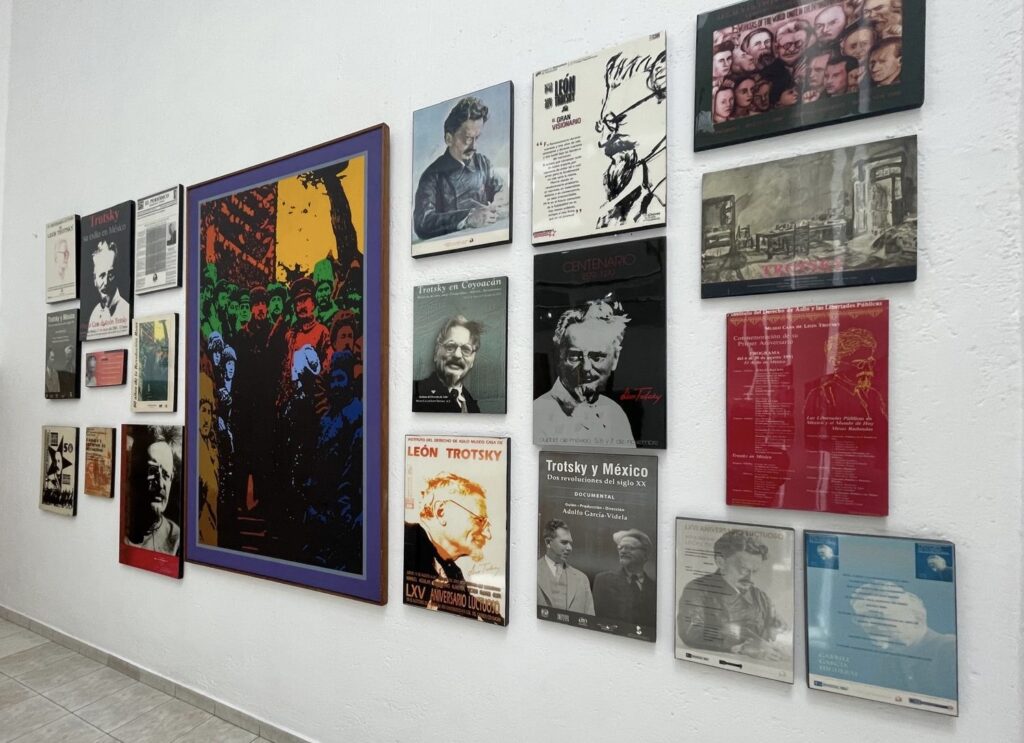
According to the Marxist model of base and superstructure, a society’s economic foundation determines its laws, culture, morality and religious beliefs.
Religion is therefore not understood as divine truth but dismissed as a social construct produced by material conditions and used to justify exploitation or legitimise ruling-class power.
This directly contradicts the Islamic worldview, which affirms that absolute truth, moral order and societal law originate from Allah rather than from changing economic forces.
Marxism also presents religion as an ideological tool used by the bourgeoisie, or capitalist ruling class, to pacify the proletariat, or working class.
By describing religion as the “opium of the people”, Marxists argue that belief in the transcendent provides illusory comfort while concealing the material causes of suffering.
Within this framework, Islamic concepts such as divine decree, earthly trials and the Hereafter are treated as forms of “false consciousness” that encourage workers to endure injustice rather than pursue revolution.
Marxists argue that once a classless society has been established, the material conditions that supposedly produce religion will disappear.
This fundamentally opposes the Islamic conviction that revelation is an eternal and unalterable truth, independent of human economic systems.
Pragmatic alliances
Muslims may share common ground with socialists and Marxists in opposing an exploitative capitalist world order and recognising Zionism as a barrier to justice and peace.
Both may also agree that Palestinian emancipation cannot be achieved while settler-colonialism remains intact.
However, it would be a grave mistake to ignore the ideological tensions beneath this temporary convergence.
While the political left is not a monolith, many contemporary leftist organisations at the forefront of Palestinian activism are influenced by socialist and Marxist thought.
Their proposed solution is often a secular democratic state or socialist federation in which Palestine is understood exclusively through the language of national liberation, decolonisation, class struggle and material justice.
This vision rejects religion as the foundation of the social and political order.
Any long-term alliance between Muslims and the secular left over Palestine must therefore be approached with caution.
Collaboration between Muslim advocacy groups and secular left-leaning media platforms, such as Zeteo or Novara Media, also requires careful strategic consideration.
These outlets may provide prominent platforms for Palestinian advocacy, but their intellectual frameworks are rooted in secular anti-capitalism, socialism or left-wing populism.
Consequently, they tend to interpret Palestine through the language of international law, human rights and material oppression while excluding theological concepts such as divine sovereignty, sacred land and Islamic governance.
Reclaiming Palestine as an Islamic cause
Muslims must therefore exercise greater discernment when choosing political allies and reclaim ownership of the Palestinian cause by framing it within an Islamic ideological structure.
The Palestinian struggle must not be reduced to a secular nationalist, socialist or liberal human rights issue.
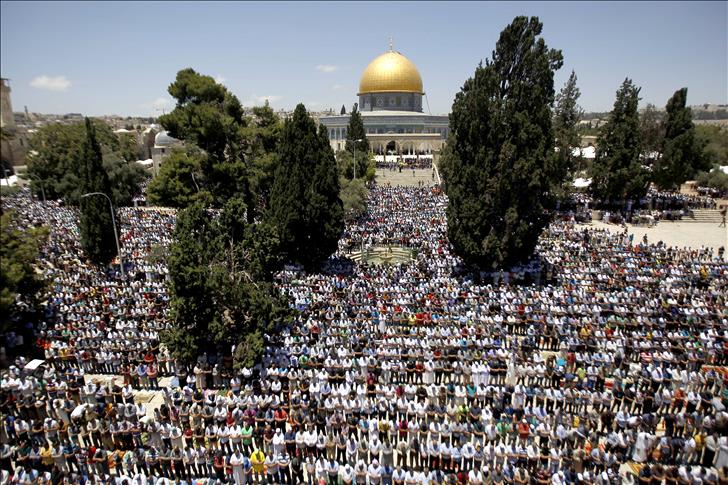
According to Islamic jurisprudence, the entirety of Palestine is a sacred and inalienable waqf belonging to the Ummah and cannot be permanently surrendered.
Its liberation requires striving in the path of Allah and the re-establishment of the caliphate upon the method of Prophethood.
Such a system would provide a single political authority capable of liberating Palestine from occupation, unifying the Muslim world and safeguarding the rights of all faith communities under Islamic rule.
Palestine cannot be liberated through civic participation within a kufr system, appeals for a secular state under the United Nations, or an internationalist working-class revolution.
By attaching the Palestinian struggle to secular leftist movements, Muslims risk diluting the sacred nature of the cause and entering a theological minefield.
While gestures of solidarity with Palestine may offer comfort, Muslims must remember that not every friend of Al-Aqsa is a friend of Islam.