
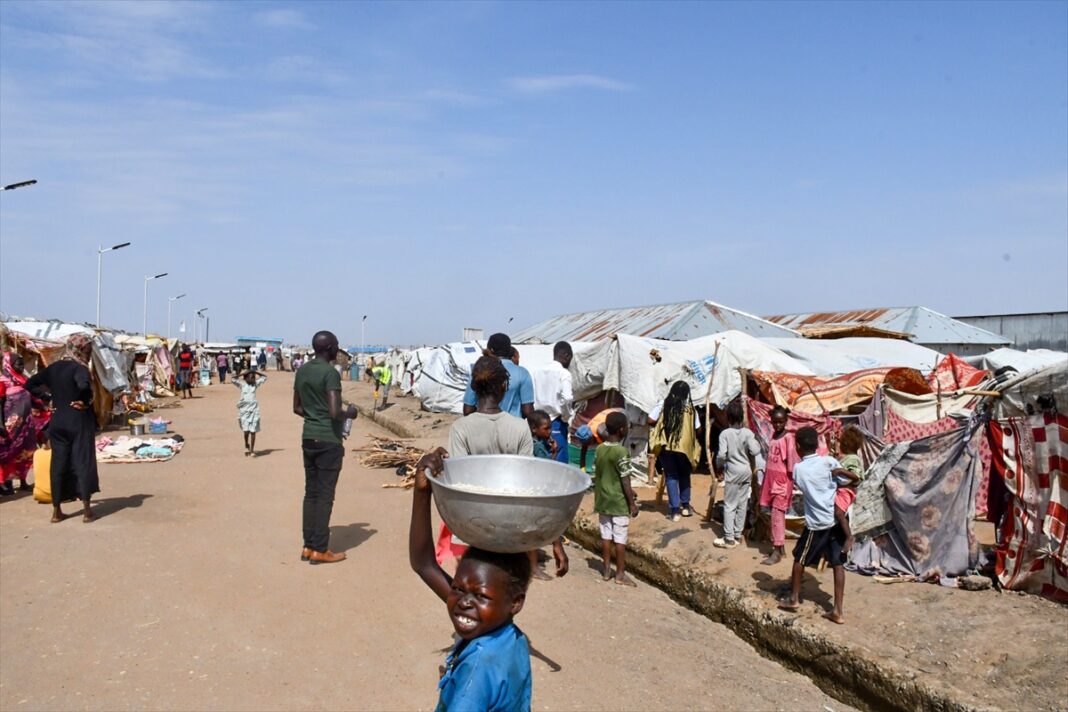

At least 41 civilians, including eight children and several women, have been killed in a drone strike blamed on the UAE-backed Rapid Support Forces (RSF) paramilitary group in Sudan’s Blue Nile region, in another deadly attack on civilians fleeing the country’s devastating civil war.
The strike targeted displaced people in the Abu Shandi area of Blue Nile state, near the Ethiopian border, on Friday, October 9, according to Emergency Lawyers, a Sudanese human rights organisation monitoring abuses committed during the conflict.
Dozens of people were also wounded in the attack, which struck an area sheltering families already uprooted by nearly three and a half years of fighting between the Sudanese Armed Forces (SAF) and the RSF.
The paramilitary group, which has been repeatedly accused of war crimes, ethnic cleansing and atrocities against civilians, has received military support from the United Arab Emirates, according to investigations by international human rights organisations. Abu Dhabi denies backing the RSF.
The United Nations Office for the Coordination of Humanitarian Affairs (OCHA) expressed outrage over the attack, warning that women and children were among the principal victims.
UN Resident and Humanitarian Coordinator in Sudan Denise Brown condemned the killings and demanded accountability for attacks on civilians.
“Condemning these senseless killings is essential, but there must also be accountability for this flagrant disregard for international humanitarian law,” she said.
“As each day goes by in this war, the world continues to accept the suffering of the people of Sudan.”
The UN warned that the Abu Shandi area had already endured sustained attacks in recent weeks, forcing thousands of civilians to abandon their homes and leaving vulnerable communities exposed to further violence.
The RSF-led alliance has denied responsibility for the latest strike.
UAE’s backing of the RSF under scrutiny
The latest killings have renewed attention on the RSF’s relationship with the UAE, whose alleged military support for the paramilitary group has become one of the most contentious aspects of Sudan’s civil war.
Investigations by Amnesty International, Human Rights Watch and international media organisations have documented evidence of weapons supplies, logistical assistance and foreign fighters linked to the UAE reaching RSF forces.
In May 2025, Amnesty International identified Chinese-made guided bombs and howitzers used by the RSF that it concluded had almost certainly been re-exported through the Emirates, potentially violating the international arms embargo on Darfur.
Human Rights Watch subsequently documented further evidence of Emirati involvement, including the recruitment and deployment of Colombian fighters to support RSF military operations in Sudan.
The organisation warned that providing military assistance to forces implicated in widespread atrocities could expose those responsible to allegations of complicity in war crimes and crimes against humanity.
Sudan’s internationally recognised government has repeatedly accused Abu Dhabi of fuelling the conflict by supplying the RSF with weapons and military assistance, allegations the UAE continues to reject.
Emirati authorities maintain that they are not supporting either side militarily and insist their involvement in Sudan is focused on humanitarian assistance and diplomatic efforts to end the fighting.
However, the mounting evidence documented by human rights organisations has intensified scrutiny of the Gulf state’s involvement in a conflict that has devastated Sudan and displaced millions of people.
Sudan’s deepening humanitarian catastrophe
Sudan descended into civil war in April 2023 following a power struggle between army chief General Abdel Fattah al-Burhan and RSF commander Mohamed Hamdan Dagalo, widely known as Hemedti.
The conflict rapidly spread from the capital, Khartoum, into Darfur, Kordofan, Blue Nile and other regions, leaving entire communities devastated.
The Sudanese army has since regained control of much of the country’s central and eastern regions, while the RSF retains significant territory in the western Darfur region and parts of southern Sudan.
Both sides have been accused of conducting drone attacks that have killed civilians and damaged critical infrastructure. However, the RSF has faced particularly grave allegations over massacres, ethnic violence, sexual abuse and the systematic targeting of civilian populations in Darfur.
International human rights organisations have documented widespread atrocities attributed to the paramilitary group, including killings, rape, forced displacement and attacks on communities identified along ethnic lines.
Amnesty International has also reported evidence of crimes against humanity and ethnic cleansing committed by RSF fighters in North Darfur, where civilians have faced mass killings, starvation and forced displacement.
The war has killed at least 150,000 people, according to conflict monitoring estimates, although humanitarian organisations warn that the actual death toll could be substantially higher.
More than 12 million Sudanese have been forced from their homes, creating one of the world’s largest displacement crises.
According to UN estimates, approximately 33.7 million people, including 17.3 million children, require urgent humanitarian assistance in 2026.
Around 825,000 children are also at risk of severe acute malnutrition as fighting, insecurity and restrictions on humanitarian access continue to deepen the emergency.
Growing fears for civilians in Blue Nile
The latest drone strike comes amid growing concern over the expansion of fighting in Blue Nile state, a strategically important region bordering Ethiopia and South Sudan.
Repeated attacks have forced thousands of residents to flee towards displacement sites, where overcrowding, food shortages and inadequate medical facilities have left families increasingly vulnerable.
The use of armed drones has added another deadly dimension to the conflict, allowing forces to strike locations far from conventional front lines and exposing communities sheltering in supposedly safer areas to further attacks.
The October 9 killings followed another drone strike in Blue Nile earlier in the week, which killed at least four women and injured dozens in the state capital, Damazin. Emergency Lawyers also blamed that attack on the RSF.
UN officials have called for those responsible for attacks on civilians to be held accountable and for all parties to respect international humanitarian law.
The latest bloodshed has also renewed questions about the role of foreign military assistance in sustaining Sudan’s war, particularly amid mounting evidence of the UAE’s support for the RSF.
For millions of Sudanese civilians caught between armed factions, displacement, hunger and increasingly deadly drone warfare, the prospect of peace remains distant as the humanitarian catastrophe continues to deepen.