
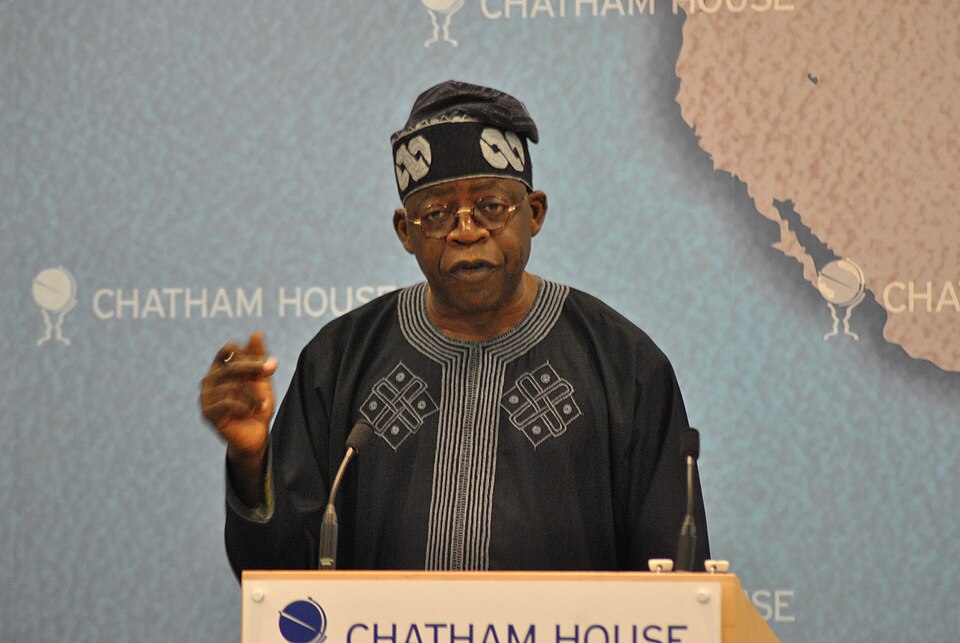

President Bola Ahmed Tinubu said on Thursday that Nigeria had reached a turning point. In his Independence Day address, marking 66 years of independence, he declared that an “age of prosperity” had begun.
He pointed to economic growth of more than 4%, falling inflation, rebuilt foreign reserves, a stabilised foreign exchange market and record non-oil export revenues. The priority now, he said, was to reduce the cost of living, create jobs, expand agriculture and industry, and ensure prosperity reached ordinary Nigerians.
It was an optimistic speech. But beyond the presidential villa, many Nigerians measure the state of their country through a different reality: missing relatives, overcrowded detention cells and communities emptied by violence.
At 66, Nigeria is living two realities at once.
Nearly 700 abducted in Niger State
Tinubu thanked Nigeria’s security forces for their sacrifices and acknowledged the difficulties citizens face in paying for food, healthcare, education and transport.
For families in Niger State, however, the immediate concern is whether their loved ones will return alive.
On 21 August, gunmen attacked Dekara and neighbouring communities in Borgu district. Residents initially reported hundreds of abductions, mostly involving women, children and elderly people. By September, local representatives estimated that close to 700 people remained in captivity.
On 21 September, protesters gathered in New Bussa to demand their release, a month after the attacks.
For these families, prosperity cannot be measured solely by inflation rates or export figures. It begins with a mother, son or grandmother coming home.
37 deaths in state custody
In Minna, the capital of Niger State, another tragedy has raised serious questions about the conduct of security agencies.
Thirty-seven people arrested on suspicion of illegal mining died in the custody of the Nigeria Security and Civil Defence Corps (NSCDC). Niger State Governor Umaru Bago said many of those who died were aged between 14 and 18.
Survivors described dozens of detainees packed into a poorly ventilated cell, struggling to breathe and attempting to alert guards. The NSCDC initially suggested a suspected disease outbreak, while survivors said severe overcrowding and a lack of ventilation contributed to the deaths.
The precise cause remains under investigation.
Tinubu ordered a comprehensive probe, while the Niger State NSCDC commandant and other officers were suspended pending the outcome.
But the questions extend beyond the suspensions. How were the arrests conducted? Why were so many people held in such conditions? And if wrongdoing is established, who will be held accountable?
For the bereaved families, the issue is ultimately what happens to a Nigerian citizen once the state locks the cell door.
The displaced and the 2027 vote
Nigeria’s prolonged insecurity has uprooted communities, leaving farmers unable to reach their fields, traders cut off from their livelihoods and children separated from their schools.
Displacement also creates serious questions around political participation. A voter card means little if its holder cannot safely reach a polling station.
Nigeria’s presidential and National Assembly elections are scheduled for 16 January 2027.
For displaced Nigerians, the practical questions are urgent. Where will they vote? Will accessible arrangements be provided? Could insecurity, movement restrictions or logistical failures prevent them from taking part?
The ability of displaced communities to participate will therefore form part of the wider test facing the electoral process. People who have lost their homes should not also lose the practical ability to exercise their political rights.
Two Nigerias
The president’s message is clear: Nigeria has endured painful reforms, strengthened its economic foundations and entered a new phase of growth.
But economic recovery exists alongside another reality.
A farmer cannot benefit from agricultural investment if armed groups control the route to his fields. A business cannot thrive if workers and customers fear travelling. A displaced family cannot experience prosperity while struggling to survive away from home.
And public confidence in state institutions is difficult to sustain when people die in custody and the circumstances remain unresolved.
That is the gap confronting Nigeria at 66.
One Nigeria is described through economic indicators: a more stable foreign exchange market, stronger growth, rising non-oil exports and reforms the government says are beginning to deliver.
The other is experienced by families waiting for abducted relatives, parents mourning children who died in custody and displaced communities wondering whether they will be able to make their voices count in 2027.
Nigeria’s independence carried a promise of freedom, dignity and the right of citizens to shape their future.
Keeping that promise will require more than stronger economic indicators. It will require bringing abducted citizens home, establishing responsibility for deaths in custody, protecting displaced communities and ensuring that economic progress reaches Nigerians still waiting for security and justice.