

The United States has called on the UN Security Council to expand an existing arms embargo on Darfur to cover the whole of Sudan, as the country’s devastating war enters its fourth year and increasingly sophisticated weapons and drones continue to fuel the conflict.
Massad Boulos, US President Donald Trump’s senior adviser for Arab and African affairs, presented the proposal during a Security Council meeting on Monday, warning that foreign military support was prolonging the fighting and risked drawing neighbouring countries deeper into the conflict.
Washington’s proposed resolution would extend the embargo across Sudan and explicitly include unmanned aerial vehicles, drone systems and related technologies. It would also strengthen the UN panel responsible for monitoring sanctions and weapons flows.
However, the proposal faces opposition from Sudan as well as veto-wielding Security Council members Russia and China.
Sudan’s UN representative Al-Harith Idriss argued that extending the embargo would undermine the country’s sovereignty and effectively place the Sudanese Armed Forces (SAF) on the same footing as the paramilitary Rapid Support Forces (RSF).
Russia has similarly rejected expanding the sanctions regime, arguing that restrictions affecting the Sudanese military could weaken state forces fighting the RSF. China has urged caution over additional sanctions and called instead for greater emphasis on implementing existing measures and pursuing political dialogue.
Britain and France have backed the US proposal to extend the embargo nationwide.
Drone war escalates
The diplomatic dispute comes amid an intensifying drone war between the SAF and RSF.
Suspected Sudanese army drones struck several RSF positions in Nyala, the capital of South Darfur, on Monday, targeting areas around the airport, the al-Riyadh neighbourhood and the University of Nyala campus.
The strikes came hours after a large cargo aircraft landed at Nyala airport, which has emerged as an important logistics hub for the RSF. The Sudanese military has repeatedly targeted the airport in an attempt to disrupt RSF supply routes.
The growing use of drones has transformed the battlefield, allowing both sides to strike targets far beyond traditional front lines. Boulos told the Security Council that armed drones had caused more than 1,120 civilian deaths during the first half of 2026 alone.
The existing UN arms embargo was imposed on parties involved in the Darfur conflict in 2005. The current measures are due to expire on September 12 unless the Security Council renews or changes them.
Foreign power accused of fuelling war
Sudan’s conflict has increasingly become entangled with competing regional interests and foreign weapons supplies.
The UAE has repeatedly been accused of providing military support and weapons to the RSF, allegations Abu Dhabi denies. Egypt, meanwhile, has backed the Sudanese military, while other regional powers have also maintained relationships with the country’s warring factions.
Recent investigations have also documented aviation networks operating routes connected to RSF logistics hubs.
Sudan’s military chief, General Abdel Fattah al-Burhan, dismissed the prospect of further international sanctions on Monday, insisting they would not weaken the army’s determination to continue fighting the RSF.
The war erupted in April 2023 following a power struggle between the SAF, led by Burhan, and the RSF, commanded by Mohamed Hamdan Dagalo, widely known as Hemedti.
The two forces had previously cooperated in Sudan’s political upheavals before disagreements over the country’s political transition and the proposed integration of the RSF into the regular military erupted into open warfare.
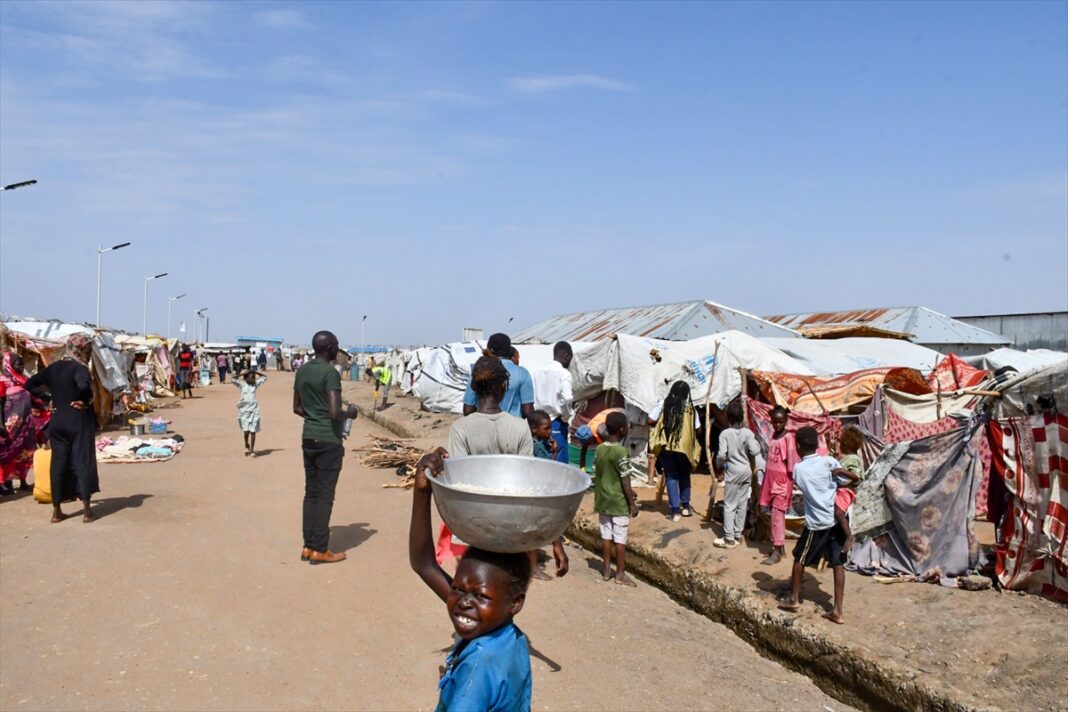
Since then, the conflict has devastated large parts of Sudan, displaced millions of people and produced one of the world’s gravest humanitarian crises, while repeated diplomatic efforts have failed to secure a lasting ceasefire.


