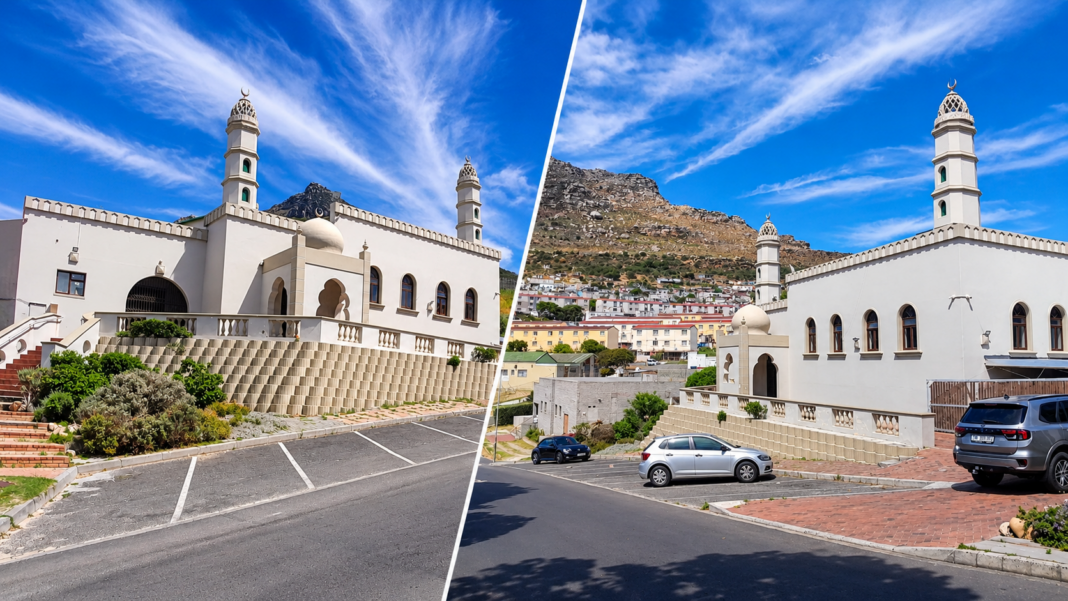

In a picturesque fishing village known for its harbour, mountains and mansions, a small mosque on Bay View Road has become a beacon for generations.
Hout Bay is postcard Cape Town. A working fishing harbour. Boats bobbing in the water. Chapman’s Peak Drive winding along the cliffs. Mountains rising behind pastel houses. Tourists come for the fish and chips, boat trips to Seal Island and sunsets that turn the bay gold.
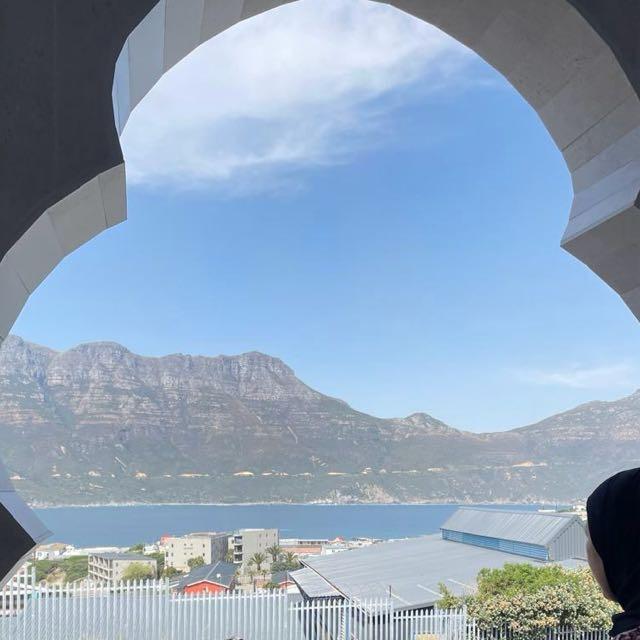
But above it all, on a hill on Bay View Road with magnificent views of the harbour, the ocean and Chapman’s Peak Drive, sits another landmark — one that most tourists never notice, but that locals know as their spiritual anchor.
Masjidul Bahrayn — the Mosque of the Two Seas — is immaculate, well-kept and quietly keeps the light of Islam alive as a beacon and true sentinel of Hout Bay.
Seeking to secure a future for generations to come, the masjid serves as a central spiritual and educational hub for Muslims and visitors from across the Mother City.
From a house kitchen to a mosque on the hill
According to historical accounts, the mosque was established in 1990. But its story began much earlier — in living rooms, kitchens and borrowed spaces.
The first plot of land was acquired in Marlon Crescent, Hout Bay, in 1982. The small plot was situated on a corner and could not be zoned for use as a mosque.
A property exchange took place with another landowner, making it possible for the masjid to be built. To date, the masjid has had eight imams, including interim and assistant imams.
Armien Camroodien, a Hout Bay resident and former trustee, has been part of the religious establishment since day one. His house was used for cooking, madrassah classes and various important occasions on the Muslim calendar before the masjid was built. He was also instrumental in the management and construction of the place of worship.
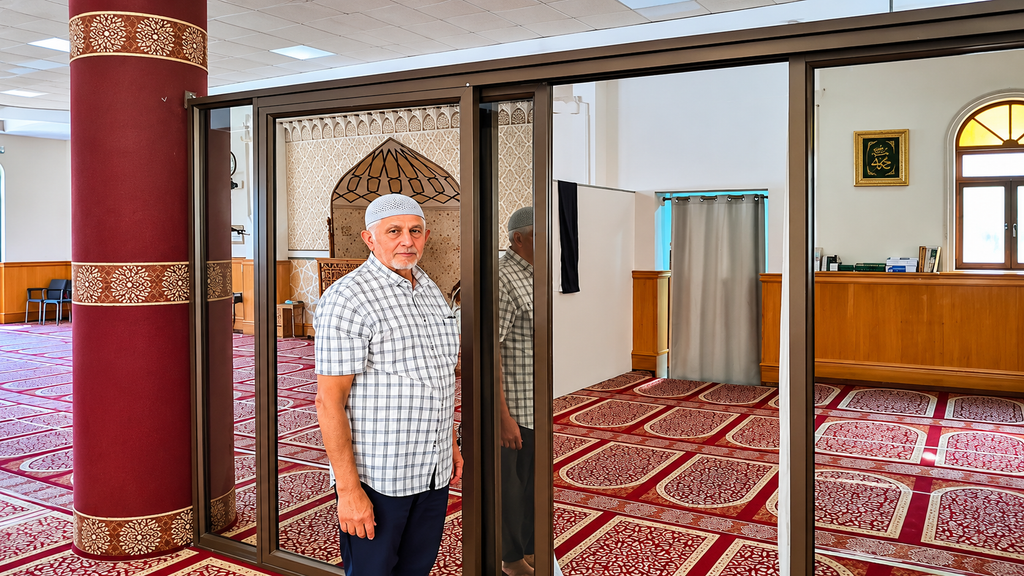
Today, he continues to manage the masjid and ensure its upkeep. He shared some of the history of his past 39 years in Hout Bay.
“After it was established that the plot could not be used for the masjid, a neighbour by the name of Gadija Van Der Skyff, who owned two plots in the road, was approached,” he said.
“She swopped her two plots for the one plot that was acquired and was paid by the Hout Bay Islamic Association around R30,000 cash in 1983.”
“Her properties were also not zoned for a place of worship, which resulted in the masjid paying high rates, and the land stood dormant for a few years, which also resulted in penalties,” he said.
The former trustee explained that after moving to the area from Rylands at the end of 1986, a board of five members was formed at a meeting in June 1987. He was elected treasurer.
“We worked around the clock to open the doors of this masjid,” he said.
“I was on the ground with the building works, buying stock and equipment, and many people contributed in many ways, donations from all over, and some are still donating for the past 34 years.”
“Builders from Stegman Road, Claremont and Surrey Estate all came out to help, and the doors of our masjid opened on the 15th day of Ramadaan in 1992,” he said.
The former trustee also pointed out that it was the ANC government that scrapped the high rates the masjid had been required to pay for years.
“It was after the ANC came into power in 1994 that they took up the fight and had the rates scrapped completely,” Camroodien said.
“We have not been rezoned, but according to the deeds office, we are on record as a place of worship,” he added.
Following the opening of the masjid, the Hout Bay Islamic Association expressed its appreciation in a letter, extending a special debt of gratitude to former trustee and chairperson Cassiem Yaghya and acknowledging the hard work and dedication that made the masjid possible for future generations.
Islam cares — three pots a week, for everyone
Camroodien continues to oversee and manage the masjid. He also cooks two 100-litre pots of food three times a week for the community, distributing meals from the mosque without distinction of religion or race — demonstrating that Islam cares.
In Hout Bay, that matters.
Hout Bay is not one community. It is three worlds in one valley: the affluent village, Hangberg and Imizamo Yethu township. It is a place still marked by spatial apartheid — where wealth and poverty exist within sight of each other, yet remain worlds apart.
The mosque, whose roots are tied to the broader demographic shifts and regional history of the Cape, serves the surrounding areas of Hangberg, Imizamo Yethu and Hout Bay, as well as the rest of Cape Town.
It does not serve one race, one class or one suburb. It serves whoever walks up the hill.
Open every day — even when everything else closed
According to assistant imam Sheikh Hasheem Rasheed (50), from Malawi, who has served in the position since 1993, the masjid offers daily congregational prayers, Friday Jumu’ah services, Qur’an classes, madrassah programmes, adult educational classes and community welfare initiatives. Its facilities also include a Mayyit Ghusl room and caretaker facilities.
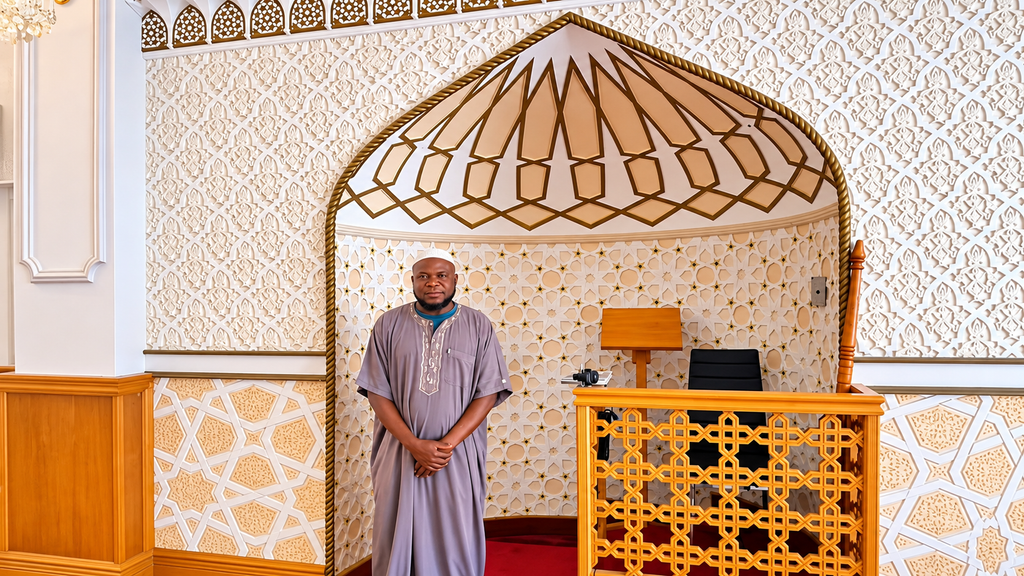
According to Rasheed, it was the only mosque in Cape Town that kept its doors open when the COVID-19 pandemic hit South Africa and places of worship were forced to close. This saw many Muslims from across the city flock to the Hout Bay religious institution.
“Our masjid is open every day, and we have a well-attended masjid. We have many social issues in the area, and we seek to address, guide and educate the public in alignment with Islam,” he said.
“We were the only masjid in Cape Town that never went into lockdown during COVID-19, and that resulted in a lot of Muslims from various areas in Cape Town visiting here. Some continued coming here because they liked the topics delivered by our visiting imams and the education that they are receiving here.”
“We also have our classes on different days, and people attend when they can.”
“The mosque sees lots of workers in the area, which includes foreign nationals from Bangladesh, Pakistan, Somalia and Malawi, people from other areas and visitors to Hout Bay, for Jumu’ah on Fridays,” he said.
“And during Ramadaan, it gets full here with the Mandela Park Muslims who come in numbers in taxi loads to attend,” the sheikh added.
Built on donations, kept alive by devotion
The masjid, like many other mosques in Cape Town, depends on donations to cover its expenses and maintain the premises.
“We do our collection, which is not much, but we always have,” he said.
“Armien, who was one of the first trustees of the masjid, has been here for 39 years and still continues to play a very important role at the masjid. He makes sure that everything runs smoothly.”
“He appeals to Muslims, and we get donations which cover our expenses,” he said.
The place of worship, which hosts visiting imams every alternate week, broadcasts its call to prayer, the athaan, through a loudspeaker but lowers the volume for the early morning call out of consideration for neighbours.
Parking in the residential area surrounding the masjid also became an issue at one stage, but the former trustee employed a car guard to direct worshippers and ensure that parked vehicles did not obstruct motorists.
It is a small gesture — but it tells you everything about this masjid. In a village famous for its beauty, Masjidul Bahrayn is trying to be beautiful in another way: considerate towards neighbours, open to strangers and faithful to the community that built it, brick by brick, donation by donation, pot by pot.
From a corner plot that could not be zoned, to an exchanged piece of land that stood dormant under mounting penalties, to a mosque that opened on the 15th of Ramadaan in 1992 — and, according to its assistant imam, remained open even during the pandemic.
That is the story of Hout Bay’s little mosque on the hill.