
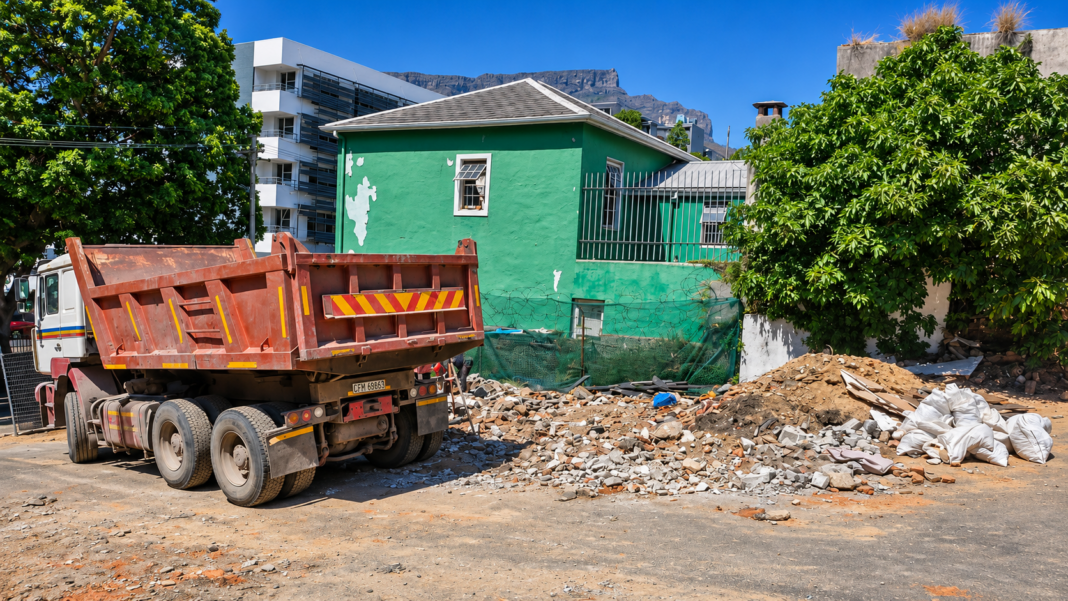

Residents of Cape Town’s Bo-Kaap are demanding to see a demolition permit, a halt to construction and answers from the City’s mayor after a controversial property developer damaged a heritage property beside Auwal Masjid.
The demolished historic wall, first recorded in municipal documents in 1768, is just metres from Auwal Masjid, the first mosque in South Africa.
The anger erupted after Flyt Property Investment began construction work a few weeks ago at 150 Buitengracht Street in Bo-Kaap.
The development previously received extensive media coverage after residents objected to it, warning that it formed part of gentrification in their residential area and could impact the heritage of surrounding properties, including the historic Auwal Masjid.
Many residents and organisations protested, lodging objections and appeals during processes involving the City of Cape Town and Heritage Western Cape. The developers were eventually given the go-ahead by the City after the mayor signed off on the project.
Now, residents say their worst fears are coming true.
Bo-Kaap Civic and Ratepayers Association (BKCRA) vice-chairperson Ebrahim Christian said the community wanted the City to account for what had happened.
“We want answers. The City must give answers to what is happening here. We warned them prior to the start of the development that they are dealing with heritage,” he said.
“This wall was recorded in 1768. It’s historic. We need to preserve such things, not demolish them.
“We want to see who authorised the demolition of this wall.”
Christian said a call had been made to the City to halt all further construction on the development until the demolition of the wall was clarified.
“Bo-Kaap is angry. The civic organisation and Auwal Mosque are challenging this development. Things were approved by the mayor, without consultations and assessments on the surrounding walls and so on,” he said.
“How the mayor could allow or authorise this project without coming out here to assess the buildings with professionals such as engineers before giving authorisation to developers is beyond us.”
According to Christian, one wall fell after being hit by diggers, whose operators acknowledged they had knocked it down, while the developer subsequently demolished another complete wall and propped up the residence with scaffolding.
“That wall was built in the 1700s. It is heritage. The developer demolished the complete wall.
“We as the BKCRA would like to know, and we want evidence of the demolition permit. We should be protected by these things,” he added.
Christian said an assessment had recently warned that there would be issues if the back wall was touched.
“Now it’s knocking us in the face what we warned them about.
“We want the City to provide us with evidence. We want that demolition permit. This comes across as underhanded dealing. We want the mayor to answer for this. He approved it.
“This is just creating further anger in the community,” he added.
Wall on record since 1768
According to records, the wall is documented as a party wall on the original Surveyor-General diagram of 1768, which is annexed to the property’s first deed of transfer, dated 22 June 1768.
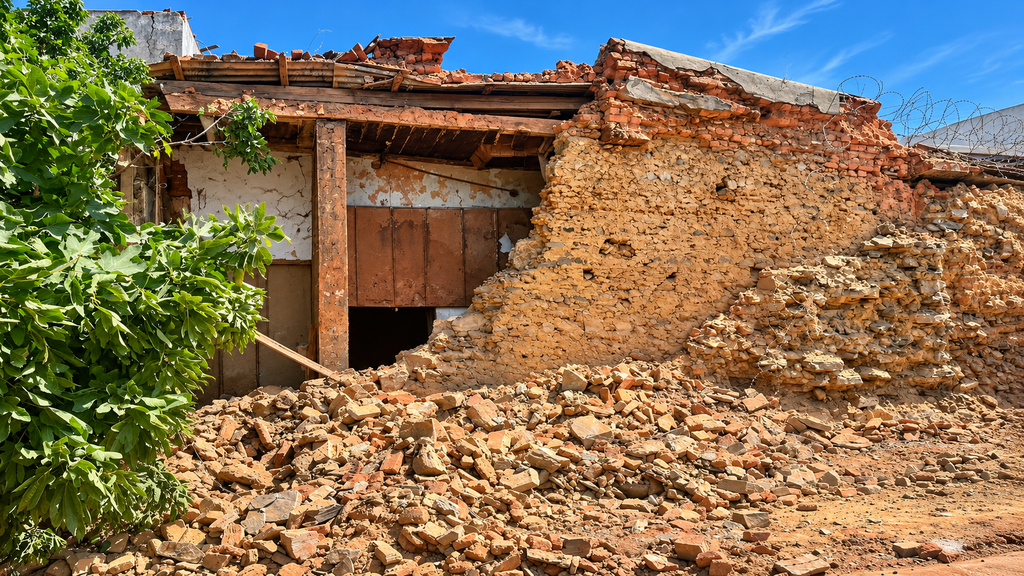
A Surveyor-General-approved diagram from 2021 carries the same party-wall record forward. The developer’s own land surveyor’s certificate from June 2026 also shows walls along this boundary before the demolition.
The wall has been on official record as a party wall since 1768.
In a letter documented this week by a resident, it is stated that the developers of the Flyt property damaged the adjoining and rear walls and installed steel props against her buildings without her consent.
The letter also calls on the City’s heritage officials to halt any further construction work on the site and investigate the demolition of the wall.
A senior City heritage professional has inspected the site and noted substantial damage and unauthorised work, raising concerns about the structural integrity and heritage fabric of the buildings.
Why Auwal Masjid matters
At the heart of the dispute is not just a wall. It is what the wall stands next to.
Auwal Masjid in Bo-Kaap, established in 1794, is recognised as the first mosque in South Africa. It was built by freed slaves and is a symbol of Islam’s survival under slavery and colonial rule, and of the community that built Bo-Kaap itself.
For residents, any damage to the heritage fabric around the mosque is not merely a technical building dispute. It is a threat to the living history of the community that still worships there, lives around it and has fought for decades to protect Bo-Kaap from being hollowed out by development.
That is why the demolition of a party wall recorded in 1768, a wall predating the mosque itself and forming part of the same historic urban fabric, has struck such a nerve.
Residents argue that heritage in Bo-Kaap cannot be protected in isolation. The mosque, the houses, the party walls, the narrow streets and the stoeps are all part of one continuous story.
When one piece is knocked down without a permit, they say, the whole story is put at risk.
City responds
The City of Cape Town acknowledged the request for comment and indicated that it would investigate and respond in due course.
For now, residents are waiting for the demolition permit, an order halting construction and an explanation of how a development approved at mayoral level could proceed without, in their view, a proper assessment of the historic walls around it.
Until then, the scaffolding propping up the damaged residence remains, and so does the anger.
The property developer has been approached for comment. Its response will be included in this article upon receipt.