
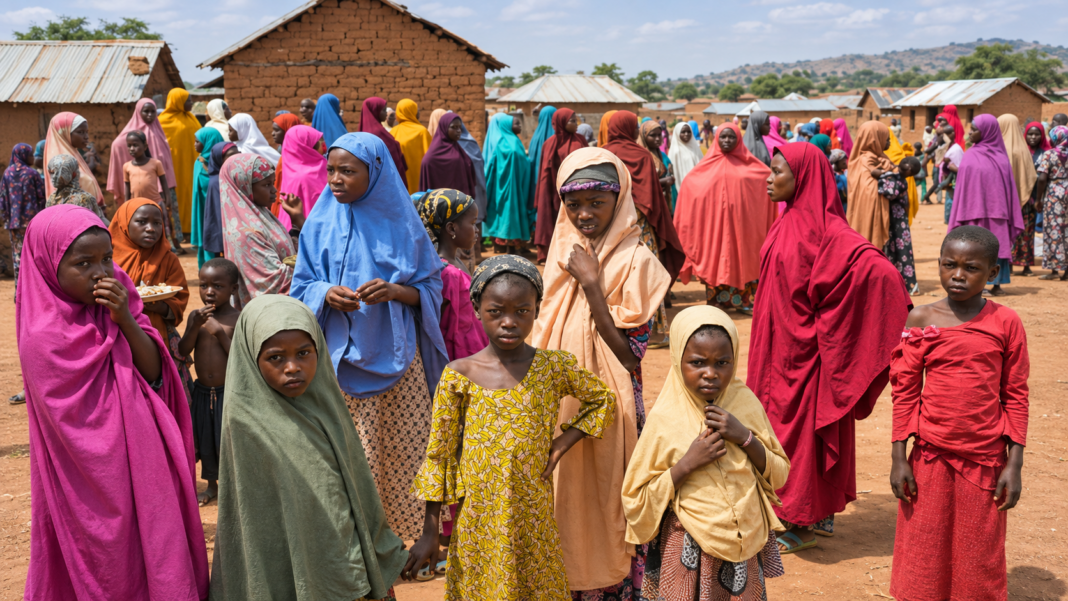

The abduction of children from a maize farm in Tungan-Bako, Niger State, has taken a disturbing turn. Armed bandits are reportedly demanding more than ₦100 million (R1.2 million) for the release of 14 Islamiya pupils — after discovering that their victims were not pupils of a well-funded government school but children from poor families.
The children were abducted on 31 October 2026 while helping their teacher harvest maize on his farm in Tungan-Bako village, Rafi Local Government Area of Niger State. The incident shows how insecurity has moved beyond classrooms into farms, places of worship and the everyday spaces where rural communities earn a living.
A case of mistaken value
According to reports quoting the pupils’ teacher, Malam Aminu Bako, the kidnappers initially believed they had captured children whose families could afford a substantial ransom. A parent, Malami Adamu, said the abductors were later told that the children attended an Islamic religious school, not a government institution.
That did not lower the price. The reported demand of more than ₦100 million has raised alarm about the desperation of families already struggling with poverty, insecurity and limited access to public services.
The Niger State Police Command confirmed the abduction of 14 Islamiya pupils from the farm. Its spokesperson, Wasiu Abiodun, said joint security teams had launched rescue operations. However, the pupils’ teacher later put the number of missing children at 15 — a discrepancy authorities were expected to clarify.
Kidnapping as a business
The case reveals a troubling dimension of Nigeria’s kidnapping crisis: the apparent calculation of victims’ economic value by criminal groups. Rather than treating the children as vulnerable minors, the abductors reportedly assessed their families’ ability to pay before setting their demand.
For parents in Tungan-Bako, the demand presents an almost impossible choice. Many households depend on subsistence farming and small-scale trading, with little capacity to mobilise enormous sums. The prospect of raising such money only deepens the trauma of families already uncertain about their children’s safety.
The incident also shows how insecurity is changing rural life. Agricultural activities that sustain household incomes and local food supplies are increasingly exposed to armed attacks. Farmers now face a difficult calculation: risk working their land or abandon their livelihoods because of threats from armed groups.
A hotspot for mass abductions
Niger State remains a major hotspot for mass abductions. In November 2025, gunmen abducted hundreds of pupils and teachers from St Mary’s Catholic School in Papiri, Agwara Local Government Area, following the kidnapping of 25 schoolgirls in neighbouring Kebbi State. Those incidents intensified national and international concerns over threats to children’s safety and access to education.
A UNICEF-commissioned study published in July 2025 identified insecurity, banditry, abductions and communal conflicts as major obstacles to education and development in Niger, Katsina and Zamfara states. It documented how violence disrupts schooling, displaces communities and restricts access to essential services.
Not just schools at risk
The latest incident is particularly significant because the children were not taken from a school compound. They were taken while doing farm work. Protecting school buildings alone cannot address the wider threat facing children in vulnerable communities.
Beyond immediate rescue efforts, the crisis raises questions about security arrangements in rural areas. Authorities must prioritise intelligence gathering, rapid-response operations and sustained protection for farming settlements, rather than relying solely on interventions after kidnappings occur.
There is also a pressing need to strengthen community-based early-warning systems and ensure local vigilante groups operate with adequate institutional support and coordination with professional security agencies.
For the families of Tungan-Bako, however, those broader questions are secondary to one urgent concern: bringing their children home alive. Their abduction is another reminder that poverty should never determine whose safety receives attention or whose children are protected.


