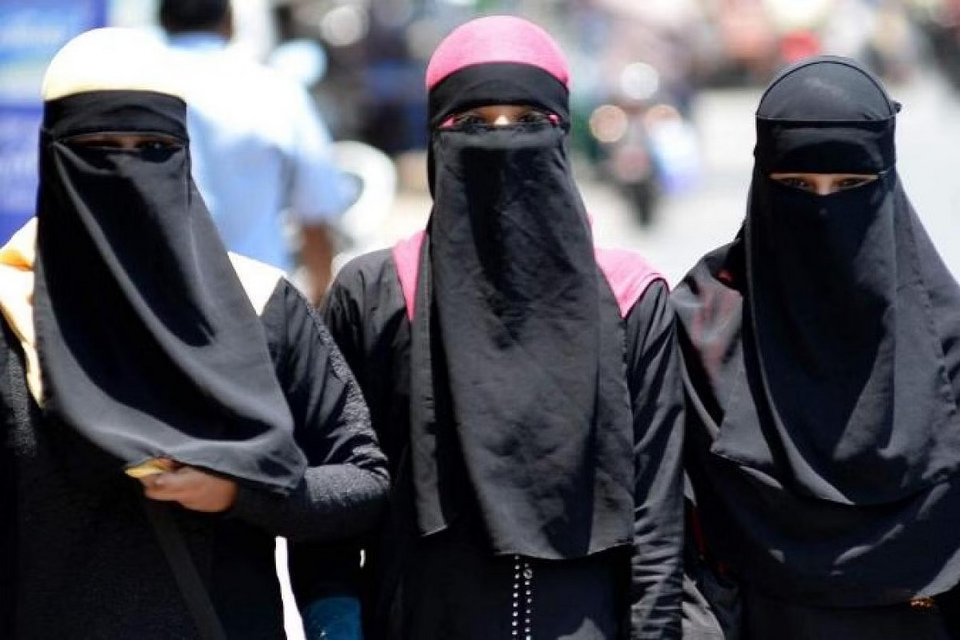

Portugal has enacted a new law banning the concealment of faces in public spaces, a measure expected to primarily affect Muslim women who wear the niqab or burqa.
The legislation was signed into law by President António José Seguro after being approved by parliament.
Although the final text does not explicitly refer to Islam, the proposal originated with the far-right Chega party, which campaigned for restrictions on full-face Islamic coverings.
The law prohibits clothing intended to conceal the face in public, with exemptions for health, professional and artistic purposes. Violations can result in fines ranging from €150 to €3,000, while separate penalties apply to anyone who forces another person to cover their face.
Chega leader André Ventura has argued that the measure is necessary to protect women and defend Portuguese values.
Opponents, however, say the law restricts rather than protects women’s freedom by preventing Muslim women who choose to cover their faces from doing so in public.
Amnesty International Portugal described the legislation as “discriminatory and a threat to human rights”, warning that it could affect freedom of religion, freedom of expression and participation in public life.
The organisation said removing explicit references to Islamic veils from the wording did not alter the fact that Muslim women would be among those most directly affected.
Portuguese Muslim commentator Abdullah al-Andalusi also criticised the measure, describing it as “deeply alienating and profoundly disappointing”.
He argued that the law targets a very small and vulnerable minority while presenting the restriction as a defence of liberty and equality.
Several Portuguese legal and professional bodies, including the Portuguese Bar Association and the Portuguese Association of Women Lawyers, had also raised objections to the original bill.
Full-face Islamic veils are believed to be relatively uncommon in Portugal, but the issue became a national political debate amid the growing influence of Chega and wider anti-immigration politics.
Portugal now joins several European countries that have introduced bans or significant restrictions on face coverings in public.
France introduced a nationwide ban in 2011, followed by Belgium, while Austria, Denmark, Bulgaria, Switzerland and the Netherlands have introduced similar restrictions of varying scope.
Supporters of such laws generally cite security, integration and women’s rights, while critics argue that Muslim women are disproportionately affected.
The legislation also comes amid broader concerns over discrimination against Muslims in Europe.
A 2024 survey by the EU Agency for Fundamental Rights found that almost half of Muslim respondents had experienced racial discrimination during the previous five years, with visibly Muslim women particularly vulnerable in areas including employment.
Critics of Portugal’s new law say it risks further restricting the ability of Muslim women who wear the niqab or burqa to participate in education, employment and public life.