

Islam is spreading rapidly across the rural heartlands of Southern Africa. In Mbota Village, in Malawi’s Chiradzulu District, where poverty, limited infrastructure and scarce resources shape everyday life, a new mosque is transforming far more than the village skyline.
Masjid Ramli Mohamed Salleh is becoming the centre of a growing Muslim community, supporting new reverts, expanding access to clean water and laying the foundations for long-term education and economic empowerment.
The journey began in 2023, when dawah initiatives were launched in the village to introduce residents to Islam. Over the past three years, around 150 villagers have embraced the faith, creating a vibrant community of reverts eager to deepen their understanding of Islam.
Their commitment to the faith began long before the new was built.
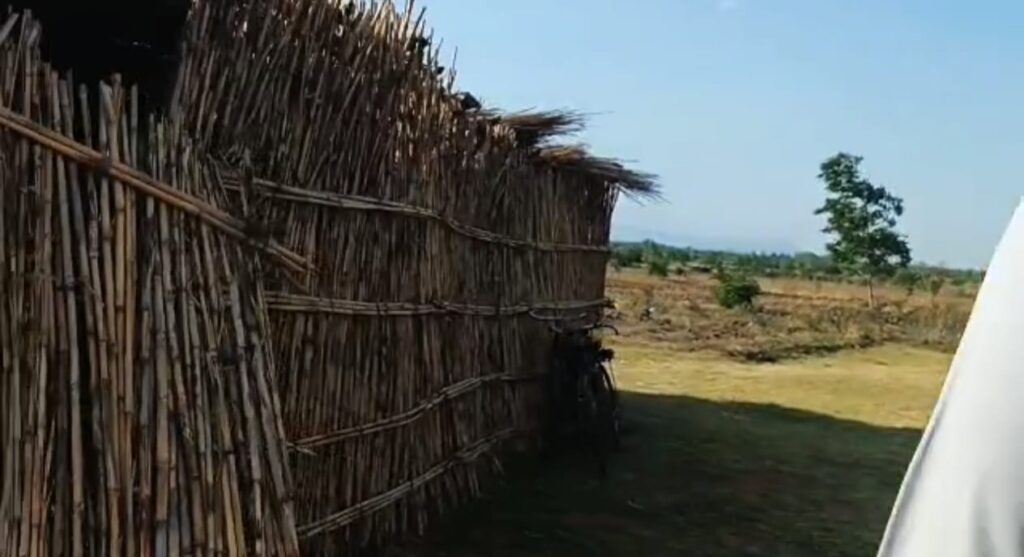
Before the new Masjid was built, Muslims in Mbota Village gathered for daily prayers and Islamic lessons in a simple grass-built Masjid. [Image/ Supplied]
For two years, the village’s Muslim community gathered in a modest grass-built mosque constructed from locally sourced materials. Despite its simplicity, the structure became the spiritual heart of the community, hosting the five daily prayers, Qur’an lessons and classes on the fundamentals of Islam.
A dedicated section for women ensured that both men and women could worship and seek Islamic knowledge.
To accommodate the rapidly growing Muslim population, Masjid Ramli Mohamed Salleh was constructed and officially inaugurated on 11 July 2026.
For many of the reverts, it is the first permanent, purpose-built mosque in which they have worshipped. Beyond serving as a place for the daily prayers, it provides a dedicated space to study the Qur’an, strengthen Islamic knowledge and foster unity among the village’s growing Muslim community.
The project’s impact, however, extends far beyond the mosque itself.
Access to clean drinking water has long been one of Mbota Village’s greatest challenges. As part of the development, an existing borehole was repaired and a second was installed, significantly improving access to safe water for the wider community.
Residents across the village, regardless of faith, now benefit from the improved water supply, demonstrating how humanitarian initiatives can provide practical relief while strengthening relationships between communities.
Those leading the initiative envision the mosque as the foundation of a broader programme centred on faith, education and sustainable development.
Plans are underway to establish an integrated madrassah providing Islamic education for both children and adults, helping the village’s growing community of reverts continue their Islamic journey.
Vocational training is also planned to equip residents with practical skills that can create sustainable livelihoods and improve household incomes.
Another proposed initiative is a beekeeping programme, introducing apiculture as an additional source of income while promoting environmental stewardship.

The long-term vision is to develop a holistic community centre in partnership with dawah, humanitarian and empowerment organisations, creating a model in which worship, education, service and self-reliance work together to strengthen the community.
While significant progress has been made, several practical challenges remain before that vision can be fully realised.
Poor road infrastructure continues to make access to Mbota Village difficult, affecting the transport of building materials, aid and visitors. Additional drainage systems are needed to protect the site during the rainy season, while improved lighting would enhance safety and allow educational and community programmes to continue after sunset.
Project leaders are also working with local residents and the mosque management committee to strengthen coordination and ensure the initiative continues to grow on a firm foundation of unity and community participation.
The project was made possible through the support of Global Ehsan Relief on behalf of Ramli Mohamed Salleh and Nur Masayu Abdullah, whose contribution has helped establish not only a new mosque, but also the foundations of a growing Muslim community.
For the people of Mbota Village, Masjid Ramli Mohamed Salleh represents far more than bricks and mortar.
From humble beginnings in a grass-built mosque to a permanent House of Allah, it stands as a symbol of faith, perseverance and hope, offering generations of reverts and their families a place to worship, learn and build a stronger future together.