
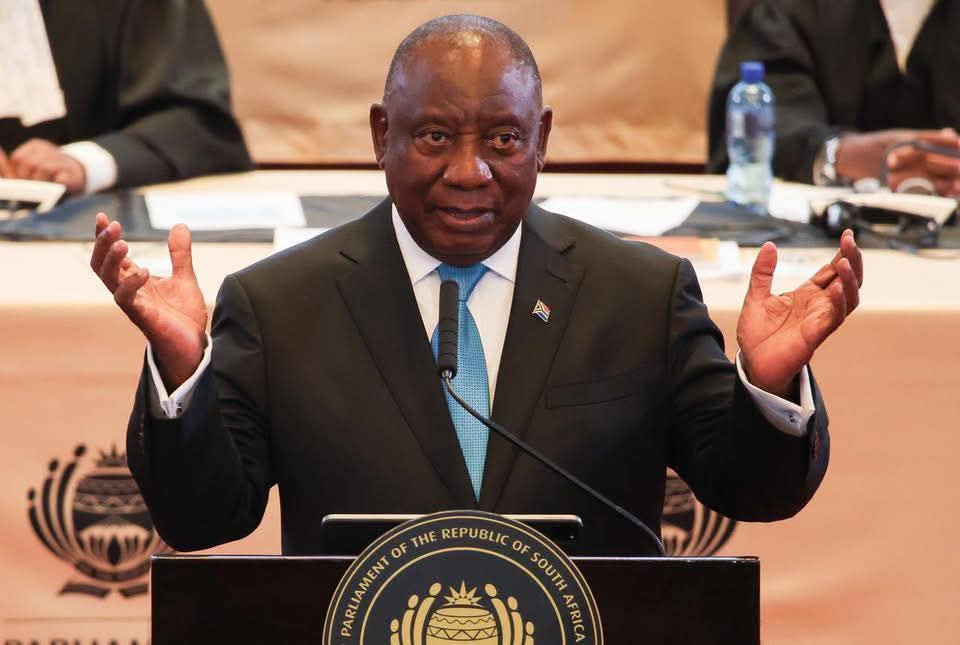

Ghana has postponed high-level bilateral talks involving South African President Cyril Ramaphosa as growing xenophobic unrest and the repatriation of foreign nationals strain relations between the two countries.
The meetings had been scheduled to take place in Ghana in early August and were expected to be co-chaired by Ramaphosa and Ghanaian President John Dramani Mahama.
Ghanaian authorities requested that the engagement be deferred, warning that the political climate surrounding anti-migrant protests in South Africa could overshadow the talks and trigger demonstrations in Ghana.
While Ghanaian officials initially referred to the planned engagement as a state visit, South Africa has disputed that description. Pretoria says Ramaphosa was expected to attend the third session of a bilateral commission between the two countries rather than undertake a formal state visit.
Both governments have indicated that diplomatic discussions will continue to identify a new date for the meeting.
Ghanaians repatriated amid rising fears
Relations have deteriorated amid a surge in anti-foreigner protests and violence across South Africa, prompting Ghana to begin voluntarily repatriating hundreds of its citizens.
More than 800 Ghanaians initially registered for evacuation, with several repatriation flights organised in coordination with South African authorities. Some Ghanaian nationals were also moved to temporary places of safety amid fears of further unrest.
Nigeria, Malawi, Mozambique and other African countries have also taken steps to evacuate or repatriate citizens threatened by the unrest.
More than 25,000 foreign nationals were reportedly repatriated from South Africa ahead of a 30 June deadline imposed by anti-migrant groups demanding that undocumented foreigners leave the country.
The crisis gained further attention after footage circulated online showing a young Ghanaian being confronted and told to return home and “fix” his own country.
Migrants, including some with valid documentation, have reported being threatened, assaulted, evicted from their homes and dismissed from their jobs during the unrest.
Dispute over Ghanaian deaths
The diplomatic row intensified after Ghana condemned the reported killing of one of its nationals during protests in Cape Town’s Khayelitsha township on 30 June.
Ghanaian authorities identified the alleged victim as 40-year-old Bahiru Isak and said he had been killed during anti-immigration unrest.
South African authorities disputed the account, saying they had no record of such a killing. Pretoria maintained that the only Ghanaian death under discussion involved 35-year-old Kwabena Boagen and said there was no evidence linking his death to the protests.
South African officials subsequently accused Ghana of circulating inaccurate information about the country’s handling of irregular migration.
The two governments have also presented conflicting accounts of the legal status of Ghanaians living in South Africa. Accra maintains that many of its citizens held valid residency documents, while Pretoria has challenged that claim. Neither side has publicly released sufficient evidence to settle the dispute.
Pressure mounts on Pretoria
Ramaphosa has condemned xenophobic violence and warned that private groups have no authority to enforce immigration laws or forcibly remove foreign nationals.
He has also pledged tougher action against irregular migration while acknowledging public frustration over unemployment, crime and pressure on public services.
However, critics argue that successive South African governments have allowed anti-migrant rhetoric and vigilantism to deepen by failing to protect foreign nationals and address the economic conditions used to justify attacks.
Ghana previously petitioned the African Union over recurring xenophobic violence in South Africa, calling for a fact-finding mission and stronger continental action to protect African migrants.
The Ghanaian government argued that attacks on foreign nationals undermine African integration and contradict the principles underpinning the African Continental Free Trade Area.
South Africa has faced repeated waves of xenophobic violence since the end of apartheid, with migrants regularly blamed for unemployment, crime and pressure on housing and public services.
The latest unrest has renewed accusations that South Africa has forgotten the political, financial and material support it received from other African nations during the struggle against apartheid.
With several governments now evacuating their citizens and publicly challenging Pretoria, South Africa faces mounting pressure to curb xenophobic violence or risk further damaging its diplomatic standing across the continent.