


By Dr Malusi Gigaba & Dr Omano Edigheji
As South Africa grapples with unemployment, rising living costs and growing hostility towards migrants, a new analysis warns that the country’s economic future is far more dependent on the rest of Africa than public debate often acknowledges.
Authored by former Home Affairs Minister Dr Malusi Gigaba and governance expert Dr Omano Edigheji, the report argues that migration cannot be separated from Africa’s wider economic integration.
Rather than viewing refugees and migrants solely through the lens of crime, security and employment, it contends that South Africa’s prosperity is deeply tied to the continent through trade, energy, investment and infrastructure.
Gigaba and Edigheji acknowledge the genuine economic hardship facing millions of South Africans but caution against blaming migrants for problems rooted in weak growth, deindustrialisation, failing infrastructure and poor governance.
They argue that organised crime operates through transnational syndicates rather than nationality and that law enforcement should target criminal networks instead of profiling individuals based on their country of origin.
South Africa’s economic dependence on Africa
Figures cited from the Trade Law Centre show that South Africa exported approximately R572 billion worth of goods to African countries in 2024 while importing around R196 billion, generating a trade surplus of nearly R376 billion.
Almost a quarter of South Africa’s exports are destined for African markets. Unlike exports to many global destinations, most goods sold elsewhere on the continent are manufactured products rather than raw minerals.

Around 64.3% of South Africa’s exports to Africa consist of manufactured goods, including vehicles, machinery, chemicals, processed foods, iron and steel.
Automotive exports alone reached R42.8 billion in 2023, making Africa the second-largest destination for South African vehicle exports after the European Union.
This trade helps sustain domestic manufacturing and jobs, while weakening regional relations could undermine one of South Africa’s most important economic advantages.
South Africa’s relationship with the rest of the continent is also one of dependence rather than one-way benefit.
Much of the country’s imported crude oil comes from African producers, while natural gas from Mozambique supplies most of South Africa’s industrial gas demand.
Electricity generated by Mozambique’s Cahora Bassa hydroelectric scheme also plays an important role in powering the South African economy.
Future industrial growth will depend heavily on continued access to African markets, particularly as the African Continental Free Trade Area expands opportunities for intra-African commerce.
The agreement is expected to increase trade between African countries and boost demand for manufactured goods, an area in which South Africa remains one of the continent’s strongest producers.
South African telecommunications, banking, retail and energy companies have also built major operations across Africa, making regional stability and goodwill increasingly important to their continued growth.
President Cyril Ramaphosa is quoted as saying: “South Africa’s future is inseparable from the future of our African continent.”
Rising ‘Afrophobia’ threatens regional interests
Against this backdrop, Gigaba and Edigheji warn that growing hostility towards African migrants could have consequences far beyond domestic politics.
Public anger directed broadly at foreign nationals, they argue, risks damaging South Africa’s diplomatic and economic relations across the continent.
They point to the backlash following xenophobic violence in 2019, when protests targeted South African businesses in several African countries and diplomatic relations temporarily deteriorated.
Similar tensions could threaten trade, investment and South African companies operating elsewhere in Africa.
Former Statistician-General Pali Lehohla is quoted as warning: “Standard Bank, Absa, Nedbank, MTN — they’re all over Africa. Vodacom, Shoprite… it is very easy to retaliate and they’ll be in trouble.”
He added that resentment elsewhere on the continent could grow if South Africans are perceived as mistreating fellow Africans while South African businesses continue to profit from regional markets.
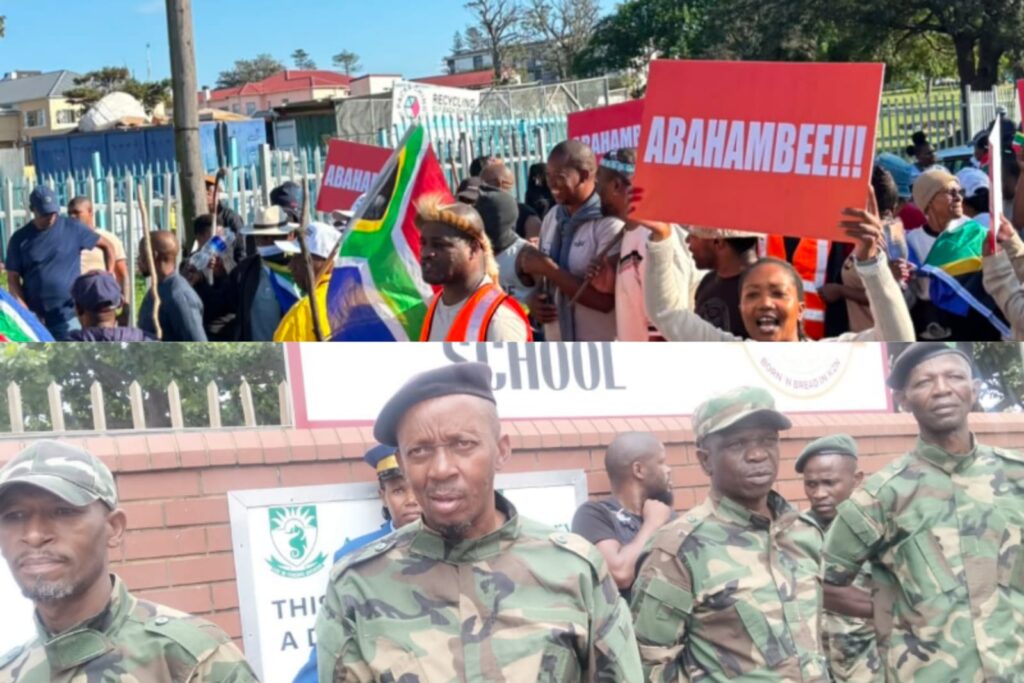
South Africa’s cultural influence, tourism industry and international reputation could also suffer if perceptions of hostility towards Africans continue to deepen.
South African music, sport and creative industries increasingly depend on audiences across the continent and the wider African diaspora.
International research cited in the analysis also suggests that migrants make a positive contribution to South Africa’s economy.
A World Bank study found that immigrant workers generated employment opportunities rather than reducing local employment.
Research by the Organisation for Economic Co-operation and Development and the International Labour Organization also estimated that foreign-born workers contribute significantly to South Africa’s economic output.
The paper challenges widely circulated claims about the scale of undocumented migration, arguing that some figures repeated in public debate are inconsistent with census data.
At the same time, it acknowledges that competition within parts of the informal economy is real and that some South Africans have faced increased pressure in sectors where migrant-owned businesses operate.
However, these localised challenges should not obscure the structural failures that have constrained job creation for years.
South Africa has both the right and responsibility to manage migration lawfully while protecting the dignity of everyone living within its borders.
Rather than treating migrants as the source of the country’s economic difficulties, policymakers should focus on rebuilding state capacity, strengthening regional cooperation and expanding shared prosperity across the continent.
South Africa’s long-term prosperity, Gigaba and Edigheji conclude, will depend not on isolation, but on deeper cooperation with its African neighbours.