

“There can be no keener revelation of a society’s soul than the way in which it treats its children,” former South African president Nelson Mandela declared in May 1995.
More than three decades later, South Africa’s latest child safety and wellbeing statistics present a deeply unsettling picture – one that stands in stark contradiction to the moral vision Mandela articulated after the end of apartheid.
Taken together, the figures point not merely to isolated criminal acts, but to a society grappling with structural violence, fractured family systems, economic despair and a widening moral crisis that is increasingly consuming its most vulnerable citizens: children.
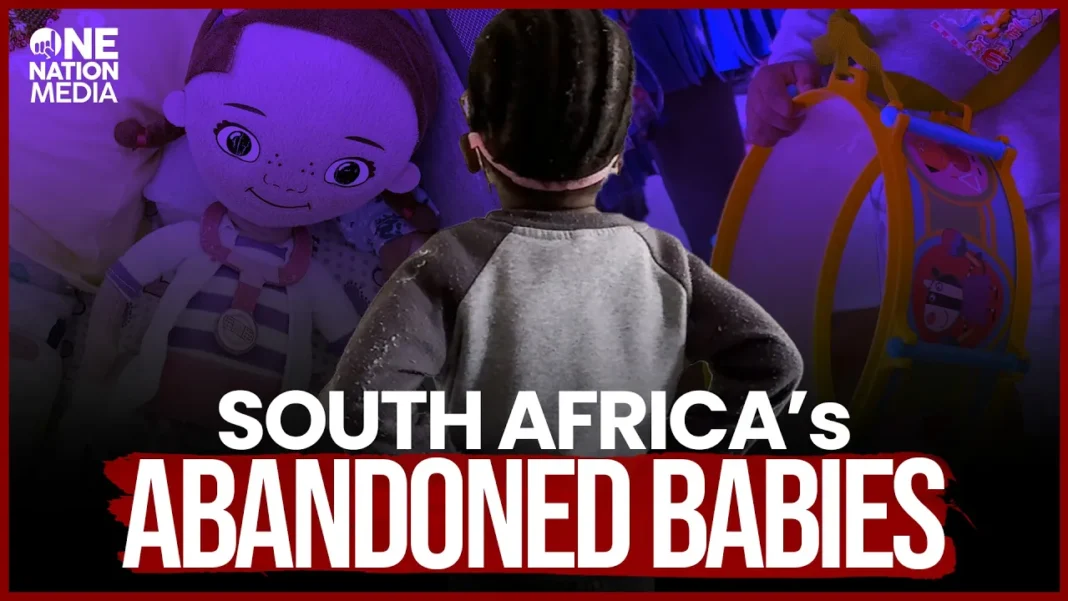
Current data paints a harrowing national reality. Three children are murdered every day in South Africa, while one in three girls and one in five boys experience violence before the age of 18. Around 3,000 babies are abandoned annually, and between 2.8 and 3 million children are classified as orphans in a country with a population of roughly 63 million people. More than 26,000 cases of child abuse were reported during the 2024/25 period, while an estimated 355,000 cases of sexual abuse were recorded among children aged 15 to 17. Only one in four children lives with both parents; approximately four million children live without either biological parent, and around 60% of children do not have their father’s name on their birth certificate.
The statistics, drawn from agencies including Statistics South Africa and UNICEF, are widely linked to intersecting pressures such as poverty, violent crime, substance abuse, family instability and the lingering impact of the HIV/AIDS epidemic.
Yet beyond economics and public policy lies a deeper societal rupture. The erosion of family structures, the normalisation of violence, absent fathers, weakened communal bonds, and failing institutions have together created conditions in which many children are growing up emotionally neglected, socially vulnerable and physically unsafe.
South Africa’s orphan crisis is frequently described as one of the most severe in the world, driven not only by disease and death, but also by the slow fragmentation of the social fabric itself.
Beyond the statistics, individual cases continue to shock the country and expose the scale of child vulnerability across South Africa.
The deaths of children such as 11-year-old Jayden-Lee Meek, allegedly killed by his mother, and 14-year-old Likhona Fose from Roodepoort, whose mutilated body was discovered in June 2025 amid disturbing allegations of ritual-related violence, have become emblematic of a broader crisis affecting South Africa’s children, particularly those under the age of 14.
In the Eastern Cape, the death of Baby Cwecwe intensified public outrage over child safety in schools and renewed scrutiny of institutional failures and delayed responses by authorities.
According to data released by the South African Police Service, between October and December 2024 alone, 273 children were murdered, 480 children survived attempted murder, and more than 2,164 cases of assault with intent to cause grievous bodily harm against children were recorded.
The figures reinforce a disturbing reality: for many South African children, danger exists not only in public spaces, but also within homes, schools and institutions meant to provide protection.
Alex Talbot of Women Men Against Child Abuse described the situation in stark terms.
“South Africa is sitting with numbers that should rattle the walls. Three children dying violently every day is not a statistic; it’s a structural failure playing out in real time,” she said.
Her remarks reflect growing concerns among child protection organisations that the crisis can no longer be understood simply through the lens of criminality. Rather, it reflects a deeper collapse involving poverty, fatherlessness, weakened communities, overwhelmed social workers and increasingly fragile support systems.
Muslim efforts in Benoni
Saadia Patel of the East Rand Welfare Centre, who works directly with orphaned and abandoned children, said institutional care is often a last resort rather than an ideal solution.
“As much as we say our facility is nice, this is not the ideal set-up for children. The first would be family, then foster care and then child and youth care centres. But because history has proven there are not enough families and not enough resources for people to take care of children, the system allows us to give them hope and the care they need,” Patel said.
She also recounted a deeply troubling reality from within the child welfare system.
“I recently spoke to a social care worker who told me there was an entire ward at one hospital filled with abandoned babies — an entire ward,” she said.
Patel further reflected on the spiritual and moral obligation to care for vulnerable children, drawing on Islamic teachings and the example of the Prophet Muhammad (peace be upon him).
“Our Prophet (peace be upon him) wants us to go beyond simply providing for children. We must see them, speak to them and listen to them,” Patel said.
She pointed to the Prophet Muhammad’s own experience of orphanhood as a source of dignity and hope for abandoned children.
“Even our Prophet (peace be upon him) was orphaned at a young age, yet according to our belief, he became the greatest man who ever lived. It does not mean these children have lost everything or cannot become somebody. The aim is to help them realise that they can still amount to something.”
Islam places extraordinary emphasis on the protection of children, orphans and the vulnerable. The Prophet Muhammad (peace be upon him) said: “Fear Allah and treat your children fairly.” (Bukhari, Muslim)
The Qur’an repeatedly warns against the neglect and oppression of orphans, elevating their protection to both a moral and spiritual obligation.
Islam and child welfare
Within the Islamic worldview, care for children is not delegated solely to the state. It is a collective responsibility shared by families, communities, institutions and society at large. A civilisation is judged not by its slogans or constitutional promises, but by how it safeguards those with the least power.
This stands in stark contrast to increasingly individualistic social models in which family breakdown, emotional detachment and social alienation have become normalised.
South Africa’s child crisis remains inseparable from broader national realities: entrenched poverty, unemployment, social fragmentation, violent crime and the lingering scars of historical inequality.
The result is a growing generation of children navigating unstable homes, emotional neglect, institutional care and environments shaped by fear and trauma.
While laws and child protection systems formally exist, the lived reality for many children tells a different story, one where safety is uncertain and childhood itself is increasingly marked by vulnerability.
The crisis raises profound questions for policymakers, religious institutions, communities and society at large: how does a nation rebuild protection for its most vulnerable? How does a society restore the moral accountability, family stability and communal responsibility necessary to safeguard its children?
For all the promises of the post-apartheid era, the condition of many South African children suggests a nation still struggling to protect life at its most innocent and defenceless stage.
Ultimately, societies that fail their children do not merely produce victims; they undermine their own future. A generation raised amid violence, abandonment and instability carries those wounds into the fabric of the nation itself.
Mandela’s warning, therefore, remains more than a moral reflection. It stands as a measure of civilisational health.
And if the treatment of children is indeed the revelation of a society’s soul, then South Africa faces an increasingly urgent question: what does the suffering of its children reveal about the condition of the nation itself?