
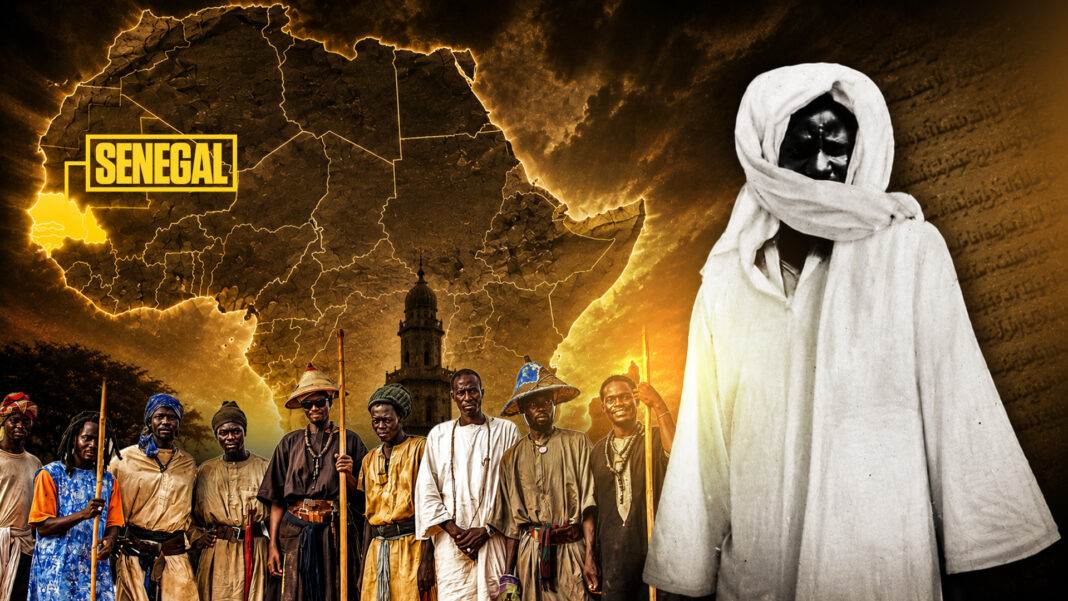

In Senegal, there are few places where religion, commerce and political authority intersect as completely as they do in the holy city of Touba. Built around the teachings of Shaykh Ahmadou Bamba, Touba is more than a spiritual centre. It functions as a parallel system of governance, economic organisation and social authority that, in many ways, operates alongside the Senegalese state rather than beneath it, writes Neelam Rahim.
To outsiders, the Mouride Brotherhood may appear to be simply another Sufi order in West Africa. In reality, it represents one of the continent’s clearest examples of how Islamic institutions can organise society beyond the formal structures imposed by the modern nation-state.
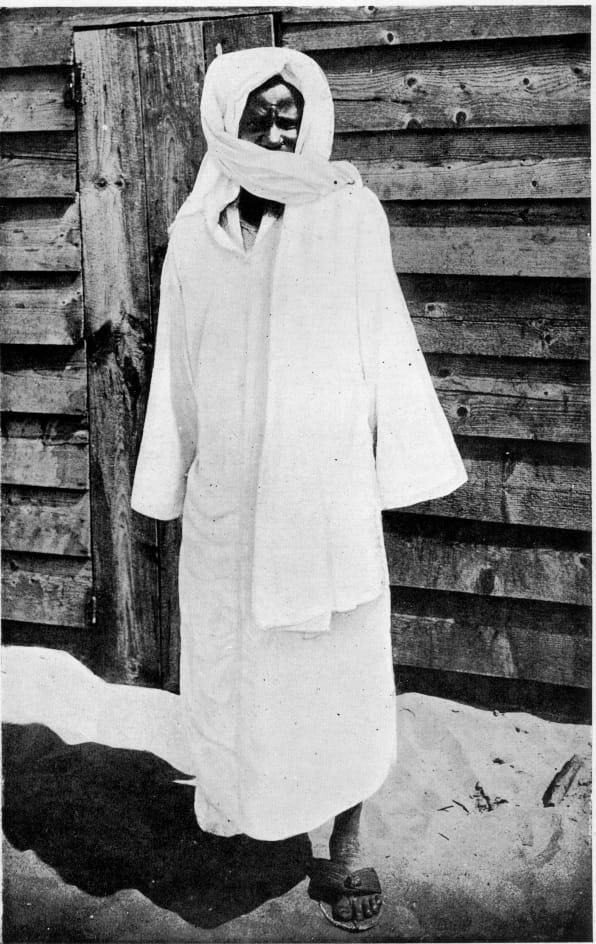
Founded during the late 19th century under French colonial rule, the Mouride movement emerged as both a spiritual revival and a social force. Ahmadou Bamba preached discipline, humility, labour and devotion to God at a time when French authorities feared the rise of Islamic resistance movements across West Africa. Though Bamba did not advocate armed rebellion, colonial authorities viewed his growing influence among Senegalese Muslims as a political threat and exiled him to Gabon in 1895.
That exile would later become central to Mouride identity, transforming Bamba into both a revered spiritual figure and a symbol of resistance to colonial domination. More than a century later, the Mouride Brotherhood remains one of the most influential Islamic movements in Africa, with millions of followers across Senegal and diaspora communities stretching from Paris and Milan to New York and the Canary Islands.
Touba: A “state within a state”
At the centre of Mouride influence stands Touba itself. Founded by Ahmadou Bamba in 1887, the city has grown into Senegal’s second-largest urban centre and one of the most important religious capitals in Africa.
Yet Touba does not function like an ordinary city. The city possesses a unique religious status and is largely administered through the authority of the Mouride leadership under the khalifa-general, the supreme head of the brotherhood.
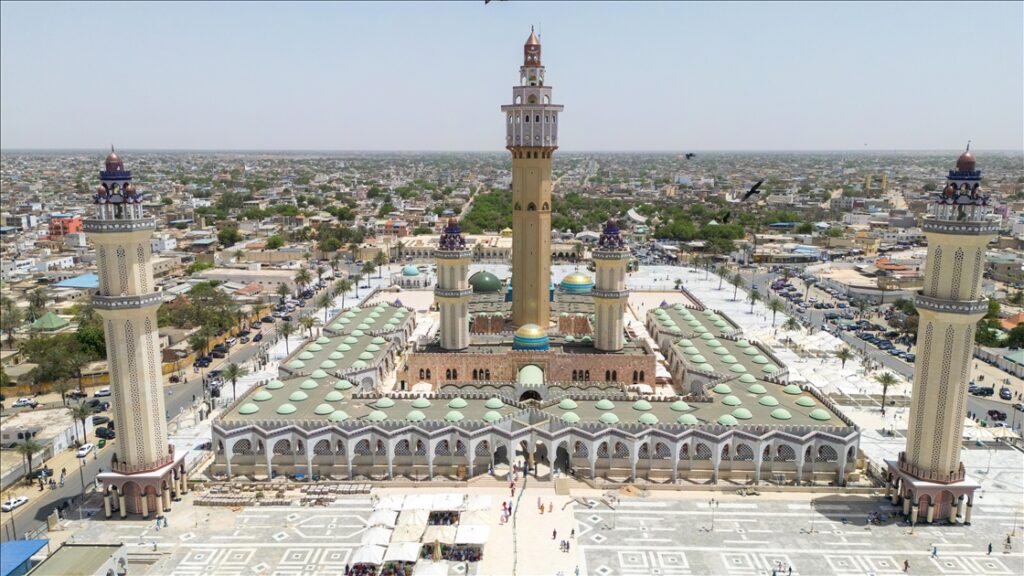
In practical terms, many aspects of social order that would ordinarily fall under the state are shaped instead by religious authority. Mouride leaders mediate disputes, regulate public morality and oversee much of the city’s religious and social life. Alcohol and tobacco are prohibited within Touba, while religious structures often command greater legitimacy among residents than formal state institutions.
For decades, analysts have described Touba as a “state within a state” – not because it exists outside Senegal, but because of the extraordinary influence the Mouride order exercises over governance, commerce and everyday life within the city.
Worship through labour
Yet the brotherhood’s influence does not rest on spiritual authority alone. Its power is deeply tied to economics.
From the colonial era onward, the Mourides cultivated a culture that fused worship with labour. Hard work was framed not merely as economic activity, but as an act of spiritual discipline and devotion. Mouride disciples historically cultivated peanut farms across Senegal’s interior, helping build one of the country’s most important agricultural sectors during the 20th century.
Over time, these networks expanded far beyond farming into transport, construction, retail trade and international commerce.
At the centre of this system lies the relationship between marabouts, spiritual guides and their disciples. Followers provide loyalty, labour and financial contributions, while the brotherhood offers protection, commercial opportunity, social support and spiritual legitimacy.
These bonds helped create resilient trading networks that now stretch far beyond Senegal itself. Across West Africa, Europe and North America, Mouride merchants have built extensive business communities rooted not simply in profit, but in religious trust and communal solidarity.
The business of religious gathering
Touba functions as the heartbeat of this economic ecosystem. The city’s markets attract traders from across the region, while the annual Grand Magal gathering generates enormous commercial activity.
Held each year to commemorate the exile of Cheikh Ahmadou Bamba by French colonial authorities in 1895, the Grand Magal draws millions of Mouride followers and visitors to Touba. While deeply significant within Mouride religious tradition, the gathering is distinct from the Islamic Hajj pilgrimage to Makkah and is not a religious obligation in Islam.
During the event, Touba transforms into a vast centre of worship, hospitality and commerce. Hotels, transport operators, food vendors, traders and informal businesses all benefit from the economic surge surrounding the gathering, reinforcing the city’s role as both a spiritual and commercial hub within Senegal.
The brotherhood’s economic influence has inevitably translated into political power. Senegal is formally a secular republic, yet no serious political figure can afford to ignore the country’s powerful Sufi orders. For decades, politicians have sought the support and blessing of influential marabouts, recognising that religious networks continue to shape social legitimacy and voting behaviour across the country.
Beyond the modern nation state
Still, the Mouride model reveals something far larger about governance in West Africa. Across much of the region, formal state institutions alone do not organise society. Religious brotherhoods, tribal structures and customary authorities continue to provide welfare, mediation, employment and social cohesion where governments are often weak, distant or mistrusted.
The Mourides demonstrate how Islamic institutions can function simultaneously as spiritual communities, business networks and systems of governance. Their influence challenges the Western assumption that religion belongs only in the private sphere. In Touba, Islam is not confined to the mosque. It shapes markets, labour relations, urban life and political authority itself.
More than a century after Ahmadou Bamba founded the brotherhood, the Mourides remain one of modern Africa’s clearest examples of how Islamic institutions can build enduring systems of order, commerce and social organisation outside purely secular frameworks.
At a time when many post-colonial states continue to struggle with legitimacy, inequality and social fragmentation, Touba stands as a reminder that for millions across West Africa, faith is not separate from governance or economics – it is the foundation upon which both are built.
You can read more of One Nation Media’s Islamic civilisation and African history features here.


Interesting reading. I would have loved to also read about some of the Sufi groups (even briefly) that exist in Senegal.