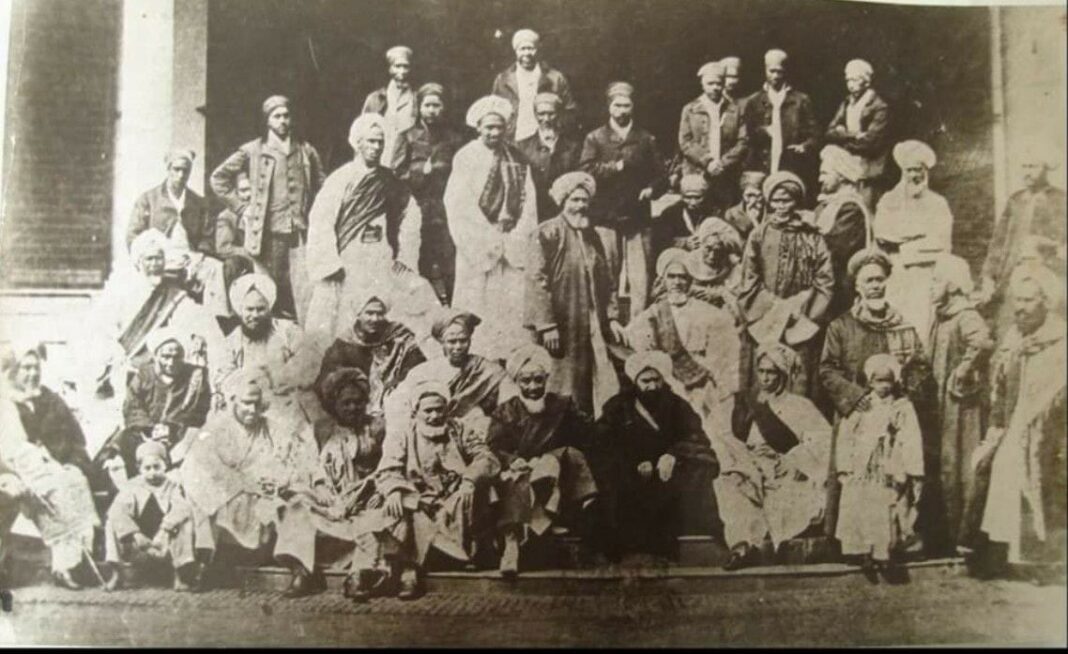

Islam in South Africa did not arrive through conquest, trade, or voluntary migration. It was imposed through exile, sustained under suppression, and later organised into a structured religious and social system under colonial rule, writes Neelam Rahim
What is often presented as a simple story of minority survival is, in reality, a case study in how Islam takes root under constraint, adapts under pressure, and consolidates into institutional form despite systematic attempts to contain it.
The Cape phase: Exile, suppression and early formation
From the mid-17th century, the Dutch East India Company transformed the Cape into both a strategic port and a site of political exile. Muslims from the Dutch East Indies were transported not as settlers, but as prisoners and enslaved individuals removed for resisting imperial authority in the native lands. Islam, in this phase, was not allowed to expand but deliberately contained, with public worship prohibited and religious practice surviving through informal networks, memory, and oral transmission.
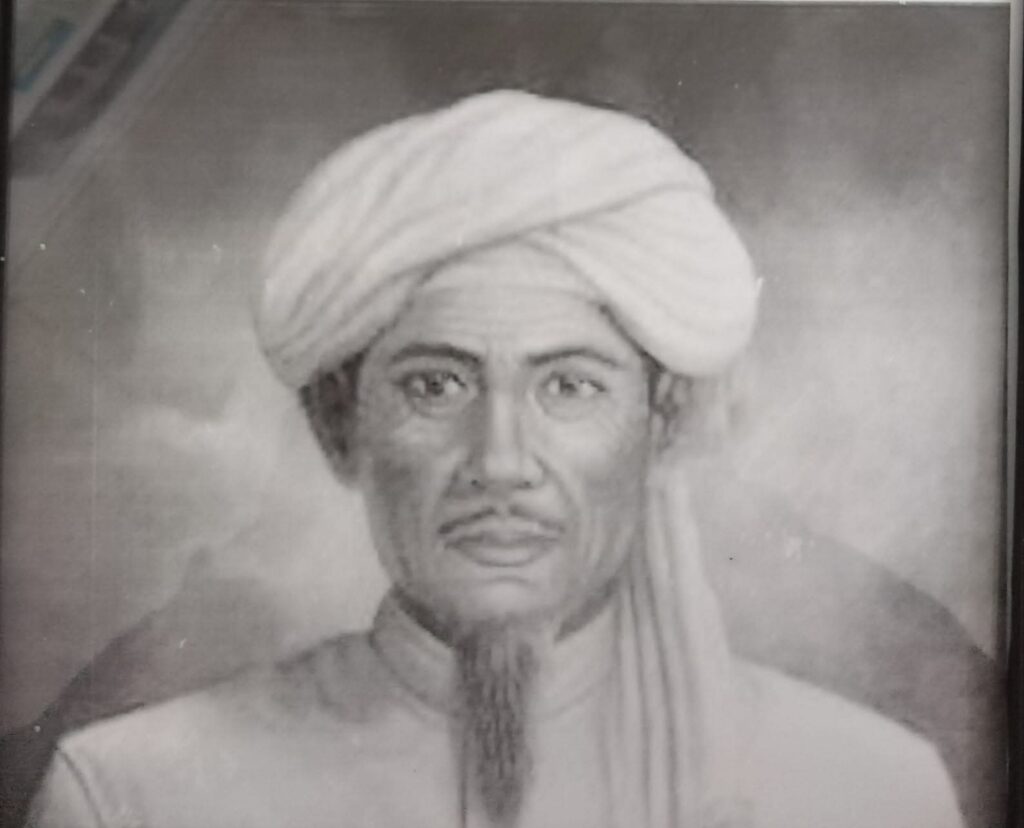
A key turning point came in 1694 with Sheikh Yusuf of Macassar. Exiled and deliberately isolated by Dutch authorities, he instead became a centre of consolidation. Around him, enslaved people and fugitives formed one of the earliest structured Muslim communities in South Africa.
What emerged was not just faith preservation, but early social organisation under coercive conditions.
Tuan Guru and the birth of institutions
By the late 18th century, Islam in the Cape moved beyond informal preservation and into institutional formation. At the centre of this shift was Tuan Guru, a scholar imprisoned on Robben Island who would go on to become one of the foundational figures of Islam in South Africa. Working entirely from memory, he produced a 600-page theological text and handwritten copies of the Qur’an at a time when access to religious material was severely restricted, demonstrating that Islamic knowledge production could persist even under extreme limitation.
Following his release, he established a madrasah and later the Auwal Mosque in Bo-Kaap, marking a decisive transition from fragmented practice to structured religious education and communal organisation. This trajectory was further reinforced in 1863 when Sheikh Abubakr Effendi arrived in Cape Town, commissioned by the Ottoman Caliph at the request of the local Muslim community. His role extended beyond symbolic presence, as he formalised religious instruction, strengthened madrasa systems, and reinforced a growing institutional framework, by which point Islam in South Africa had moved firmly from survival to organisation.
The Natal phase
The second major phase of Islam in South Africa was shaped by 19th-century Indian migration under British colonial labour systems. Between 1860 and 1911, over 150,000 indentured labourers were brought to Natal, with Muslims forming a minority within this group, later joined by independent “passenger” traders who established commercial networks across Durban, Pretoria, and surrounding regions.
Figures such as Sufi Sahib played a central role in anchoring Islamic life in these emerging urban centres, establishing mosques and religious institutions that provided continuity in an otherwise restrictive and racially stratified environment.
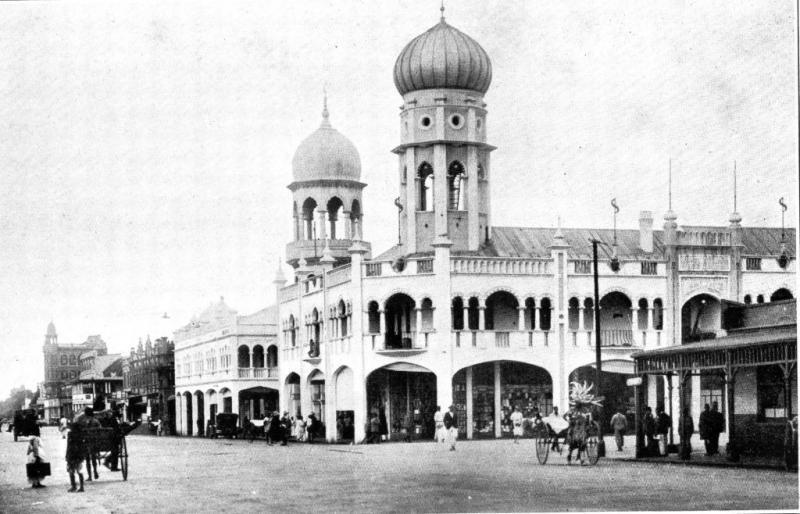
The Grey Street Mosque in Durban became one of the key institutional landmarks of this period, illustrating how Islam was no longer confined to survival under exile but was adapting to new economic realities while maintaining its religious infrastructure and reconfiguring itself within a hostile system rather than dissolving under it.
Islam in South Africa is often reduced to “Malay” and “Indian” categories, a framing that obscures both historical and contemporary African Muslim presence. From the 19th century, Muslim labourers from Zanzibar and East Africa formed part of the broader influx into South Africa, while in the post-1994 period, conversions among indigenous Black South Africans have steadily increased, reshaping the demographic and cultural composition of the Muslim community.
This shift reflects more than demographic change; it represents an expansion of identity in which Islam is no longer confined to inherited colonial classifications but is becoming more fluid, more diverse, and less tied to singular ethnic narratives.
Apartheid era
Under apartheid, Muslim communities were subjected to the same system of racial engineering that defined the broader South African order. The Group Areas Act forcibly removed communities from established neighbourhoods such as District Six, dismantling social networks and restructuring Muslim life into segregated zones as part of a deliberate process of fragmentation rather than incidental disruption.
Within this environment, however, Islamic institutions did not collapse but instead consolidated, with mosques, madrasahs, and community organisations becoming centres not only of religious continuity but of political consciousness.
Islam, in this period, functioned as both a faith and a framework through which injustice was understood and resisted, with Muslim participation in anti-apartheid movements reflected in figures such as Imam Abdullah Haron and Ahmed Timol, demonstrating how religious identity and political resistance became intertwined under pressure.
Post-apartheid era
The post-apartheid period introduced a structural shift in both scale and composition. Migration from across Africa and South Asia, combined with local conversions, has significantly diversified the Muslim population, with Muslims now represented across government, academia, business, and civil society.
However, this expansion has introduced new layers of complexity, particularly around questions of identity, authority, and interpretation within a plural and increasingly globalised environment. Islam in South Africa is therefore no longer defined by a single historical trajectory, but by overlapping and sometimes competing identities, reflecting a transition rather than a decline.
The history of Islam in South Africa is not simply a narrative of arrival or minority endurance, but a demonstration of how a religion subjected to exile, labour exploitation, and racial engineering can still produce continuity, institutions, and identity. Across the phases of exile, labour migration, and post-apartheid transformation, Islam has moved from survival under constraint to a structured presence within a complex and evolving society.
The question now is no longer whether Islam can sustain itself in South Africa, as it has already done so under far harsher conditions, but what role it will play in defining the values, direction, and future of the society around it.
You can read more of One Nation Media’s Islamic civilisation and African history features here.