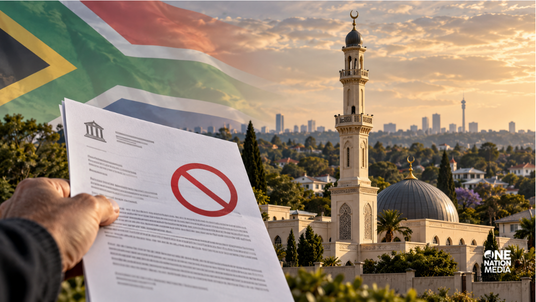

For Muslim families moving into Johannesburg’s northern suburbs, finding a nearby place to pray should be a straightforward part of settling in. In Blairgowrie, Oaklands and Sunninghill, it has instead led to fierce opposition, objections, tribunal hearings and court battles.
On paper, the disputes are about town planning: parking, traffic, land use and noise. But those involved say some objections raise a deeper and more uncomfortable question — whether suburbs shaped by South Africa’s segregated past are ready to accommodate communities and cultures once excluded from them.
Blairgowrie: “Too few Muslims” for a mosque?
The Blairgowrie Muslim Association Trust applied to rezone 70 Conrad Drive for a mosque accommodating a maximum of 75 worshippers. Twenty-three external objections were lodged.
Significantly, every relevant City of Johannesburg department supported the application and agreed there was a need for a mosque in the area.
Some residents disagreed. One objector presented a community survey claiming that only around 1% of Blairgowrie households were Muslim — too few, they argued, to justify a mosque. Others raised concerns about traffic, parking and whether the property could accommodate the development without affecting the character of the neighbourhood.
The applicant pushed back.
Planning consultant Johan Visser said the application reflected Johannesburg’s changing demographics, noting that 30 years ago an Islamic facility in what was regarded as a white Christian area would have been almost unthinkable.
The City’s land-use representative also backed the mosque, arguing that the proposed religious use would have less impact than some business activities already permitted on the property.
Oaklands: Beyond parking and traffic
A similar dispute is now before the Municipal Planning Tribunal in Oaklands, where the owners of a residential property want to use around 130 square metres as a musallah.
Attiyah Saloojee, co-director of Node Townplanning & Design and the authorised agent for the owners, told One Nation Media (ONM) that legitimate planning issues, including parking, traffic and compatibility with a residential area, must be taken seriously.
But she said some objections went much further, warning about “changing the social dynamics of the neighbourhood” and the “integration of cultural differences”.
In South Africa, she said, such language carries particular weight. Modern planning policy is intended to dismantle apartheid-era spatial exclusion, yet some objections appear to defend those old boundaries.
During proceedings, Saloojee said concerns were even raised that a religious facility would bring people from other areas into the neighbourhood — an argument she believes echoes apartheid-era thinking about who belongs where.
Johannesburg attorney Yousha Tayob, who is assisting with the matter, said some objections have focused on minor issues such as the sound of car doors closing when worshippers arrive for Fajr or Isha prayers.
“Many of these objections seem to be less about real planning problems and more about resistance to diversity and having a mosque in the area,” he said.
According to Saloojee, the Muslim community has submitted more than 1,000 letters of support.
The applicants have also offered compromises, including no amplified Adhan, alongside measures to address parking, lighting and noise.
Sunninghill: Eight years and still in court
Sunninghill demonstrates just how long such disputes can drag on.
The Sunninghill Islamic Jamaat Trust applied for rezoning in 2018. The City eventually approved the mosque in 2022, but the Friends of Sunninghill residents’ association approached the High Court seeking to have that approval reviewed and set aside.
The legal battle continues.
On 30 September 2026, Acting Judge Sarita Liebenberg granted the mosque trustees leave to appeal to a full court of the Gauteng Division of the High Court.
Eight years after the rezoning application was first lodged, there is still no finality.
More than a planning issue
These cases should not be reduced to Muslims versus residents of another faith. Each objection must be assessed on its merits, and genuine planning concerns deserve proper answers.
But taken together, the disputes reveal a wider struggle over how Johannesburg’s changing population fits into suburbs shaped by a far more segregated past.
Questions about parking, traffic and noise are legitimate. Questions about whether certain communities belong in particular neighbourhoods are something else entirely.
Islam teaches that human difference should lead to understanding rather than exclusion:
“We made you into peoples and tribes so that you may get to know one another.” (Qur’an 49:13)
For Johannesburg, the real test is not simply whether a mosque meets the technical requirements of planning law.
It is whether the city’s neighbourhoods are prepared to change alongside the people who now call them home.