

The South African government’s recent multi-agency enforcement operations targeting businesses suspected of employing undocumented foreign nationals have reignited debate over the balance between enforcing immigration and labour laws and protecting the rights, dignity and reputations of employers during investigations.
The operations, conducted jointly by the Department of Home Affairs, the South African Police Service (SAPS) and the Department of Employment and Labour, form part of the government’s intensified efforts to clamp down on unlawful employment practices and improve workplace compliance.
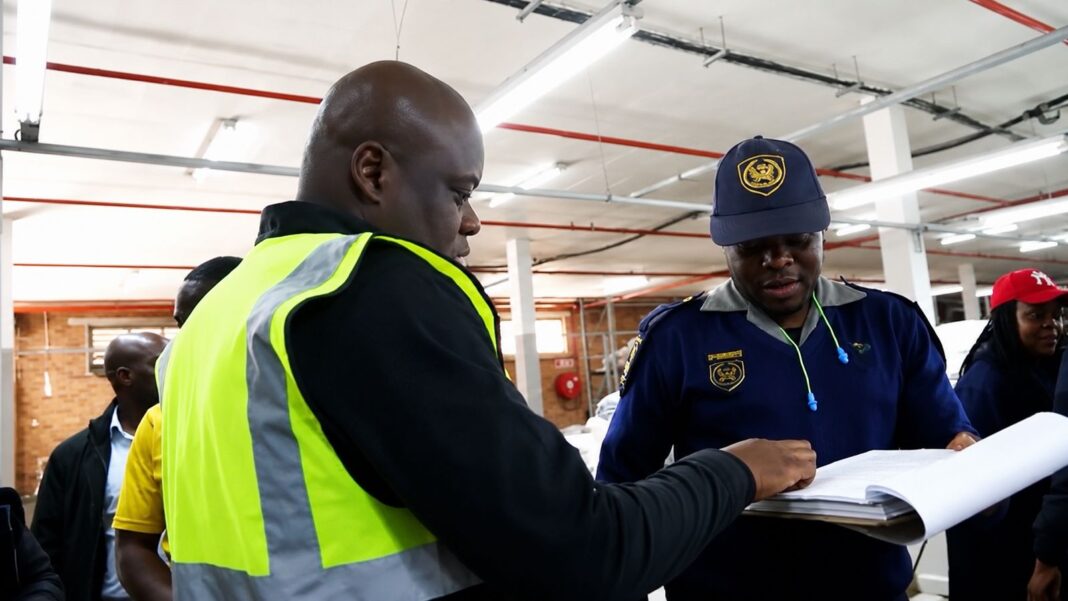
One of the most high-profile operations took place at Korteks Textiles Africa and Zaydtex, where Managing Director Khabir Tayob alleges that what began as a routine inspection quickly escalated into a public spectacle.
In a lengthy public statement released after the operation, Tayob said government officials, accompanied by media crews, entered the factory while he was hosting an international business visitor.
According to Tayob, officials later identified six Lesotho nationals employed in the company’s cut, make and trim (CMT) department whose immigration documents did not permit them to work in South Africa.
He said management believed the workers had been lawfully employed based on asylum documentation and pending applications for work authorisation.
“We accept that,” Tayob wrote.
“Where we are wrong, we will fix it.”
However, Tayob argued that his primary concern was not the compliance findings themselves, but the manner in which the operation was conducted.
He alleged that he and his brother were escorted by officials through the factory in full view of employees and media cameras before being placed in a police vehicle. He also claimed television crews filmed inside the premises without the company’s consent.
“It should never mean turning a compliance inspection into a live television spectacle,” Tayob wrote.
“It should never mean publicly destroying the reputation of a 30-plus-year business before they have been given a fair opportunity to respond.”
The textile manufacturer employs more than 220 people, the majority of whom, according to Tayob, are South African citizens.
He said businesses that fail to comply with the law should be held accountable, but questioned whether enforcement could be carried out “with fairness, dignity and respect”.
Responding to questions from One Nation Media (ONM), Department of Employment and Labour spokesperson Teboho Thejane defended the department’s role in the joint operations.
“The Department inspects and enforces labour laws,” he said.
Explaining the increased number of inspections, Thejane said the objective was “to increase the level of compliance and ensure workers’ rights and health and safety are protected”.
He also issued a clear message to employers hiring foreign nationals.
“Don’t break the law. Do the right thing and hire documented workers.”
Addressing concerns that businesses may suffer reputational damage before legal processes have run their course, Thejane said compliant businesses ultimately benefit from inspections.
“Compliant businesses gain a good reputation, as do those that correct and improve. Inspections are conducted to ensure compliance and empower both employers and workers regarding their rights and obligations.
“Inspections are conducted in real time, and the non-compliance is explained to the employer in real time,” Thejane added.
Asked whether employers are ordinarily afforded an opportunity to rectify non-compliance before criminal proceedings are pursued, Thejane said this was generally the case.
“Yes. All non-compliance and prohibition orders issued are expected to be corrected within a specified timeframe, and this is clearly explained to employers.”
Regarding Tayob’s allegations that the operation at Korteks was humiliating and unfair, Thejane rejected the criticism.
“The inspection was professional and respectful, like all inspections we conduct,” he told ONM.
The case has become emblematic of the broader national debate surrounding the government’s intensified workplace enforcement campaign.
While authorities maintain that inspections are necessary to uphold labour standards, protect workers’ rights and ensure employers comply with immigration legislation, some business owners argue that highly publicised enforcement operations risk causing lasting reputational damage before allegations have been tested through the appropriate legal processes.
ONM contacted Tayob for additional comment before publication. He indicated that he was not in a position to comment further at this stage. Should he provide further comment, this article will be updated accordingly.