
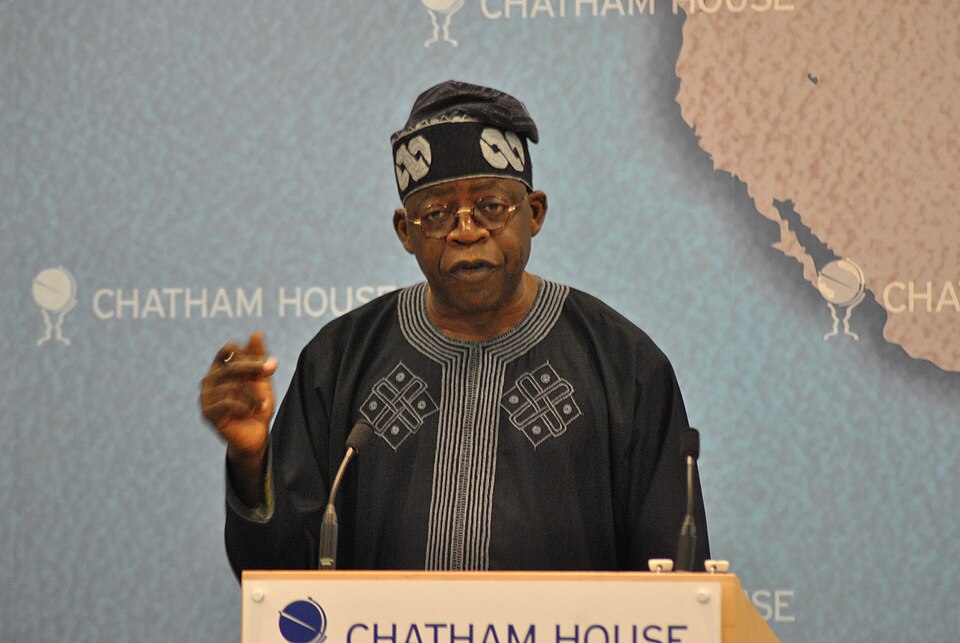

Nigeria’s President Bola Tinubu has approved one of the country’s largest military expansions in recent years as his government struggles to contain armed violence across several regions.
The plan includes the recruitment of 28,000 additional soldiers and the establishment of four new army divisions, increasing the total number of divisions from eight to 12.
The government says the restructuring will improve operational coordination, intelligence sharing and response times as security forces confront armed groups ranging from kidnappers and separatists to militant organisations affiliated with Daesh.
Nigeria has endured years of insecurity, with armed groups exploiting weak state control, overstretched security forces and vast rural territories.
Violence continues across Nigeria
The announcement follows another week of deadly attacks and mass abductions.
At least 20 villagers were reportedly killed by an armed gang in the north-western state of Zamfara, while 46 students were abducted from a school in Borno State in north-eastern Nigeria.
The students were rescued by the army several hours later.
Although Nigerian forces have recently recorded some successes against armed groups, attacks remain widespread and increasingly sophisticated.
Under the current military structure, individual army divisions are responsible for operations across several states and large geographical areas, placing significant pressure on personnel and resources.
The four additional divisions are expected to reduce the burden on existing formations and allow commanders to respond more rapidly to emerging threats.
Three new army headquarters will also be established in north-eastern and central Nigeria, where communities have faced attacks by militant groups, armed bandits and violence linked to disputes between farmers and herders.
Insecurity spreads southwards
While much of Nigeria’s armed violence has traditionally been concentrated in the north, mass abductions and organised attacks have increasingly affected southern parts of the country.
In May, 44 pupils and teachers were abducted during coordinated attacks on schools in Oyo State in south-western Nigeria.
Security experts have warned that the government may face difficulties recruiting tens of thousands of young Nigerians into the army, particularly following reports of significant military casualties in recent months.
Before approving the expansion, Tinubu ordered armed groups operating across Nigeria to surrender or face what he described as the full force of the state.
The president also announced plans to recruit more than 50,000 police officers and allocated a record 5.41 trillion naira to defence and security in the annual budget.
Operations against Daesh-linked groups
Nigeria has also intensified security cooperation with the US against militant groups operating in the country.
In December, Nigerian and US forces launched a joint operation targeting fighters from the Lakurawa group in north-western Nigeria, including strikes carried out on Christmas Day.
Senior Daesh commander Abu-Bilal al-Minuki was also killed during a months-long operation focused largely on the Lake Chad Basin in the north-east.
Daesh has increasingly shifted its operations towards Africa, with analysts estimating that approximately 90% of its attacks now take place in sub-Saharan Africa.
Its Nigeria-based branch remains the organisation’s most active affiliate.
However, despite the conclusion of the recent US-Nigeria operation earlier this month, militant groups continue to launch attacks against security forces across the country.