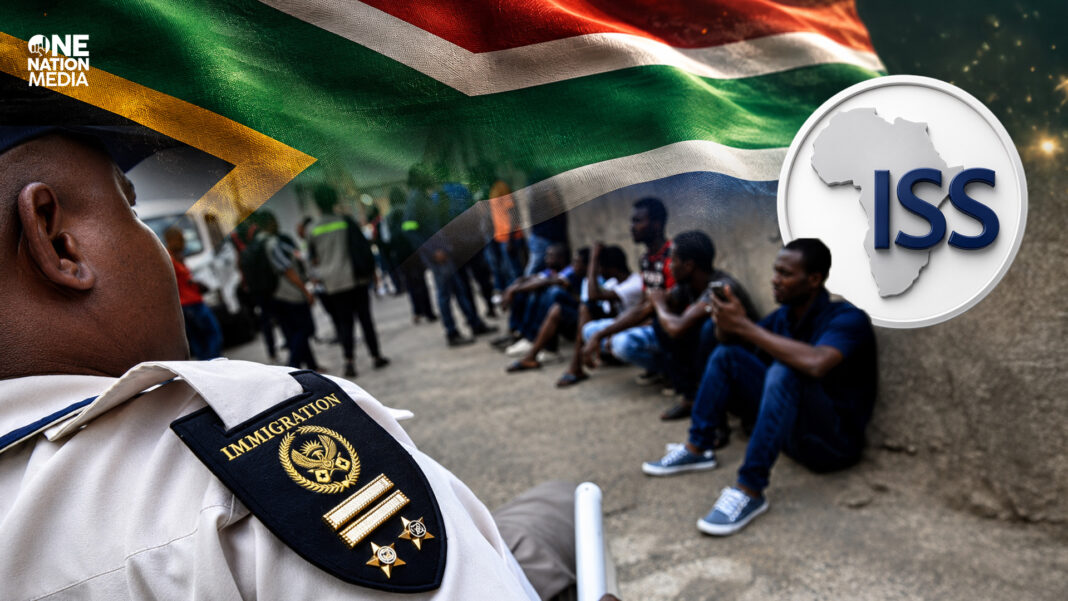

As South Africa intensifies immigration enforcement operations and considers tougher restrictions on foreign workers, a leading migration researcher has urged policymakers to base migration policy on evidence rather than perception.
Dr Vanya Gastrow, Senior Researcher at the Institute for Security Studies (ISS), warned that migrants make significant contributions to South Africa’s economy and that overly restrictive measures could carry considerable economic, diplomatic and social costs.
Her comments come amid heightened public debate over undocumented migration, labour market reforms and workplace compliance operations involving the Department of Home Affairs, the Department of Employment and Labour and law enforcement agencies.
Speaking to One Nation Media (ONM), Gastrow said one of the biggest misconceptions shaping the migration debate was the belief that migrants simply take from South Africa without contributing to its economy.
“One of the biggest misconceptions is that immigrants are purely extractive to host nations and that removing them will automatically improve national prospects.”
Instead, she said migrants often play an important role in economic development.
“Immigrants establish businesses, develop new supply chains, and create employment and other economic opportunities for nationals.”
Gastrow added that migrants frequently fill gaps in the labour market.
“They often concentrate in job markets avoided by nationals due to perceived low social status, difficult working conditions, or low pay. Some also bring special skills, expertise and investment to the country from other parts of the world.”
Her remarks follow the publication of an ISS analysis examining the consequences of restrictive migration policies across Africa.
The report argues that countries which have attempted to expel migrants or impose sweeping restrictions on foreign-owned businesses have often suffered unintended economic and diplomatic consequences.
Drawing on examples from Ghana, Uganda and Zimbabwe, the analysis concludes that such measures disrupted supply chains, weakened investor confidence and strained regional relations before governments were ultimately forced to soften or reverse their policies.
The report warns that South Africa should avoid repeating those mistakes.
Migration policy must be evidence-based
Gastrow also cautioned against migration policies being shaped by exaggerated perceptions of the size of South Africa’s migrant population.
According to Census 2022, approximately 3.9% of people living in South Africa were born outside the country. The figure includes documented and undocumented migrants and represents a decline in the proportion of foreign-born residents compared with the 2011 Census.
“It is important that migration policy is based on reliable evidence, so as not to alarm and divide the public with inflated numbers and crisis narratives, and waste public resources by implementing uninformed strategies.”
Gastrow said evidence-based policymaking was essential to ensure public resources were directed towards effective solutions rather than policies driven by political rhetoric or public misconceptions.
Restrictive policies carry economic risks
While acknowledging the government’s responsibility to regulate migration and enforce immigration laws, Gastrow warned that overly restrictive approaches could have unintended consequences for South Africa’s economy.
“Restrictive practices could undermine economic supply chains, reduce productivity in sectors that rely on migrant labour, including agriculture, transport and hospitality, and hamper cross-border trade and investment.”
She said the effects could also extend beyond South Africa’s borders.
“They could also contribute to diplomatic conflict and retaliatory measures that could impact negatively on South African businesses and citizens.”
The ISS analysis argues that migration restrictions alone are unlikely to resolve South Africa’s deeper structural challenges, including unemployment, poverty, inequality and weak governance.
Gastrow said the most successful migration policies were those grounded in evidence and developed through regional cooperation.
“The best policies are based on reliable data and evidence, uphold the rule of law and human rights, promote the genuine public interest rather than populist and personal motives, and are developed in collaboration with other countries and regions.”
Enforcing the law while protecting dignity
The migration debate has intensified following recent workplace inspections targeting businesses suspected of employing undocumented foreign nationals.
Some business owners, including textile manufacturer Khabir Tayob, have alleged that immigration enforcement operations were conducted in a manner that caused unnecessary public humiliation.
Asked how the government could balance effective enforcement with procedural fairness, Gastrow said the two objectives should not be mutually exclusive.
“Government should ensure that all immigration officers apply the principles of procedural justice during the course of inspections and enforcement operations. This includes listening carefully, making fair and consistent decisions, treating people with dignity and respect, and acting in a way that shows that they are sincere and trustworthy. There should be accountability measures in place for officials who fail to meet these standards.”
Impact on religious institutions
Gastrow also addressed the reported dismissal of foreign imams and muadhins by some mosques seeking to comply with immigration requirements.
She warned that the consequences could extend beyond immigration compliance.
“Increased enforcement of immigration laws affecting foreign imams and muadhins could result in religious institutions having diminished access to specialised knowledge, language skills, and theological expertise. Furthermore, if not carried out sensitively, it could contribute to public hostility towards foreign religious figures and even minority religious communities.”
Gastrow advised mosque committees to seek legal guidance where uncertainty existed over an individual’s immigration status or right to work.
“Mosque committees should seek legal advice where there is uncertainty about an individual’s immigration status or right to work. Eligibility will depend on the circumstances of each individual. For example, some may qualify under the scarce skills provisions of the Immigration Act, while others may have rights under South Africa’s refugee legislation.
“At the same time, mosque committees should ensure they comply with the law and should not knowingly employ individuals who do not have a legal right to work in South Africa.”
As South Africa reviews its migration policies and intensifies immigration enforcement, Gastrow believes the central challenge is not whether the law should be enforced, but whether enforcement is guided by evidence, respects human dignity and recognises the economic and social contributions migrants make to the country.