
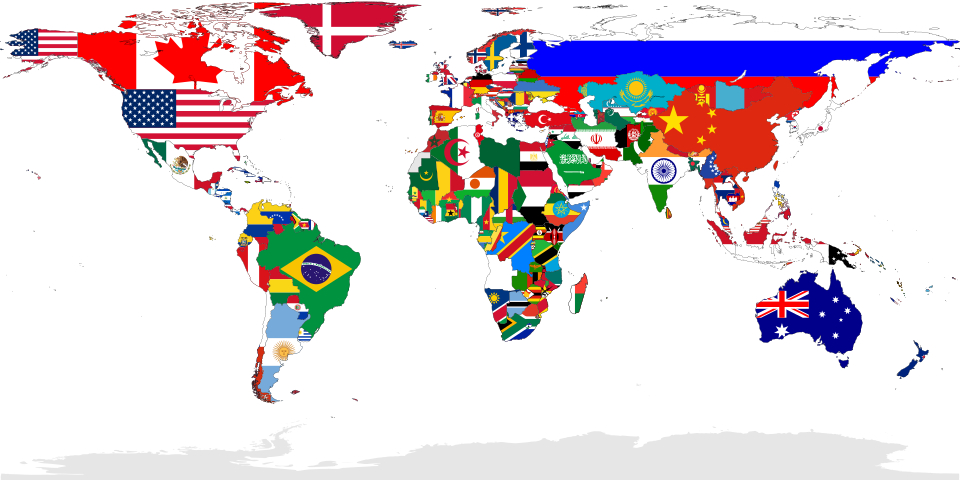

Moulana Uwais Dockrat examines why modern governments pour billions into professional sport, arguing that it serves not only as entertainment, but also as a powerful tool for cultivating nationalism, distracting the public and reinforcing loyalty to the nation state.
When governments spend billions on football and other professional sports, the investment is often justified in terms of economic development, tourism, employment and international prestige. Yet public spending extends far beyond hosting major tournaments, as nation states also finance national teams, elite athletes, coaches, stadiums, training centres, sporting federations and international tours, even when millions of citizens face unemployment, inadequate healthcare, struggling schools and rising living costs.
Why do they continue to do so?
Sport as a tool of national identity
From the perspective of the modern nation state, this investment serves purposes that extend far beyond sport. Professional sport helps cultivate national identity while also providing a powerful source of public distraction.
A nation state is not held together by borders alone. It must persuade people from different ethnic, religious and cultural backgrounds that they belong to a single political community. To achieve this, it relies on shared symbols, ceremonies and emotional experiences, all three of which are provided by national sport.
When a national team plays, supporters wear the same colours, wave the same flag and sing the same anthem. They instinctively say, “We won,” “We lost,” or “We qualified,” despite neither training with the team, selecting the players nor stepping onto the field. The simple use of the word “we” illustrates how deeply individuals identify with the nation.
This is one reason governments invest heavily in teams competing abroad, rather than limiting their spending to tournaments hosted at home. Every international fixture becomes a ritual of nationalism, with players walking onto the field beneath the national flag, the anthem being played and the match being presented as one nation competing against another.
The ideal citizen is not simply someone who carries a passport. He is expected to feel emotionally invested in the nation, to celebrate its successes and mourn its defeats, and few institutions cultivate this attachment as effectively as professional sport.
Distraction from political failure
This emotional investment can also prove politically valuable. A government may struggle to provide quality housing, education, employment or healthcare, yet a major sporting victory can temporarily dominate public attention. Politicians proudly wear the team’s colours, congratulate the players and present success on the field as a triumph for the nation itself. For a brief moment, deeper structural failures recede from public consciousness.
Professional sport also serves as a powerful distraction. Societies wrestling with unemployment, corruption, poverty, crime and deteriorating public services often find public conversation shifting dramatically during major sporting events. Headlines become dominated by team selections, injuries, refereeing decisions and tournament predictions, while questions about failing schools, collapsing hospitals and the rising cost of living give way to debates about line-ups, tactics and results.
The circumstances of the ordinary supporter remain unchanged: debt remains, communities continue to struggle and living conditions do not improve. Yet when 11 players wearing national colours defeat another team, millions experience the result as though it were a personal victory.
Sport therefore offers emotional triumph without real empowerment, excitement without lasting progress, unity without justice and release without meaningful reform.
The cycle rarely pauses. When one competition ends, another begins, whether through domestic leagues, continental championships, international tournaments, qualification campaigns or transfer windows. Countless hours are devoted to discussing athletes who will never know the names of those supporting them, while political, intellectual and spiritual questions often receive far less attention.
None of this is a criticism of exercise, recreation or children playing sport. Physical activity is healthy and encouraged. The concern lies with the ideological machinery surrounding professional sport and the role it can play in shaping public consciousness.
Islam and the limits of national loyalty
Islam recognises families, tribes, communities and regions, and these identities have their place. However, they cannot replace the bond of īmān or become the primary objects of loyalty and rivalry.
Allah says: “Indeed, this Ummah of yours is one Ummah, and I am your Lord, so worship Me.” (Qur’an 21:92)
For the believer, the deepest identity is not the flag on a passport, but servitude to Allah and membership of the Ummah of Muhammad (peace be upon him).
Yet modern national sport often conditions Muslims to think first as South Africans, Egyptians, Moroccans, Pakistanis, Turks or Saudis before thinking of themselves as part of a single Ummah. Muslims celebrate when “their country” defeats another, while artificial borders are emotionally reinforced through competition and national rivalry.
This becomes especially concerning when Muslims know the names, statistics and careers of professional footballers but know little about the history, struggles and responsibilities of the Ummah. Many are more emotionally affected by a missed penalty than by the suffering of Muslims elsewhere in the world.
As Muslims, our concern cannot end at the borders of the country in which we were born. Our understanding of success cannot be confined to trophies, nor should our heroes be limited to those who score goals beneath a national flag.
Looking beyond the spectacle
We are called to think as one Ummah by celebrating what pleases Allah, grieving over what harms Muslims and directing our energy towards knowledge, daʿwah, justice, service and revival.
Professional sport helps cultivate national identity, strengthen loyalty to the state and provide moments of emotional escape. These are among the reasons governments continue to invest enormous public resources in it. The Muslim, however, is called to look beyond the spectacle.
Our identity is greater than a passport, our unity is greater than an anthem and our victory is greater than a trophy.
We are an Ummah united by lā ilāha illā Allāh. We should not allow ourselves to remain divided by flags, pacified by entertainment or so captivated by the game that we lose sight of the responsibilities Allah has placed upon us towards the Ummah.
Moulana Uwais Dockrat is an Islamic scholar and public servant involved in education and da‘wah. A graduate of Darul Uloom Azaadville, he is the Managing Director of The Guardian Da‘wah Institute and founder of Markaz Manār al-Fikr, organisations dedicated to Islamic education and addressing contemporary misconceptions about Islam. He also serves as secretary of the Association of Muslim Schools (AMS) at both Gauteng and national levels.