
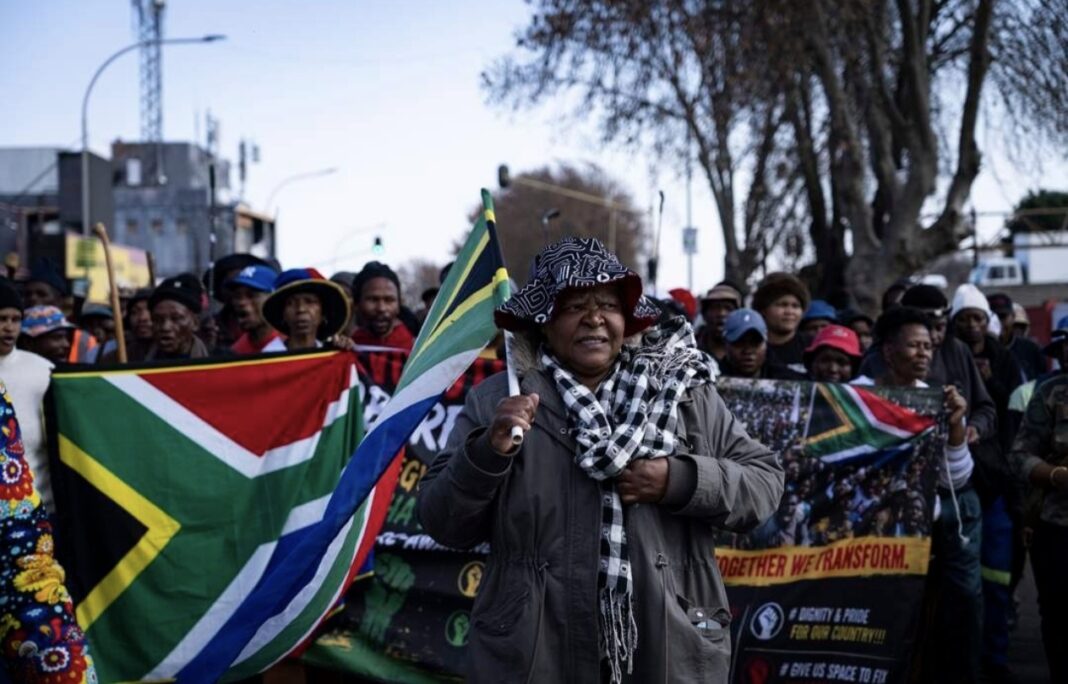

In a strong rejection of xenophobia and the targeting of migrants, a broad coalition of civic organisations, trade unions, faith groups and activists has launched a national campaign under the banner Siyafana Sonke Action, meaning “We are all the same”.
The initiative brings together community organisations, social movements, civil society groups, activists and concerned citizens seeking to promote social cohesion and counter growing anti-migrant sentiment in South Africa.
The campaign’s launch comes amid heightened tensions over immigration and follows a recent joint statement by 22 Muslim organisations condemning xenophobia and calling for constructive dialogue on migration, social justice and community tensions.
Siyafana Sonke Action says its main objectives are to confront vigilantism, strengthen unity between communities and challenge narratives that blame South Africa’s socio-economic problems solely on migrants.
More than 300 delegates representing social movements, trade unions, community structures and civil society organisations attended the campaign’s recent launch meeting.
Organisers say the gathering was convened in response to escalating xenophobic rhetoric, hate speech, online harassment, intimidation and what participants described as the growing influence of organised groups promoting fear and division.
Attendees also expressed concern over planned actions by anti-migrant and right-wing groups in the period leading up to, during and after 30 June 2026.
According to organisers, Siyafana Sonke Action has already secured the support of more than 120 organisations nationwide. The campaign is calling on South Africans to reject xenophobia, Afrophobia, ethnic discrimination and all forms of hatred.
Campaign organisers argue that the frustrations experienced by many communities should not be directed at migrants or other vulnerable groups.
Instead, they say greater attention should be paid to the structural causes of poverty and social distress, including unemployment, inequality, poor service delivery and broader economic challenges.
As part of its advocacy efforts, the campaign has submitted a petition to the Presidency, the Ministry of Justice and Constitutional Development, the Ministry of Police and the Department of Home Affairs, calling for urgent measures to prevent violence and safeguard affected communities.
Calls to halt March and March mobilisation
Health workers and several civil society organisations aligned with the campaign have called for the cancellation of the planned March and March mobilisation and its 30 June deadline targeting migrants.
They argue that threats, intimidation, violence and the incitement of hatred violate South Africa’s Constitution and fundamental human rights.
Organisers have urged law enforcement agencies and government authorities to act decisively against any attempts to destabilise communities.
The organisations have also challenged claims that migrants are responsible for the country’s socio-economic difficulties, arguing that migrants make up a relatively small proportion of South Africa’s population and cannot be solely blamed for challenges affecting public healthcare, employment and poverty.
Many migrants, including both documented and undocumented individuals, are reportedly living in fear amid the heightened tensions.
Some have allegedly fled their homes and sought refuge in public spaces, exposing them to harsh winter conditions, illness, injury and psychological trauma.
Community leaders have described the situation as both unacceptable and dangerous, calling for greater protection and support for all people living in South Africa.
Migrants are not the enemy
The Palestinian Solidarity Alliance has also condemned what it described as increasing xenophobic mobilisation by groups such as Operation Dudula and March and March.
The organisation said migrants, refugees, asylum seekers and foreign nationals should not be viewed as the source of South Africa’s problems.
Campaign supporters argue that ordinary people seeking safety, employment and better opportunities should not be scapegoated for broader systemic failures.
“The mother from Zimbabwe trying to provide for her children, the worker from Malawi searching for employment, the Mozambican labourer, Congolese trader, Somali business owner, Nigerian student and Ethiopian refugee are not responsible for South Africa’s crisis,” the campaign said.
Organisers are urging communities to reject hatred and division and instead strengthen solidarity among all who live in the country.
Faith communities call for peace
Faith leaders have also joined calls for calm. The South African Council of Churches Greater Pretoria is set to host a Peace Prayer and March focused on community safety, social cohesion and prayers for immigrants living in South Africa.
Organisers say the event aims to promote unity, compassion and peaceful solutions to the challenges facing communities.
Siyafana Sonke Action has called on all South Africans to choose unity over hatred and work collectively towards building a society in which the dignity and human rights of all people are respected.
“Siyafana Sonke – We are all the same.”