
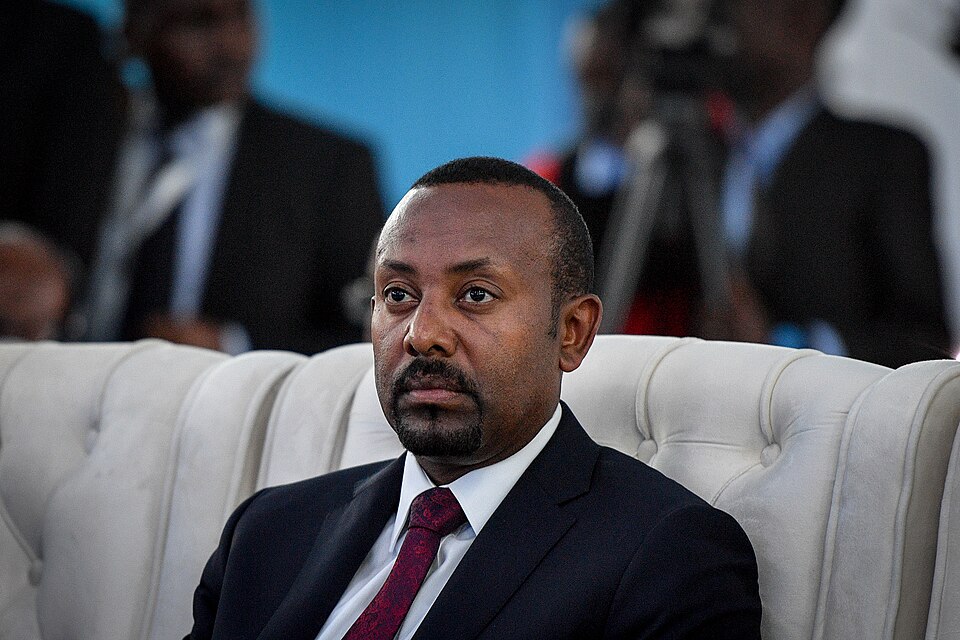

Ethiopian Prime Minister Abiy Ahmed begins his second term facing a paradox that has come to define contemporary Ethiopian politics: overwhelming electoral dominance amid deepening national fragility.
Religion remains a critical, though often overlooked, dimension of Ethiopia’s political and social landscape. The country is home to one of the largest Muslim populations in sub-Saharan Africa, with estimates placing its Muslim population at between 41 million and 47 million people, around 31% to 34% of Ethiopia’s estimated population of 132 million to 138 million.
As a country deeply woven into Islamic history, from the first Hijrah to Abyssinia to its centuries-old Muslim communities, political instability in Ethiopia carries significant implications for millions of Muslims.
Any future settlement aimed at securing lasting peace and national cohesion will therefore need to account for the country’s religious diversity and ensure that the concerns and aspirations of its Muslim communities are not overlooked.
While Abiy’s Prosperity Party has secured a commanding political mandate, the scale of Ethiopia’s unresolved crises suggests that electoral victories alone may not guarantee stability.
From post-war recovery and ethnic tensions to economic pressures and increasingly complex regional disputes, Ethiopia enters a new political chapter burdened by multiple fault lines that continue to test both state cohesion and regional security.
The most immediate internal challenge remains the aftermath of the devastating conflict in Tigray.
Although the war formally ended with the Pretoria Peace Agreement, its consequences continue to shape Ethiopia’s political and security landscape. Humanitarian needs remain immense, governance structures in parts of the north remain fragile, and longstanding grievances have yet to be fully addressed.
The conflict also altered regional dynamics, particularly in relation to Eritrea. Eritrea’s involvement in the war left deep scars and complicated trust between the two neighbours.
Relations between Addis Ababa and Asmara, once dramatically transformed by Abiy’s landmark 2018 peace agreement that earned him the Nobel Peace Prize, have cooled considerably. The optimism that accompanied the end of decades of hostility has given way to renewed suspicion as shifting alliances and security calculations reshape the Horn of Africa.
At home, Ethiopia’s ethnic federal system continues to present profound governance challenges. Designed to accommodate the country’s diverse communities, the system has often intensified rather than resolved political competition among regions.
Competing nationalisms, sporadic violence and recurring disputes over autonomy, land and resources remain among the most persistent threats to long-term stability under Abiy’s leadership.
Economic pressures further complicate the picture. Ethiopia continues to grapple with rising debt, foreign currency shortages and persistent inflation.
Although large-scale infrastructure projects remain central to the government’s development agenda, they have also increased fiscal pressures at a time when international financial support has become more cautious and domestic socio-economic needs continue to expand.
Islam has formed an integral part of Ethiopian society for centuries, existing alongside Christianity as a central component of the country’s national identity. Any sustainable political settlement must therefore take account of Ethiopia’s religious diversity, particularly in regions where Muslim communities play significant social, cultural and economic roles.
Historically, Ethiopia has projected an image of religious coexistence. However, localised tensions occasionally strain this balance, especially where political grievances intersect with ethnic and religious identities. Preserving interfaith harmony will remain essential to maintaining national cohesion.
Externally, Abiy’s administration faces an increasingly complex regional environment.
Ethiopia’s long-standing aspiration for direct access to the sea remains a strategic priority, driven by its landlocked status and heavy dependence on neighbouring ports. Yet this ambition has generated friction with surrounding states and heightened concerns over sovereignty and regional balance across the Horn of Africa.
Relations with Sudan have also become more complicated. Border disputes, alongside instability from Sudan’s ongoing conflict, have strained bilateral ties. Allegations of external interference and competing regional narratives have further eroded trust, adding another layer of geopolitical complexity to Ethiopia’s diplomatic agenda.
Perhaps the most enduring external flashpoint remains the Grand Ethiopian Renaissance Dam on the Blue Nile.
For Ethiopia, the dam symbolises sovereignty, economic development, energy independence and national pride. For Egypt, however, the project is widely viewed as a threat to its water security.
Despite years of negotiations involving regional and international mediators, the parties have yet to reach a legally binding agreement governing the filling and operation of the dam. As a result, the Nile Basin remains an arena of strategic uncertainty, with tensions periodically resurfacing.
Taken together, Abiy Ahmed’s second term appears defined less by electoral legitimacy than by the scale of unresolved challenges spanning domestic governance, regional security and international diplomacy.
Ethiopia’s importance as a pivotal state in the Horn of Africa means that its internal stability carries implications far beyond its borders.
Yet the convergence of debt pressures, ethnic fragmentation, post-conflict recovery challenges and external disputes suggests that the road ahead will remain turbulent.
As Ethiopia navigates these intersecting pressures, the central question is whether Abiy Ahmed’s government can convert political dominance into durable national stability, or whether the country’s competing fault lines will continue to shape its future and the wider Horn of Africa for years to come.