

Malawian authorities have described the plight of citizens returning from South Africa as “very dire”, warning that many families have arrived home traumatised, destitute and in urgent need of long-term support after fleeing recent anti-migrant violence.
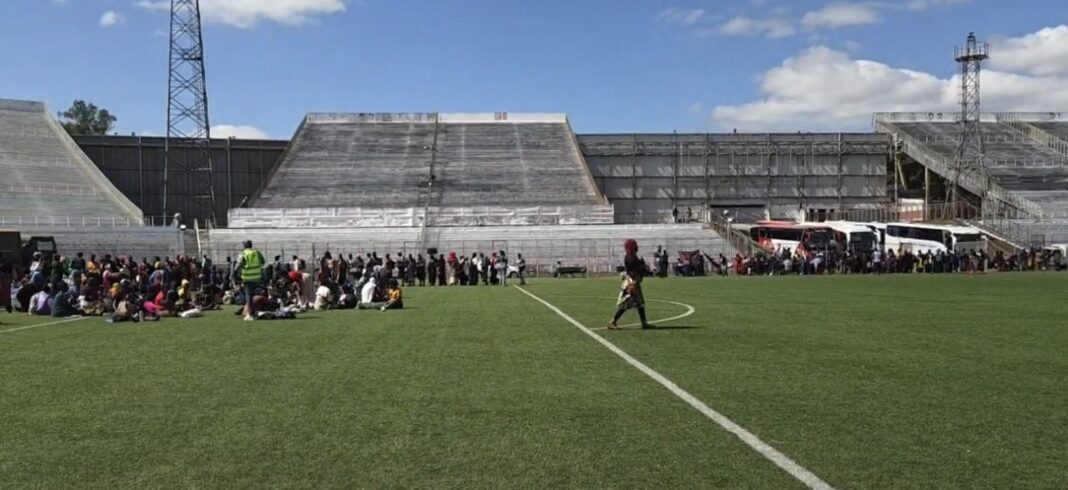
Hundreds of Malawian nationals continue to arrive at Chichiri Stadium in Blantyre, which has become the country’s main reception and processing centre for returnees evacuated from South Africa.
The influx follows weeks of heightened tensions in parts of KwaZulu-Natal and other areas of South Africa, where thousands of foreign nationals, predominantly Malawians, sought refuge in temporary shelters amid fears of xenophobic attacks and forced removals.
Many displaced migrants say they were driven from informal settlements, lost businesses and were forced to abandon homes and possessions accumulated over several years.
Speaking to One Nation Media at Chichiri Stadium, senior Department of Disaster Management Affairs (DODMA) official Nelly Kalengamaliro said many returnees had lost virtually everything.
“The situation is very dire. You’ll agree with me that people have lost their livelihood. They are coming here with empty hands and with no hope,” she said.
“They’ve lost hope, they’ve lost everything they had worked for. Some of them are traumatised, some of them have small children that have spent days and days at the camp without food, without shelter. It’s just so heart-wrenching.”
DODMA, the government agency mandated under Malawi’s Disaster Risk Management Act of 2023 to coordinate disaster response and humanitarian interventions, has been leading efforts to receive, process and assist returning citizens.
The department is working alongside humanitarian organisations and international partners to provide immediate relief, including food, health screenings, transport assistance and psychosocial support.
Officials say many returnees are struggling to come to terms with the sudden loss of homes, businesses and livelihoods.
One story that particularly affected aid workers involved a woman who had operated a salon business in Durban.
According to Kalengamaliro, the woman was forced to abandon both her business and home after being ordered to leave.
“She left everything that she had worked for. She was only able to go inside the house, take a few things, take her children and run for her life,” she explained.
Beyond immediate humanitarian needs, authorities are placing increasing emphasis on psychological support.
Counsellors stationed at Chichiri Stadium are helping returnees process trauma and begin planning for life after displacement.
“It’s very important to give them psychological support. When you lose a livelihood in a manner like this, you are disturbed. You do not have peace. You don’t see what tomorrow is like,” Kalengamaliro said.
“The counsellors are helping them to give a perspective that is more positive, that if you still have your life, you can also work again and achieve even maybe more than what they’ve lost.”
Despite the hardship many families have endured, officials are urging returnees to see their return to Malawi as an opportunity to rebuild.
“Home is where the heart is. They’ve come home, there’s hope,” she said.
However, authorities warn that significant assistance will still be required long after returnees leave the reception centre.
“Support is what we need. We need a lot of support,” Kalengamaliro told One Nation Media.
“Their children don’t even have warm clothes because they came out of their houses without anything.”
She added that reintegration support would be critical in helping returnees rebuild their lives and regain economic independence in communities across Malawi.