
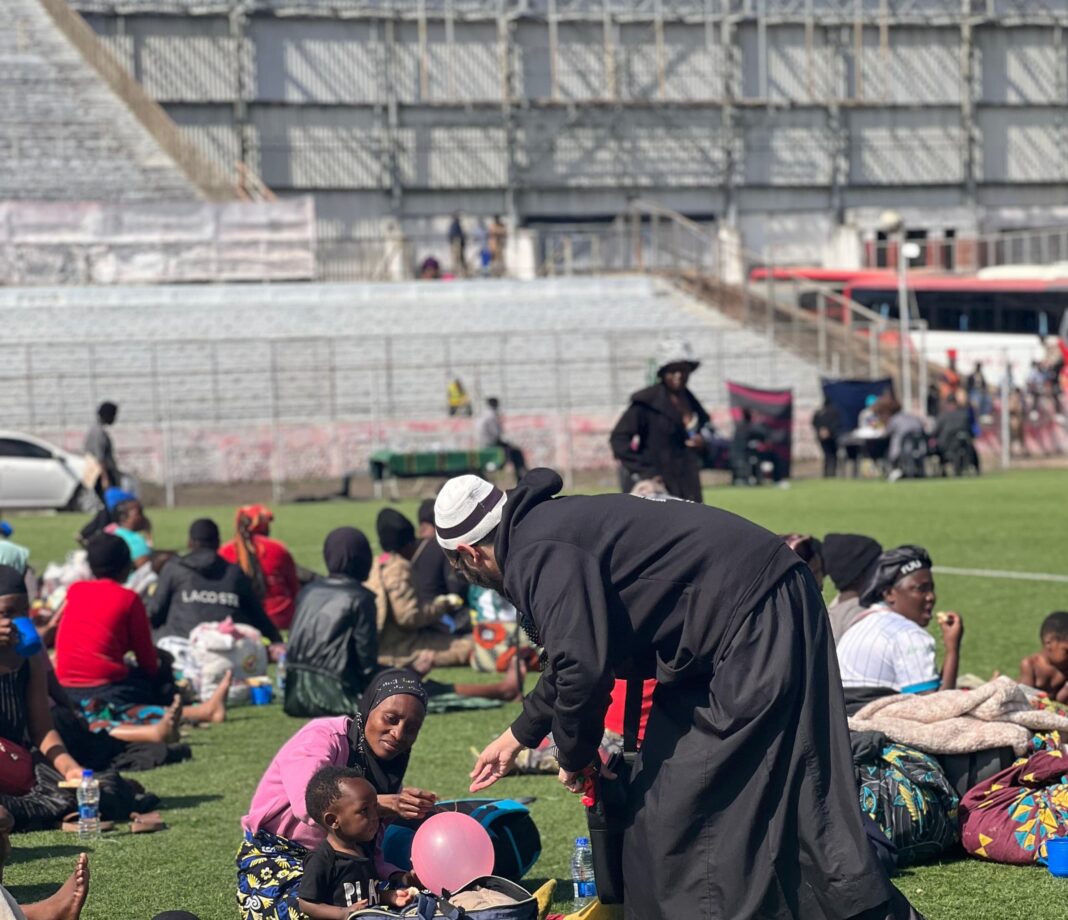

Malawian nationals returning from South Africa are facing severe humanitarian challenges upon arrival home, with aid agencies describing a situation marked by exhaustion, loss and extreme vulnerability.
Many of the returnees are women and children who have arrived in Malawi after long and difficult journeys with little more than the clothes they are wearing, leaving them immediately dependent on emergency humanitarian assistance.
Speaking from the ground, Abdullah Panjwani, CEO of Ashraful Aid in Malawi, described the scale of deprivation among the returnees as one of the most striking aspects of the relief operation.
“One of the key observations that we have noticed is how little the people who have come over are able to bring with them,” Panjwani told One Nation Media (ONM).
“How many items can they actually bring with them on the journey, and what quantity and quality of items can they actually bring during such a tedious and long trip?”
He added that even among those with education or relative means, the reality of displacement meant families arrived with extremely limited resources.
“So, it is quite a dire situation, and one of the key observations is how few items and resources of value they can bring over,” he said.
According to Panjwani, the first wave of returnees comprised approximately 650 people transported in six buses. Additional buses carrying similar groups have since arrived, with women and children making up the majority of passengers.
Emergency support at Kamuzu Stadium
Most returnees are first processed at Kamuzu Stadium in Chichiri, Blantyre, where health screenings are conducted and basic humanitarian assistance is provided.
Panjwani explained that the reception centre functions primarily as a temporary transit point.
“The majority of the people who are coming over, if not all of them, come through one of the processing points, which is Kamuzu Stadium in Chichiri, Blantyre,” he told ONM.
“They come here for processing, they get their health checked, they receive a few rations and meals, and then by the next morning or the next day, they are sent back to the places where they need to go or where they have to travel to.”
He said Malawi’s Department of Disaster Management Affairs (DODMA) assists with arranging onward transport to various destinations across the country.
“So the majority of the people who do come through are only really there for that one day,” Panjwani added.
The scale and composition of the arrivals have placed immediate pressure on humanitarian systems, particularly as many returnees arrive without shelter materials, adequate clothing or basic hygiene essentials.
Humanitarian partners, including Malawi’s Department of Disaster Management Affairs, are coordinating with aid organisations to conduct assessments and distribute relief supplies.
In response to the growing needs, Ashraful Aid has rolled out emergency assistance, including hot meals, infant formula, drinking water, blankets, hygiene kits and sanitation supplies. The organisation has also supported operational costs at reception centres and provided basic comfort items for children.
However, Panjwani stressed that significant gaps remain, particularly among vulnerable groups.
For children, diapers, wet wipes and essential hygiene products are urgently needed. For women, especially nursing mothers, additional meals and sanitary products remain in short supply. Among elderly returnees, there is an urgent need for proper bedding, seating and other comfort items.
The return of Malawian nationals is unfolding against a backdrop of growing tensions in parts of South Africa, where hostility towards foreign nationals, economic frustration and sporadic outbreaks of xenophobic violence have contributed to a climate of fear and insecurity among migrant communities.
While experiences differ across regions, aid workers and community observers say rising unemployment, competition for informal work and periodic anti-foreigner sentiment have increased pressure on migrant populations, including Malawians who have lived and worked in South Africa for many years.
For numerous families, these conditions have resulted in abrupt displacement, forcing them to abandon livelihoods and possessions in search of safety and stability.
Trauma and uncertainty
Beyond immediate physical needs, Panjwani emphasised that the emotional toll of displacement is becoming increasingly apparent.
He said psychosocial support must form a central component of the humanitarian response as returnees attempt to process both the trauma of leaving and the uncertainty surrounding reintegration.
“The psychological aspect is critical, not only in terms of what has just happened, but what is about to happen,” he told ONM.
Aid organisations have echoed similar concerns, highlighting the need for longer-term psychosocial interventions, particularly for children who have experienced instability and sudden relocation.
As humanitarian teams continue scaling up assistance, demand continues to outstrip available resources.
What is emerging is not merely a story of return, but one of disrupted lives and shattered stability, with families arriving in Malawi carrying little more than memories of what they have lost.
For aid workers on the ground, the challenge extends beyond providing immediate relief. It is also about restoring dignity in the aftermath of displacement.
For many of these returnees, the journey home does not represent an ending, but the beginning of an uncertain process of rebuilding their lives.