
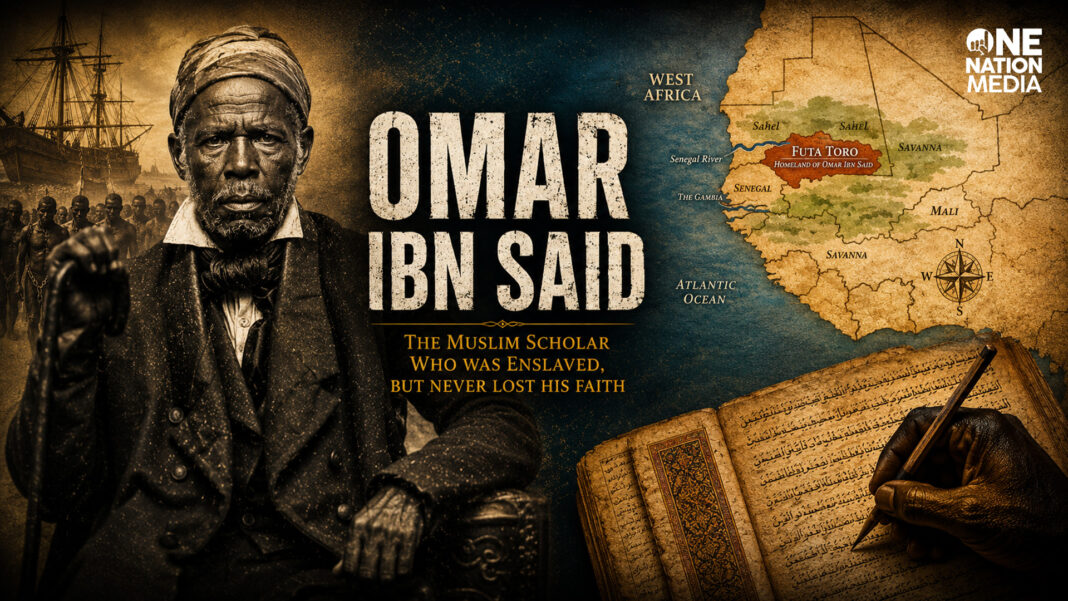

When the transatlantic slave trade is remembered, the focus often falls on the physical suffering of the millions of Africans who were captured, transported and forced into bondage across the Americas. Less remembered is another tragedy: the destruction of societies where Islamic learning, scholarship and faith were deeply rooted, writes Neelam Rahim.
Among those taken was Omar Ibn Said, a West African Muslim scholar whose story challenges the common assumption that Islam arrived in America only through twentieth-century immigration. Long before that, enslaved African Muslims carried the faith across the Atlantic in their hearts and memories.
Omar’s life stands as one of the clearest examples of this forgotten history: a scholar uprooted from a flourishing Islamic civilisation who endured slavery without surrendering his faith or identity.
More than a century and a half after his death, the Arabic manuscripts he left behind continue to bear witness to a remarkable life shaped by knowledge, tested by oppression and sustained by belief in Allah.
A scholar from Futa Toro
Omar Ibn Said was born around 1770 in the wider Senegambian region of West Africa, commonly associated with Futa Toro. Far from being isolated, the region was an important centre of Islamic learning, connected to wider scholarly networks across West Africa.
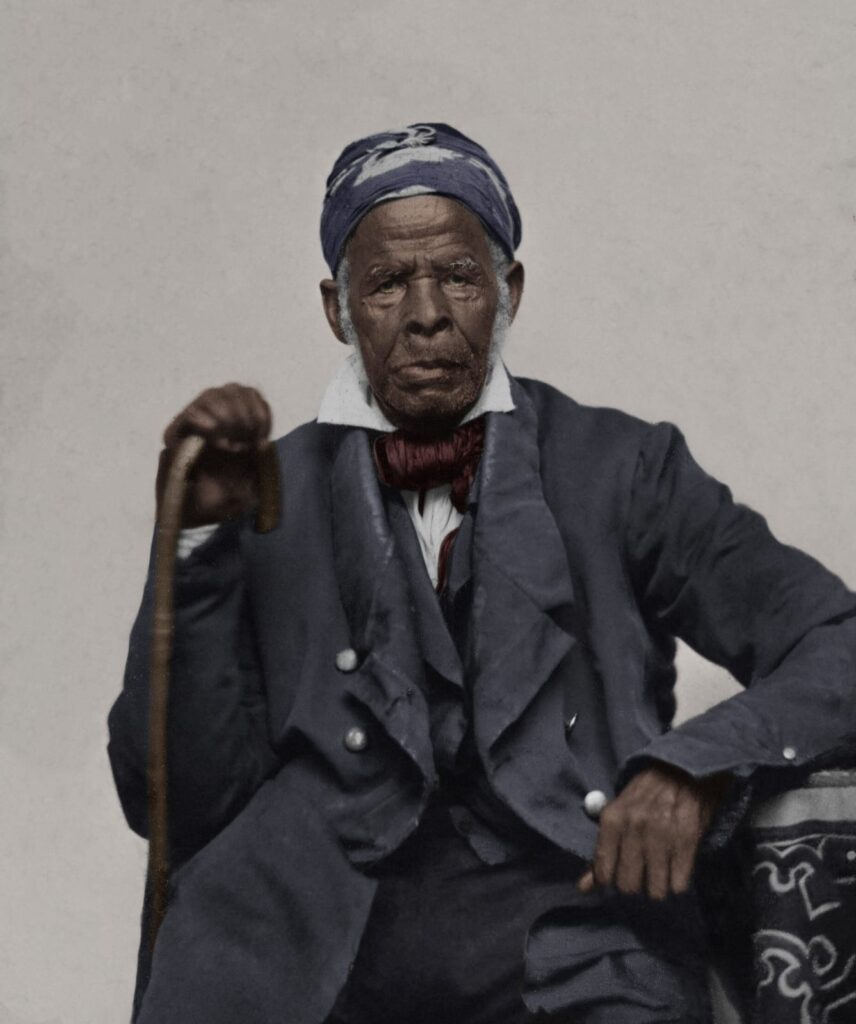
Mosques, Quranic schools and circles of learning formed part of daily life. Arabic served as the language of scholarship, while the study of the Quran, jurisprudence and theology flourished.
Omar grew up in this environment and later wrote that he spent approximately twenty-five years studying under respected scholars. By adulthood, he was a learned Muslim with a strong grounding in the Islamic sciences.
His background challenges enduring misconceptions about Africa before colonialism and the slave trade.
Many of those forced onto slave ships came from established societies with sophisticated traditions of learning, governance and religion, yet none of this protected Omar from what was to come.
From scholar to captive
In 1807, at around thirty-seven years of age, Omar was captured during conflict in his homeland and sold into slavery.
The details remain unclear, but the consequences were devastating. A man who had spent decades pursuing sacred knowledge suddenly found himself trapped within one of history’s greatest crimes.
Forced aboard a slave ship bound for America, he was separated from his family, community and homeland. He eventually arrived in Charleston, South Carolina, where he entered a society built upon slavery.
For Omar, the journey was not merely geographical. It was the violent severing of a life rooted in faith, learning and belonging.
The prisoner who wrote in Arabic
Omar’s early years in America were marked by hardship. He later described his first enslaver as cruel and eventually attempted to escape.
The effort failed, and after being captured and imprisoned in Fayetteville, North Carolina, Omar revealed something that astonished those around him. Inside his jail cell, he began writing Arabic on the walls.
Few Americans at the time had encountered an enslaved African capable of reading and writing Arabic, let alone composing sophisticated religious texts. The elegant script challenged racist assumptions that sought to portray Africans as uncivilised and intellectually inferior.
The prisoner before them was not an illiterate labourer. He was a scholar.
Word of the remarkable African who wrote in Arabic spread quickly, eventually leading to his purchase by James Owen, a prominent North Carolina slaveholder.
Faith that slavery could not erase
Although Omar remained enslaved for the rest of his life, neither bondage nor distance from home extinguished his faith.
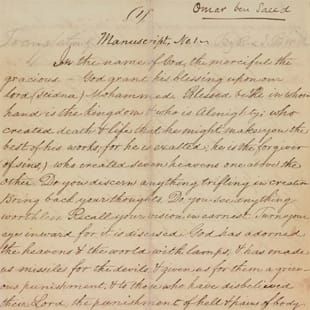
In 1831, he wrote what would become one of the most significant documents in American history: an autobiography composed entirely in Arabic. It remains the only known surviving autobiography written in Arabic by an enslaved person in the US.
The document opens not with his personal story, but with verses from Surah al-Mulk, which proclaim Allah’s sovereignty over all creation.
The symbolism is striking. Under American law, Omar was considered property, yet the opening words of his autobiography affirmed that ultimate dominion belongs to Allah alone. Many scholars view this as a subtle but powerful declaration that, despite his legal status, his ultimate allegiance remained with his Creator.
His surviving writings contain Qur’anic passages, invocations of Allah and salutations upon the Prophet Muhammad. More than five decades after arriving in America, the language that flowed most naturally from his pen remained the language of the Qur’an.
The Quran he carried
One of the most remarkable aspects of Omar’s story is the way he preserved knowledge despite slavery’s attempts to erase identity.
[Image/ Library of Congress]
The slave trade separated countless Muslims from their books, scholars and communities. Yet many carried something their captors could never confiscate: the Qur’an committed to memory.
Omar’s writings reveal a man who continued to draw upon verses learned decades earlier in West Africa. Every manuscript became an act of preservation, a refusal to allow faith and knowledge to disappear.
His Arabic texts also challenge simplistic portrayals of the enslaved population in the Americas. They remind us that among those transported across the Atlantic were people of learning and deep religious commitment, individuals shaped by centuries-old Islamic intellectual traditions.
A legacy that endured
Omar Ibn Said died in North Carolina in 1863 after more than half a century in bondage.
He never returned to Futa Toro. He never saw his homeland again. Yet slavery failed to erase him.
His manuscripts survived. His autobiography survived. His testimony survived.
Today, Omar stands as a powerful reminder that the slave ships crossing the Atlantic carried far more than labourers. They carried scholars, theologians and people of profound faith. They carried men who had memorised the Qur’an, studied under respected teachers and belonged to thriving centres of Islamic civilisation.
The chains that bound Omar lasted a lifetime, but the words he wrote outlived them.
Through those words, the Muslim scholar from Futa Toro continues to remind the world that while slavery imprisoned his body, it never conquered his faith, his knowledge or his soul.