
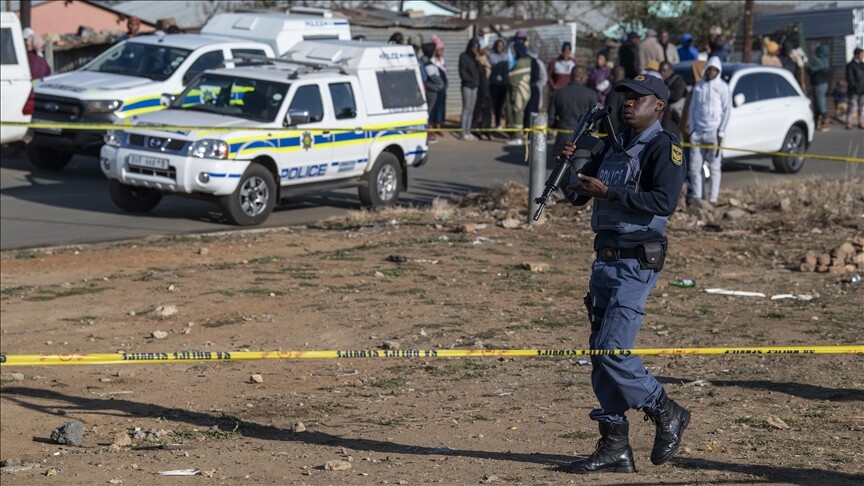

Police have launched a manhunt for a group of armed suspects who killed 12 people and injured at least nine others at the Jumpers Informal Settlement in Cleveland, Johannesburg, on Tuesday night.
Members of the South African Police Service (SAPS) were called to the scene at approximately 23:10 following reports of an active shooting. On arrival, officers found multiple victims with gunshot wounds across different sections of the informal settlement.
Emergency medical personnel were dispatched to the scene, while police secured the area for forensic investigation and emergency response operations. Police sources have alluded to feuding among zama zamas (illegal artisanal miners) as possibly a reason for the carnage.
Preliminary reports indicate that 12 people were killed in the attack. Eight adult men and three adult women were declared dead at the scene, while another male victim later succumbed to his injuries in hospital.
Nine additional victims were transported to nearby medical facilities, where they remain under medical care.
According to witness accounts, more than 10 armed suspects arrived in a white Toyota Quantum, which was allegedly dropped off near a petrol station in Cleveland before the attack unfolded.
The suspects are believed to have split into smaller groups before entering the settlement through multiple access points. They then moved through the area, opening fire on residents before fleeing in the same vehicle.
Provincial and district detectives, supported by crime intelligence and forensic teams, have been deployed to trace the suspects and establish the motive behind the killings.
Police confirmed that no arrests had been made by Wednesday morning and that investigations remain ongoing.
By Wednesday, the investigation had escalated to a national level, with Acting National Commissioner Lieutenant General Puleng Dimpane deploying additional specialised SAPS resources, including forensic and tactical response teams, to support the probe.
A multidisciplinary task team comprising provincial and national experts has also been established to pursue investigative and intelligence leads, including efforts to trace the white Toyota Quantum allegedly linked to the massacre.
“We have reinforced provincial efforts with additional national specialised resources to ensure that the investigation is expedited and that those responsible are swiftly brought to justice,” Dimpane said.
The Cleveland massacre is the latest in a growing pattern of high-casualty shootings that continue to expose the depth of violent crime in South Africa.
Such attacks are rarely random incidents involving lone perpetrators. Instead, they are frequently linked to organised criminal networks, gang rivalries, extortion rackets, illegal mining operations and disputes connected to informal economies.
These shootings often occur in informal settlements, taverns, hostels, shebeens and densely populated communities where policing resources are stretched, access control is limited and illegal firearms circulate with relative ease.
Recent incidents highlight the scale of the crisis. In December 2025, 12 people, including children, were killed in Saulsville after gunmen opened fire inside an illegal shebeen. Later that month, nine people were killed in Bekkersdal in a shooting reportedly linked to illegal mining turf wars.
In September 2024, 18 people were murdered in Lusikisiki during coordinated attacks on two homesteads, while the 2022 tavern shooting in Soweto left 16 people dead in one of the country’s deadliest mass shootings in recent years.
South Africa continues to record one of the highest murder rates in the world, with firearms remaining the leading cause of homicide. Police statistics consistently show that thousands of murders are committed annually, with gun violence heavily concentrated in townships and informal settlement environments where poverty, unemployment and organised criminal activity frequently overlap.
Although authorities have intensified operations targeting illegal firearms, unlicensed liquor outlets and organised crime syndicates, law enforcement agencies continue to face major challenges in curbing the flow of illegal weapons and dismantling entrenched criminal networks operating within vulnerable communities.
As investigations continue in Cleveland, the latest massacre once again underscores the scale of South Africa’s gun violence crisis and the persistent challenge of restoring safety in communities increasingly caught in cycles of organised criminality and armed violence.