


After blowing hot and cold about peace talks, the United and Iran confirmed late on Monday their respective delegations were on their way to Islamabad to iron out their differences.
The New York Times reported that US Vice-President JD Vance would be leading the US delegation and would depart for Islamabad on Tuesday. The Iranian delegation will be led by Mohammad Bagher Ghalibaf, and influential political and military figure in Tehran.
In what has been described as a rollercoaster ride in politics surrounding the Iran war, a series of events over the weekend and Monday had cast doubt whether the talks would happen at all.
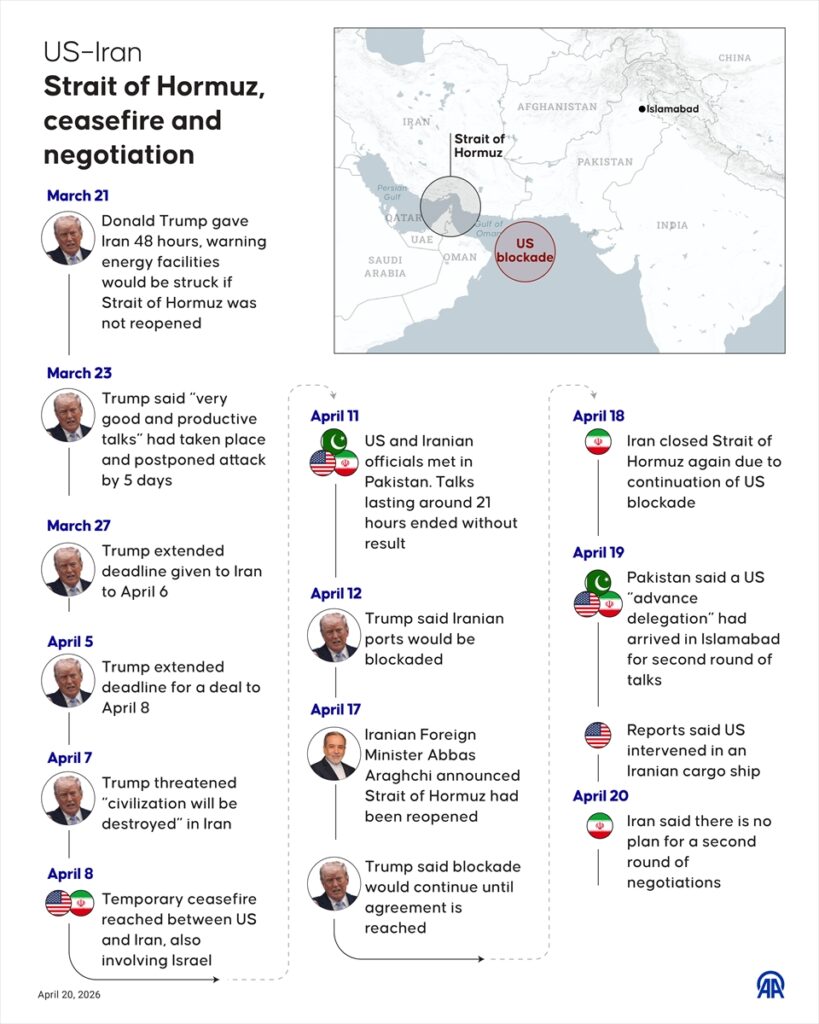
The events include:
- Iranian news media, quoting official sources, said the Iranian government had now agreed to meet in Islamabad;
- Iran reversed a decision to open the Strait of Hormuz to all shipping after its announcement on Friday that it had been unconditionally reopened;
- On Sunday the US navy fired on and seized an Iranian flagged cargo ship as it tried to evade the US blockade of Iranian ports in the Gulf;
- Overnight from Sunday oil prices spiked once again to 96 US dollars a barrel as hopes were dashed the Strait of Hormuz would be reopened soon.
China on Monday expressed “concern” over US forces boarding the Iranian cargo ship, urged against escalation, and called on both parties to provide “necessary conditions” to normalize the situation in the Strait of Hormuz
“Strait of Hormuz is an important” waterway for goods and trade globally, and keeping it safe and stable “serves the interests of international community,” Foreign Ministry spokesman Guo Jiakun told reporters in Beijing
“On the US taking the (Iranian) ship by force, we express our concern,” said Guo, urging restraint between the two warring parties.
Beijing was reacting to Trump’s announcement that American naval forces intercepted and disabled an Iranian-flagged cargo ship that attempted to breach a US naval blockade in the Gulf of Oman, with Marines now holding the vessel in custody.
The USS Spruance, a guided missile destroyer, intercepted the Touska after its crew refused repeated warnings to stop, Trump said Sunday.
China hopes the US and Iran can “fulfil their obligations, abide by the ceasefire, to prevent escalation and provide necessary conditions for re-normalization of the strait,” Guo said.
He called on the two sides to “maintain momentum of ceasefire, continue to promote de-escalation” toward a political end to the conflict.
The US move to force entry into the Iranian ship comes as efforts are underway to bring the warring parties to the negotiating table in Pakistan for a fresh round of talks.
This comes as a two-week ceasefire mediated and secured by Pakistan is set to expire by dawn on Wednesday.
Iran had declared the strait open on Friday but closed it again, a day later after Trump said the blockade of Iranian ports will continue.
On February 28, the US and Israel launched a war on Tehran, triggering retaliation by Iran which hit US assets and bases across the Middle East.
The fighting halted on April 8, and Islamabad on April 11-12 hosted the highest-level engagements between the US and Iran since 1979, but the talks remained inconclusive.
US President Donald Trump earlier announced a US team will travel to Pakistan on Monday for the second round of talks with Iran.