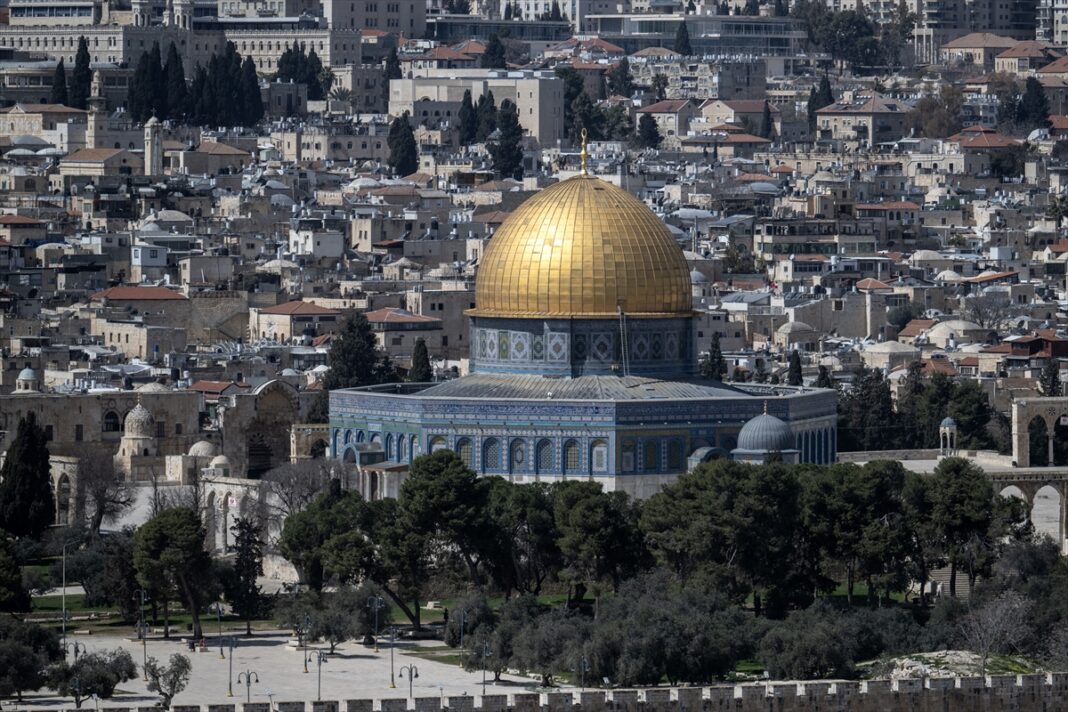

The continued closure of Masjid Al-Aqsa, Islam’s third holiest site, is being felt far beyond Jerusalem, with many South African Muslims reflecting on what the moment demands of them.
Speaking to Olive News Network on Tuesday, Mufti Ebrahim Smith, Principal of Darul Iftaa Western Cape, described the weight of the situation, particularly as it unfolded during sacred periods.
“Today is day 32 since the Zionist regime closed Masjid al-Aqsa. People did not have the permission to enter a place of worship that is so sacred.”
For many, the pain is not only about access, but about what that loss represents. Al-Aqsa holds a central place in the hearts of Muslims, making its closure deeply personal, even from thousands of kilometres away.
At the same time, the conversation is shifting inward.
“Are we doing enough? Are we absolved if we just make dua and give charity?” he asks.
Mufti Smith’s remarks do not dismiss spiritual support, but rather question whether it has become the limit of engagement.
Drawing on Islamic history, he points to moments where faith was accompanied by action, suggesting that reflection alone may not be enough in times like these.
Within South Africa, where solidarity has long been part of public life, the situation has prompted a renewed sense of introspection about responsibility, awareness, and what meaningful support should look like from afar.
Concerns around political influence and lobbying have also entered the conversation, with attention turning to how global dynamics may shape South Africa’s position.
Mufti Smith pointed to organisations such as AIPAC in the United States, suggesting that similar forms of lobbying exist locally.
“If you know AIPAC in America, then you would know that the same type of lobbyist group is found here in South Africa as well, called SAIPAC – The South African Israel Public Affairs Committee,” he told Olive News Network.
According to Mufti Smith, such groups have the capacity to influence political direction, public discourse, and decision-making processes.
“Their job is to influence the decisions that the current government takes and to undermine South Africa’s authority.”
The remarks come at a time when South Africa has taken a visible stance internationally on the issue, prompting both support and scrutiny.
The discussion highlights broader concerns about how influence operates within political systems, and the extent to which external or organised interests may shape national positions.
Questions around media influence and the spread of misinformation are increasingly being raised as part of the broader conversation.
Mufti Ebrahim Smith cautioned that narratives surrounding global events are not always neutral and may be shaped by various forms of influence.
“They have the ability to distort our media, influence our journalists and our religious communities,” he told Olive News Network.
The concern extends beyond traditional media, with social platforms also playing a significant role in how information is consumed and understood.
Smith warned that shifts in messaging could impact not only public perception but also religious understanding within communities.
“People will take this version, and they will adapt it in their normal lives.”
The discussion underscores the importance of critical engagement with information, particularly at a time when global events are unfolding rapidly, and narratives continue to evolve.