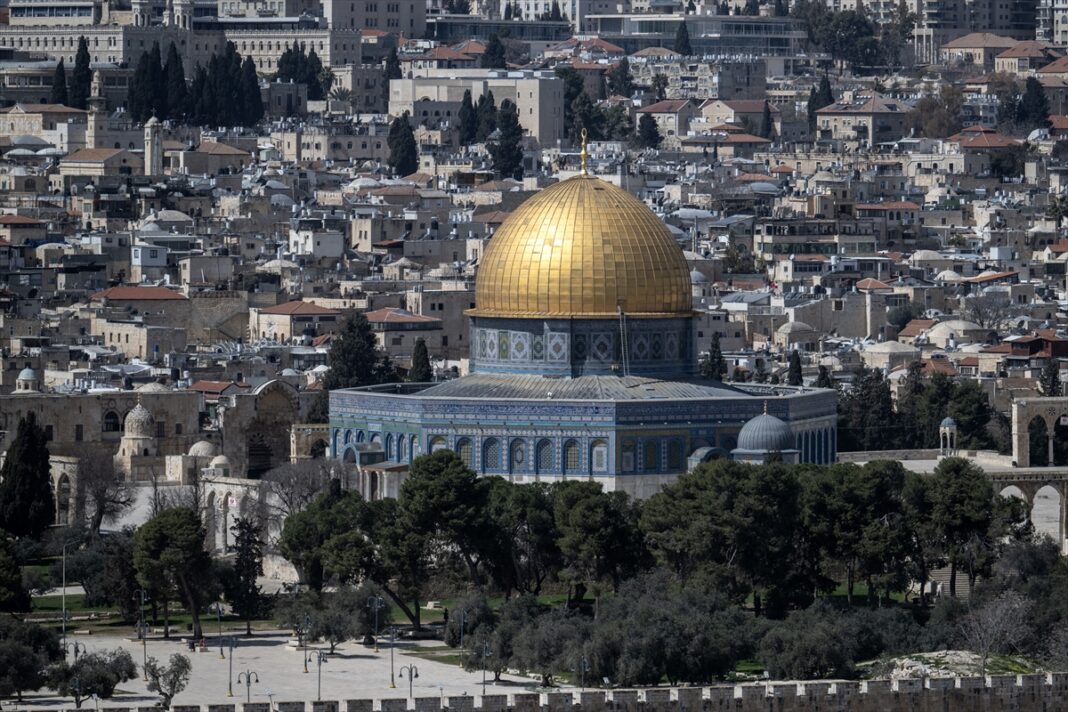

Israeli authorities have kept al Aqsa, Islam’s third holiest site, closed to worshippers for 32 consecutive days, tightening restrictions under the cover of the US-Israeli war on Iran.
At the same time, Jewish groups calling for the destruction of al-Aqsa Mosque have escalated incitement, urging supporters to storm the site during Passover and perform sacrificial rituals inside the compound, while demanding it be opened between April 2 and 9.
For Sheikh Dr Sajid Umar, Mufti and Judge, the mosque is not just a location; it is divinely significant, historically vital, and a core part of Islamic belief. Its protection, he told Olive News Network, is a responsibility for all Muslims transcending borders, ethnicity, and politics.
“The Messenger Muhammad ﷺ instilled the importance of Al-Aqsa within the hearts of the Sahaba, passing on a responsibility to future generations,” Sheikh Umar explains. Masjid Al-Aqsa is the first Qibla of Islam, and its sanctity belongs to the entire Ummah, not just a region or ethnicity.
Sheikh Umar calls for action that goes beyond slogans or reactive gestures. “We may go faster alone, but we go further together,” he says, emphasising the need for knowledge grounded in the Qur’an and Sunnah, unity among Muslims, and consistent advocacy.
Protecting al-Aqsa requires both spiritual and practical action: educating youth, spreading awareness, and organising advocacy that is deep, sustained, and heartfelt. “The closure of Masjid Al-Aqsa is a test for the Ummah, it demands a response as urgent and committed as any personal or communal challenge,” he adds.
For Sheikh Umar, the mosque’s protection must touch the heart, soul, and actions of every believer. “If the Ummah truly lives in its faith, al Aqsa cannot remain a distant concern; it must inspire us to act, he concludes.
Islamic scholar Imam Zakariyya du Preez offers a deep perspective on the ongoing challenges facing Masjid Al-Aqsa and the broader responsibilities of the Ummah.
Du Preez emphasises the urgent need for action and unity within the Muslim community.
He emphasises that advocacy, education, and mobilisation are critical. “Communities should rally Masjids, organise campaigns and provide educational content to instill a deep understanding of the cause in youth and congregants,” he told Olive News Network.
He also warns that political lobbying in South Africa, including by organisations such as The South African Israel Public Affairs Committee (SAIPAC), risks influencing local politics in ways that could undermine solidarity efforts.
The Imam stresses that the Ummah’s response must be coordinated, sustained, and heartfelt, combining awareness with tangible advocacy. Only then can the protection of Masjid Al-Aqsa move beyond discussion to real, impactful action embraced by every community member.