
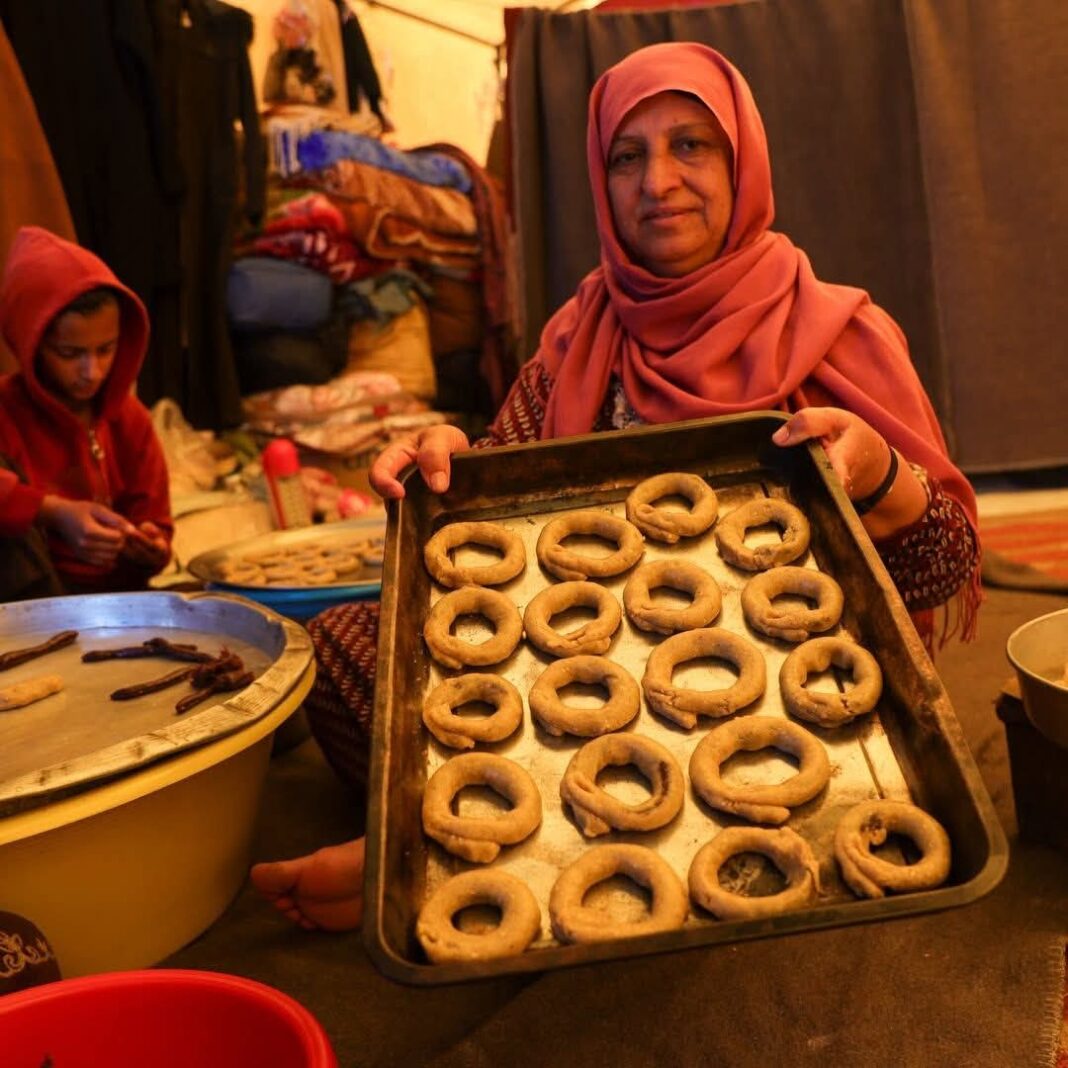

Families across Gaza are marking the last days of Ramadan in harsh conditions – in unsafe shelters or out in the open in winter, and with limited access to essential goods and services.
With their homes destroyed, many prepare and have iftar in the open while at the same time preparing meals and refreshments for Eid-ul-Fitr under grim conditions.
Palestine International Broadcast posted on Facebook that as Eid al-Fitr approached, displaced families across the Gaza Strip were trying to create small moments of joy inside their makeshift tents.
Despite the heavy reality of loss and displacement. Between scarce bags of flour and scattered pieces of firewood, mothers sit around improvised tables or cloths spread on the ground, kneading Eid cookies just as they once did in their homes—this time from the heart of a tent.”
The United Nations reports that it and partners had been working on food security, and adjusted the distribution hours to better align with fasting hours during Ramadan.
“This is to reduce overcrowding, especially ahead of iftar. These measures are intended to ensure access for older persons, people with disabilities, and women who head their households.”
The UN reports that, meanwhile, at the Rafah crossing, conditions for passengers remain inadequate.
“The UN and humanitarian partners have visited the reopened crossing and have noted gaps in basic facilities, including limited availability of latrines and handwashing stations, raising concerns for hygiene at the collection points.
“People are experiencing prolonged waiting periods with insufficient seating and a lack of wheelchairs, often in areas with limited shade. The condition of the access road to and from Rafah is also of concern, particularly for patients being medically evacuated,” it said.