
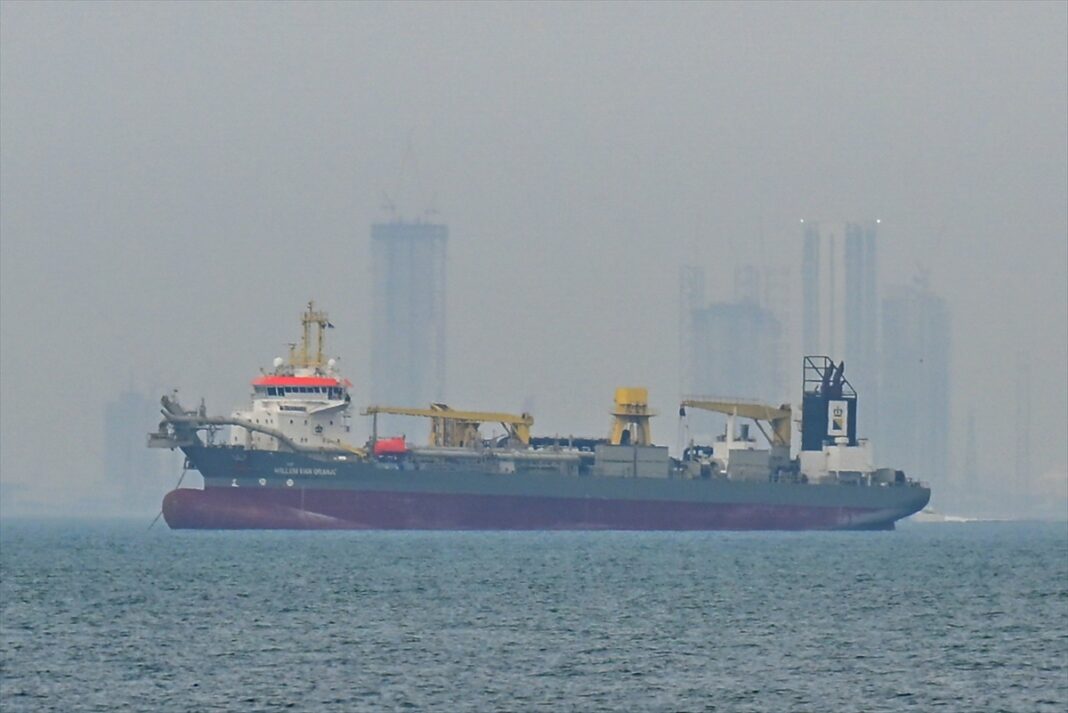

Iran has triggered its most potent weapon, shutting the Strait of Hormuz.
With nearly 20 percent of global oil demand flowing through the narrow 39-kilometre-wide Persian Gulf gateway, Iran has now displayed its ultimate trump card by making the Strait of Hormuz a maritime target.
The Strait of Hormuz, connecting the Persian Gulf with the Gulf of Oman and the Arabian Sea, is one of the most strategically important energy chokepoints in the world.
In the first half of last year, oil flows through the strait averaged 20.9 million barrels per day.

This volume represented about 20% of global oil consumption and roughly one quarter of seaborne oil trade.
Around 5.5 million barrels per day of shipments consisted of refined petroleum products, highlighting the Gulf region’s role as a major exporter of fuels such as diesel and jet fuel.
Approximately 80% of the oil passing through Hormuz is shipped to Asian markets, with Japan, South Korea, China and India heavily dependent on supplies transiting the strait.
The US imported about 400 000 barrels per day of crude oil and petroleum products from Persian Gulf countries through the Strait of Hormuz in the first half of last year, accounting for roughly 7% of US crude and condensate imports.
Following US and Israeli military strikes against Iran on February 28 and attacks by the Islamic Revolutionary Guard Corps (IRGC) targeting vessels linked to the US and Israel passing through the strait, shipping traffic has dropped sharply.
According to the UK Maritime Trade Operations (UKMTO), the historical daily average for vessels transiting the Strait of Hormuz is around 138 commercial ships.
US Energy Secretary Chris Wright on Monday posted on X claiming the US Navy escorted an oil tanker through the Strait of Hormuz. It was swiftly deleted when Iran challenged the veracity of the post.
In an attempt to manage the fallout of the factually incorrect tweet, White House Press Secretary, Karoline Leavitt, denied Wright’s statement, clarifying that the Navy had not escorted any vessel through the vital waterway.
Despite its brief appearance, Wright’s false post caused significant disruption in oil markets, with an exchange-traded fund (ETF) losing $84 million in market capitalisation.
However, on March 7, only one commercial vessel transited the strait, and no oil tanker transits were recorded.
The disruption to maritime trade, particularly shipments of oil and LNG, has raised concerns over global energy supply security and contributed to rising prices.
Saudi oil giant Aramco’s CEO Amin Nasser said a prolonged shutdown of the strait “could lead to catastrophic consequences for global oil markets,” according to the Saudi television Al Ekhbariya.
Last week, Ebrahim Jabbari, an advisor to the commander of Iran’s Revolutionary Guards, announced that the Strait of Hormuz had been closed, warning that any ships attempting to pass through would be targeted.
Nasser described the current crisis as “by far the largest challenge ever faced by the oil and gas sector in the region.”
He said the disruption of navigation in the Strait of Hormuz has affected not only shipping and insurance but also threatens wider repercussions for sectors such as aviation, agriculture and the automotive industry.
Global oil inventories are at their lowest level in five years and could decline more rapidly if the crisis continues,” he warned.
Oil prices briefly surged this week to a record $120 per barrel before dropping on Tuesday to around $92 after comments by US President Donald Trump suggesting the war could end soon.
In addition to closing the Strait of Hormuz, a key transit route for oil tankers, Iran has launched attacks on what it says are US bases and interests in Gulf countries, Iraq and Jordan.
Some of those attacks have hit energy facilities, prompting several countries to reduce production, driving energy prices higher and raising fears of worsening inflation worldwide.
The New York Times reported on Wednesday that Trump and his advisors had miscalculated Iran’s response to the war and deliberately downplayed the risks to the energy markets.
The paper reported that on February 18, as President Trump weighed whether to launch military attacks on Iran, Chris Wright, the energy secretary, told an interviewer he was not concerned that the looming war might disrupt oil supplies in the Middle East and wreak havoc in energy markets.

Some of Mr. Trump’s other advisers shared similar views in private, dismissing warnings that — the second time around — Iran might wage economic warfare by closing shipping lanes carrying roughly 20 percent of the world’s oil supply.
The extent of that miscalculation was laid bare in recent days, as Iran threatened to fire at commercial oil tankers transiting the Strait of Hormuz, the strategic choke point through which all ships must pass on their way out of the Persian Gulf. In response to the Iranian threats, commercial shipping has come to a standstill in the Gulf, oil prices have spiked, and the Trump administration has scrambled to find ways to tamp down an economic crisis that has triggered higher gasoline prices for Americans.
The New York Times said the episode was emblematic of how much Trump and his advisers misjudged how Iran would respond to a conflict that the government in Tehran sees as an existential threat. Iran has responded far more aggressively than it did during last June’s 12-day war, firing barrages of missiles and drones at U.S. military bases, cities in Arab nations across the Middle East, and Israeli population centres.
The war now threatens a global economic meltdown. – AA & ONN Reporters