

Nontobeko Hlela
During the Cold War the African continent was not considered as geopolitically important as other regions such as Europe, Asia and the Middle East. This is changing, and in the recent past there has been a resurgence in the importance of the African continent to foreign powers. This renewed interest in Africa has been referred to as the new scramble for Africa as these countries have been jostling for natural resources such as minerals, oil, and rare earth elements critical for technology. This new ‘scramble’ for Africa – the intense rivalry between today’s big powers – has seen these foreign powers jockeying for strategic military and naval positions, as well as market access to Africa’s growing economies and young population.
From the late 1990s China turned its focus to the continent with massive infrastructure investments through the Belt and Road Initiative, trade partnerships, and loans. In response, the US formed its Africa Command (AFRICOM), which is focused on identifying threats and advancing US interests on the continent. China’s growing influence on the continent has seen a growing economic and political rivalry between Washington and Beijing as the US sees China’s influence to be diluting US power in the continent. These two global powers’ interest in the continent increased Africa’s geostrategic importance with the US competing for influence by focusing on security partnerships and countering Chinese expansion. The consequence is that the rivalry has developed into a geostrategic imperative on the part of both powers.
The Trump administration’s return in 2025 has intensified the scramble through an explicitly transactional approach focused on securing critical minerals. The administration dismantled USAID, imposed steep tariffs on South Africa and Nigeria, while brokering deals like the June 2025 DRC-Rwanda peace accord that granted US firms preferential mineral access. This “trade not aid” doctrine, implemented by Senior Advisor Massad Boulos, has forced African nations to navigate competing offers from the US, China, Russia, and Europe while attempting to maintain sovereignty and pursue collective action through mechanisms like the African Continental Free Trade Area (AfCFTA).
European engagement with Africa has undergone dramatic transformation in recent years. Traditional ties, particularly France’s presence in the Sahel, have unravelled as military governments in Mali, Burkina Faso, and Niger expelled French forces and diplomatic missions. While the EU continues to pursue strategic interests—including migration management, counter-terrorism, and economic partnerships—through development aid and selective diplomatic engagement, it increasingly competes with China, Russia, Türkiye, and Gulf states for influence across the continent.
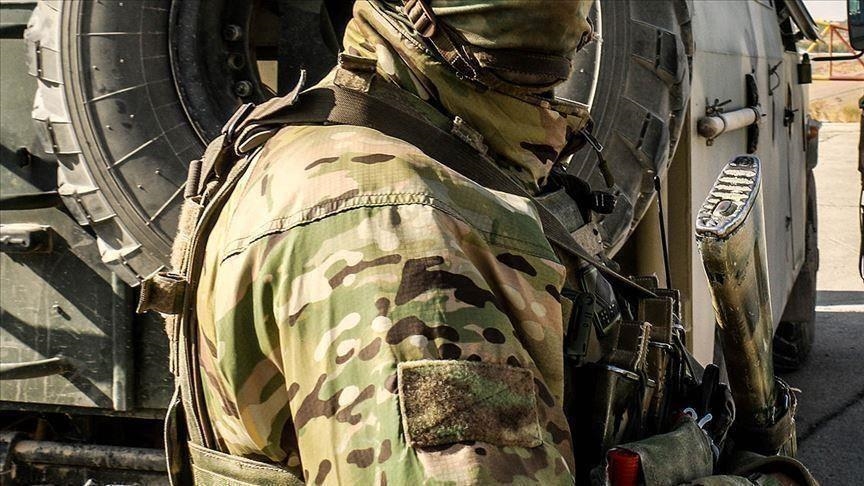
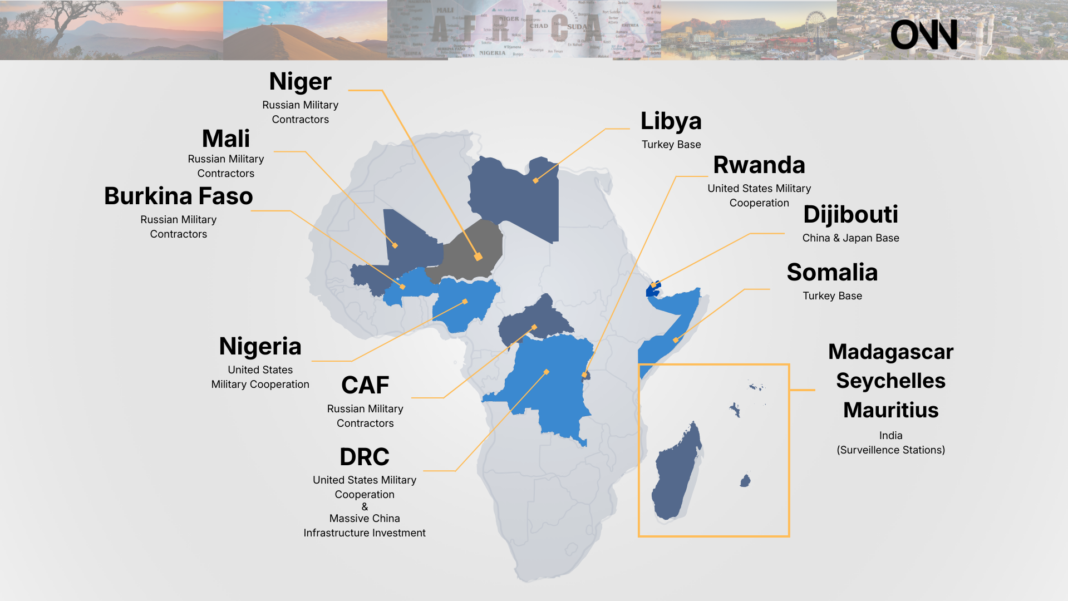
Russia has also re-engaged through military cooperation, arms sales, and private military contractors such as Africa Corps, previously known as the Wagner Group. Africa Corps has been deployed across Libya, Burkina Faso, Mali, Central African Republic and Niger, often filling the security vacuum left by French withdrawal from the Sahel. Since 2014 Russia has signed 19 military deals with African states.
Other than these “traditional” actors on the continent, new players such as Türkiye and the Gulf states have increasingly become active in trade and security on the continent. Between 2002 and 2023, Türkiye increased its presence on the continent from 12 embassies to 43. In 2017 Türkiye built its largest overseas military base, and its first in Africa, in Somalia. Oil-rich Arab states are building bases on the Horn of Africa and hiring African mercenaries. India has also been increasing its economic and diplomatic engagement on the continent.
The new scramblers want more than just a share of what Africa has; they want a stake in what it is now trying to build—in the economies and growing global stature of the world’s second-most-populous continent. Africa holds around 30% of the world’s mineral reserves, including critical resources like cobalt, gold, and platinum, along with 12% of global oil and 8% of natural gas reserves. These are essential for electronics, renewable energy, and electric vehicle manufacturing.
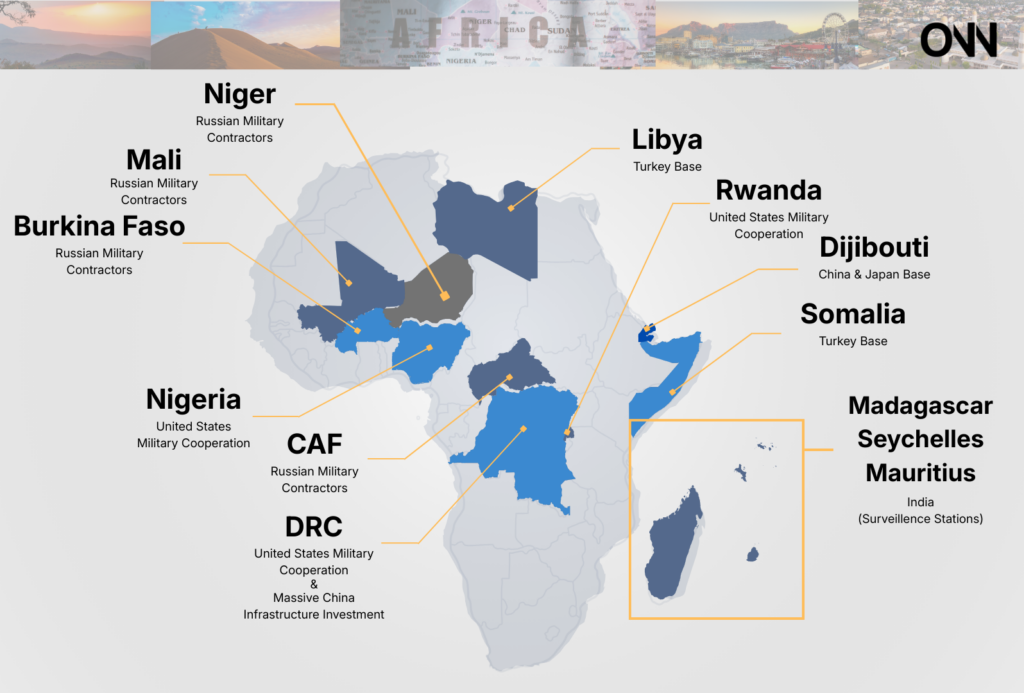
Governments and businesses from around the world have been working to strengthen diplomatic, strategic, and commercial ties with the continent. From 2010 to 2025 more than 320 foreign diplomatic missions were opened in Africa, probably the biggest embassy-building boom anywhere. The US has approximately 29 known military facilities in 15 countries on the continent and has spent approximately US $2 billion annually on its African operations, supporting AFRICOM’s programmes to mentor, advise and train African militaries. China’s military influence stretches well beyond the base in Djibouti and has conducted military exercises with multiple African countries including Tanzania, Mozambique, South Africa, Nigeria, Cameroon, Gabon, Ghana, Egypt, and Namibia. China’s military base in Djibouti, established in 2017, has worried other Asian powers, prompting Japan to expand its own Self-Defense Forces base in Djibouti (opened in 2011) and India to develop a network of coastal radar surveillance stations in Madagascar, Mauritius, and Seychelles around the Indian Ocean.
The continent is becoming a hotbed for terrorist and insurgency groups, a direct result of the war on terror and the invasion of Libya. Since AFRICOM was set up, a number of African states that received training from the US military have been racked by coups, insurgencies, violence and volatility. As US “stability” operations in Africa have increased, militancy has spread, insurgent groups have proliferated, partners such as Rwanda, Mali, DRC, Kenya, Uganda, Ethiopia, and Chad have faltered or committed abuses, terrorism has increased, the number of failed states has risen and the continent has become more unsettled.
How can African countries successfully navigate this new scramble for the continent’s natural resources and geostrategic vitality and ensure it enhances African agency and the continent’s commercial interests? The new scramble for Africa has presented both opportunities and risks, with Africa caught in the middle as great powers compete for influence. There’s ongoing debate about whether this represents genuine partnership or neo-colonialism in different forms.
This question becomes more urgent when examined closely. Unlike the past, Africa is not just a passive recipient of foreign influence but an active participant in shaping its relationships with global powers. Some African leaders and analysts see this scramble as an opportunity to leverage competition for better deals on infrastructure contracts and development projects. Nevertheless, concerns have been raised that this new geopolitical competition poses the danger of creating new forms of dependency, debt traps, and exploitation.
The new scramble for Africa, despite its modern vocabulary of “partnerships,” “win-win cooperation,” and “mutual benefit,” bears the unmistakable hallmarks of the neo-colonialism that Kwame Nkrumah warned against. Whether through debt-trap diplomacy, military base proliferation, coups by foreign-trained officers, or transactional deals that exchange sovereignty for short-term gains, the fundamental dynamic remains extraction and subordination.
The intensifying competition among global powers—the US securing mineral rights through peace deals, China building strategic infrastructure, Russia deploying mercenaries, European nations clinging to former spheres of influence, and Türkiye and Gulf states expanding their footprint—represents not the end of neo-colonialism but its evolution into a multipolar form.
Neo-colonialism, as Nkrumah noted, seeks to fragment Africa, weaken state institutions, and prevent unity in order to subordinate the continent’s aspirations for pan-African consolidation. The new scramble achieves precisely this through bilateral deals that pit African nations against each other, military partnerships that compromise sovereignty, and economic arrangements that perpetuate dependence on raw material exports.
The enduring presence of foreign military bases, the wave of coups by foreign-trained militaries, and the surge in terrorism following interventions like Libya demonstrate how external interference continues to destabilise the continent while claiming to bring security and development.
Yet this neo-colonial scramble also creates unprecedented opportunities for African resistance and agency. The very fact that multiple powers now compete for influence means Africa need not accept diktat from any single hegemon. The AfCFTA represents a critical vehicle for continental unity—the antidote to neo-colonial fragmentation. With 54 participating countries creating the world’s largest free trade area by number of nations, a unified Africa can leverage great power competition for genuine development rather than exploitation.
Breaking free from neo-colonialism requires more than rhetoric; it demands concrete action. African leaders must establish joint negotiating positions on critical mineral extraction, standardised frameworks that limit foreign military presence, collective vetting of infrastructure projects to avoid debt traps, binding commitments to intra-African trade, and mechanisms to hold foreign powers accountable for destabilisation. Regional economic communities and the African Union must move from symbolic unity to enforceable coordination.
The new scramble for Africa will either perpetuate neo-colonial extraction under new management or catalyse genuine African unity and development. The choice belongs to African leaders: continue as fragmented competitors vulnerable to divide-and-rule tactics, or unite as a continental force capable of shaping the terms of engagement with global powers. Only through such unity can Africa ensure that this moment enhances African agency, advances the continent’s commercial interests, and serves the developmental aspirations of its people rather than repeating the exploitation of the past. Africa’s sovereignty and prosperity depend on breaking the neo-colonial pattern. The question is whether its leaders will seize this moment or squander it.
Nontobeko Hlela is a political analyst based in Johannesburg